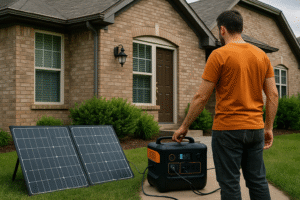
Imagine having the power of the sun at your fingertips, ready to energize your home whenever you need it. The idea of a portable solar generator is not just for camping trips or emergencies anymore.
It’s becoming a real game-changer for homeowners like you, seeking sustainable and reliable energy solutions. But, can a portable solar generator truly power your entire house? This question might have you curious, maybe even a bit skeptical. Before you decide, you’ll want to know how it works, what it can handle, and if it’s the right fit for your lifestyle.
As you read on, we’ll unravel the potential of these devices, and by the end, you’ll have a clear picture of whether a portable solar generator can transform your home’s energy future. Stay with us, because what you’ll discover might just change the way you see home energy forever.
What Is A Portable Solar Generator
Can a portable solar generator power a house? These compact devices convert sunlight into electricity. While ideal for small appliances and backup power, they might not fully power a home. Consider energy needs and generator capacity for effective use.
A portable solar generator is a game-changer in the realm of renewable energy. Compact and efficient, these devices harness the sun’s power to provide electricity on the go. They are perfect for outdoor adventures and can even serve as a backup power source at home.What Makes Up A Portable Solar Generator?
A portable solar generator typically consists of three primary components: solar panels, a battery storage system, and an inverter. The solar panels capture sunlight, converting it into electrical energy. This energy is stored in the battery for later use. The inverter then converts the stored DC power into AC power, which is used by most household appliances.Advantages Of Using A Portable Solar Generator
One of the biggest advantages is the eco-friendly aspect. These generators use renewable energy and produce no emissions, making them a sustainable choice. They are also incredibly quiet compared to traditional gas generators, allowing you to maintain a peaceful environment.Limitations To Consider
While portable solar generators are impressive, they do have limitations. Their power output may not be sufficient for high-energy-demand appliances. A typical portable solar generator might not power an entire house but can handle essential devices during an outage.Are Portable Solar Generators Right For You?
Consider your energy needs and usage patterns. If you require a backup for short-term use or need power on the go, a portable solar generator could be ideal. Evaluate your specific needs to determine if investing in one aligns with your lifestyle.
Credit: www.facebook.com
Components Of A Solar Generator
Understanding the components of a solar generator is essential. These components work together to harness and store solar energy. They ensure reliable power for your home. Each part plays a vital role in the generator’s efficiency and functionality.
Solar Panels
Solar panels are the first component of a solar generator. They capture sunlight and convert it into electricity. Made of photovoltaic cells, they harness the sun’s energy. The size and number of panels affect power output. More panels mean more electricity.
Battery Storage
Batteries store the electricity produced by the solar panels. This stored energy can be used when the sun is not shining. Battery capacity is crucial for continuous power supply. Larger batteries store more energy, ensuring longer power availability.
Inverter Systems
Inverters convert the stored DC electricity into AC electricity. Most home appliances run on AC power. Without inverters, the stored energy is not usable. Inverters come in different types, affecting efficiency and compatibility.
Charge Controllers
Charge controllers manage the energy flow from panels to batteries. They prevent battery overcharging, extending battery life. Charge controllers ensure efficient energy transfer. They are vital for maintaining the health of the solar generator system.
Benefits Of Portable Solar Generators
Explore the benefits of portable solar generators for home use. They provide eco-friendly power and reduce electricity costs. Efficient and versatile, these generators can run essential appliances during power outages, making them a valuable backup solution for households.
Portable solar generators are changing the way we think about powering our homes. These innovative devices offer a range of benefits that make them an attractive alternative to traditional power sources. Whether you’re considering one for emergency backup power or as a primary energy source, understanding their advantages can help you make an informed decision.Mobility And Convenience
Portable solar generators are designed with mobility in mind. You can easily move them around your home or take them on the go. Imagine having a reliable power source while camping or during outdoor events. Their lightweight and compact design means they fit easily in a car or RV, providing power wherever you are. This level of convenience can be a game-changer, especially in remote locations.Eco-friendly Energy Source
Using a portable solar generator means tapping into a clean, renewable energy source. Unlike traditional gas generators, they produce no emissions. This makes them an environmentally friendly choice, reducing your carbon footprint. Plus, harnessing the sun’s energy can give you peace of mind knowing you’re contributing to a more sustainable future.Cost-effective Solution
While the initial investment might seem high, portable solar generators can save you money in the long run. You won’t need to spend on fuel or extensive maintenance, which can add up over time with traditional generators. Additionally, some regions offer tax credits or incentives for using solar energy. These savings can make a significant difference in your overall energy costs. Isn’t it time to consider how a portable solar generator could fit into your lifestyle?Limitations Of Solar Generators For Homes
Portable solar generators offer green power solutions for homes. Yet, they have limitations that affect their usage. Understanding these constraints helps homeowners make informed decisions.
Power Output Constraints
Solar generators produce limited energy. Most models can’t power large homes. They often handle small appliances only. High-demand devices like ovens or air conditioners exceed their output. Balancing energy needs is crucial.
Weather Dependency
Solar energy depends on sunlight. Cloudy days reduce power generation. Nighttime offers no solar energy. Generators work best in sunny areas. Backup options are necessary during poor weather.
Initial Setup Costs
Solar generators require upfront investment. Costs vary with size and capacity. Larger systems are more expensive. Long-term savings are possible, but initial costs can be high. Budget planning is essential before purchase.
Determining Energy Needs For A House
Determining energy needs for a house involves assessing power consumption and sustainability. A portable solar generator can supplement energy, but may not fully power a house. Consider household appliances and energy use before relying solely on solar generators.
Determining the energy needs for your house is the first step in deciding whether a portable solar generator can power it. It’s crucial to understand how much energy your household consumes daily. This understanding allows you to match your needs with the generator’s capacity, ensuring you have enough power without overspending on an unnecessarily large system.Understanding Household Energy Consumption
Household energy consumption varies widely based on factors like house size, number of occupants, and personal habits. You might be surprised to learn that appliances like refrigerators, air conditioners, and heaters are significant power hogs. Tracking your energy usage can be as simple as checking your electricity bills for average monthly consumption. Many utility companies provide detailed breakdowns that can be invaluable. Consider the energy efficiency of your home. Older homes may have less efficient systems that require more power. Simple upgrades, like LED bulbs or energy-efficient appliances, can drastically reduce consumption.Calculating Required Generator Capacity
Once you understand your household’s energy consumption, you can calculate the generator capacity needed. Start by listing all essential appliances and their power ratings, typically found on a label or in the manual. Add up the watts used by these appliances to determine your total daily energy requirement. Remember, some appliances have higher starting watts, which should also be considered. Consider how often you use each appliance. A fridge, for instance, runs continuously, while a microwave is used sporadically. This helps in understanding actual power needs versus peak demands. Portable solar generators have varying capacities, typically measured in watt-hours. Choose a generator that can meet or exceed your calculated needs. A bit of buffer can ensure you stay powered even on cloudy days. Have you considered the future? If you’re planning to add more appliances or expand your home, factor in this potential increase in energy needs. Planning now can save you from needing a larger generator later.Choosing The Right Solar Generator
Portable solar generators can power a house, but it depends on energy needs and generator capacity. Assess essential appliances and total energy consumption. Select a generator that matches these requirements for optimal performance.
Choosing the right solar generator for your home can be challenging. Each generator has distinct features and specifications. Understanding these will help you make an informed decision. You want a generator that meets your power needs without stretching your budget.Evaluating Power Capacity
Start by assessing your home’s power requirements. Determine the essential appliances you need to run. Calculate their combined wattage to find your minimum power capacity. Look for generators that can handle this load efficiently. Keep in mind, more capacity offers flexibility for future needs.Comparing Brand Features
Different brands offer varied features and technologies. Some may have advanced battery storage, while others boast faster charging times. Compare warranties and customer service reviews. Check if the generator is compatible with your existing solar panels. Prioritize features that align with your specific needs.Considering Budget Constraints
Solar generators come in a wide range of prices. Set a budget to narrow down your options. Consider the long-term savings on electricity bills. Factor in potential maintenance costs. You might find a slightly pricier option offers better value over time. Balance your immediate budget with future benefits.Installation And Setup Process
Ensure your portable solar generator is compatible with your home’s energy needs. Position solar panels in direct sunlight for optimal efficiency. Connect the generator to your home’s electrical system using a transfer switch for seamless power integration.
Installing and setting up a portable solar generator to power your house can seem daunting, but it’s a manageable process with the right guidance. Whether you’re a seasoned DIY enthusiast or a newbie to solar energy, understanding the key steps will ensure a smooth experience. Let’s break down the installation and setup process into clear, actionable steps.Positioning Solar Panels
Choosing the right spot for your solar panels is crucial. Aim for an area with maximum sunlight exposure, typically a south-facing roof or open yard. Consider any potential obstructions like trees or buildings that might cast shadows and reduce efficiency. To get the best results, adjust the panel angle according to your location’s latitude. Some panels come with adjustable mounts, making it easier to optimize their position throughout the year. Remember, even a small change in angle can significantly affect energy output.Connecting Components
Once your panels are in place, it’s time to connect the components. Start by linking the solar panels to the charge controller. This device regulates the voltage and current, ensuring your battery doesn’t overcharge or deplete too quickly. Next, connect the charge controller to the battery. Use high-quality cables to ensure a secure connection and minimize power loss. Finally, link the battery to the inverter, which converts DC power to AC power for household use.Safety Measures
Safety should always be your top priority. Wear appropriate safety gear like gloves and goggles when handling electrical components. Ensure all connections are secure and insulated to prevent short circuits or electric shocks. Keep the generator in a dry, well-ventilated area to avoid overheating. Regularly inspect your setup for any signs of wear or damage and address them immediately. Do you feel confident handling electrical installations, or would you prefer professional assistance? Setting up a portable solar generator is a rewarding project that can significantly reduce your energy bills. With careful planning and attention to detail, you can harness the power of the sun safely and efficiently.
Credit: udpwr.com
Maintenance And Care Tips
Regular checks ensure a portable solar generator performs efficiently. Clean panels and monitor battery levels for optimal power. Proper storage protects against damage and extends lifespan, guaranteeing reliable energy for home use.
Maintaining a portable solar generator ensures its efficiency and longevity. Proper care helps you get the most from your investment. Here are essential maintenance and care tips for your generator.Regular System Checks
Perform regular system checks to keep your generator in good condition. Inspect connections and cables for any signs of wear or damage. Ensure that all components are securely fastened. Check the control panel for any error messages or unusual indicators.Battery Health Monitoring
Monitoring battery health is crucial for optimal performance. Check the battery charge level regularly. Avoid letting the battery discharge completely. Recharge it promptly to prevent damage. Observe for any swelling or leakage, which indicates battery issues.Cleaning Solar Panels
Clean solar panels to maintain their efficiency. Dust and debris reduce their ability to capture sunlight. Use a soft cloth and mild soap solution for cleaning. Avoid abrasive materials that might scratch the surface. Clean panels every few months, or more often if needed.Real-life Case Studies
Exploring the potential of portable solar generators reveals their ability to power essential home appliances. Case studies demonstrate their effectiveness during outages. Portable solar generators can sustain lights, refrigerators, and small devices, offering a practical solution for temporary energy needs.
Real-life case studies provide insight into the practicality of portable solar generators. People have shared their experiences, showing how these systems can support home energy needs. These stories highlight both success and challenges. They offer valuable lessons for those considering this eco-friendly solution.Successful Home Implementations
Several families have successfully integrated portable solar generators into their homes. One example is a family in Arizona. They used a portable solar generator to power essential devices during outages. Their setup included lights, a refrigerator, and communication devices. They found the generator reliable and efficient. Another case is a couple in Texas. They used solar power for heating in winter months. This reduced their electricity bills significantly. Their system was easy to install and maintain.Lessons From Users
Users have learned important lessons from their experiences with portable solar generators. Many emphasize the importance of assessing energy needs. It’s crucial to understand what devices are essential. Proper planning ensures the generator can handle the load. Some users discovered the significance of regular maintenance. Keeping the solar panels clean boosts efficiency. Others shared insights on battery storage. They found that a larger battery can store more energy. This increases usability during cloudy days.Future Of Solar Generators In Residential Use
The future of solar generators in residential use is bright and promising. As homeowners increasingly seek sustainable energy solutions, portable solar generators are stepping into the spotlight. These compact devices offer the potential to power homes, reducing reliance on traditional electricity sources and contributing to a greener planet. But how close are we to having these generators fully power a house? Let’s explore the technological advancements and market trends shaping this exciting prospect.
Technological Advancements
Solar generator technology has evolved significantly. Improvements in solar panel efficiency mean generators can now harness more energy from the sun, even on cloudy days. Battery technology has also seen leaps forward; lithium-ion batteries provide longer life and faster charging times. Some models even offer smart features that allow you to monitor energy usage through your smartphone, helping optimize power management at home.
Imagine controlling your home’s power usage while sipping coffee in your living room. This is not just a dream anymore. With advancements in energy storage and conversion, portable solar generators can potentially power essential household appliances, and soon, maybe even the whole house.
Market Trends
The market for portable solar generators is expanding rapidly. Increasing awareness about climate change and rising electricity costs are driving more homeowners to explore solar solutions. Companies are innovating to meet this demand, creating generators that are more affordable and accessible. This trend is evident in the diverse range of products now available, catering to different power needs and budgets.
Are you ready to join the solar revolution? With prices dropping and efficiency increasing, the barriers to entry are lowering. Many homeowners are opting for hybrid systems, using portable solar generators alongside traditional power sources for a seamless transition. This blend not only ensures reliability but also offers a practical path toward complete solar adoption.
In your quest for sustainable living, how do you envision the role of solar generators in your home? As technology advances and the market grows, integrating these devices into residential spaces is becoming more feasible and attractive.

Credit: www.jackery.com
Frequently Asked Questions
Can I Use A Solar Generator To Power My House?
Yes, you can use a solar generator to power your house. It depends on your energy needs and generator capacity. Ensure it can handle essential appliances and devices. Consider battery storage for continuous power during cloudy days or nights. Consult a professional for proper installation and system size.
What Size Solar Generator Do You Need To Run A House?
To run a house, a solar generator should be at least 5000 watts. Consider energy needs and appliance usage. Factor in battery capacity for cloudy days. Evaluate your daily energy consumption for accurate sizing. Consult a professional for personalized recommendations.
How Long Will A 1000 Watt Solar Generator Run A Refrigerator?
A 1000-watt solar generator can run a refrigerator for about 6 to 12 hours. This depends on the refrigerator’s power consumption, battery capacity, and solar panel efficiency. Check your refrigerator’s wattage to estimate exact runtime.
What Are The Disadvantages Of A Solar Generator?
Solar generators have limited power output, relying on sunlight, which can be inconsistent. They are expensive and require significant initial investment. Battery life can decrease over time, affecting efficiency. They may not support high-energy devices, limiting usage. Portability can be an issue due to size and weight.
Conclusion
A portable solar generator can help power small appliances. It’s great for emergencies or remote areas. Yet, powering an entire house might be challenging. Most generators have limited capacity. Consider your energy needs and generator specs. Solar power is eco-friendly and sustainable.
But, it may not replace traditional electricity for bigger homes. Evaluate your home’s energy use carefully. Portable generators offer flexibility and convenience. They can reduce reliance on the grid. More research and planning are needed for full home power. It’s an exciting option for energy-conscious people.