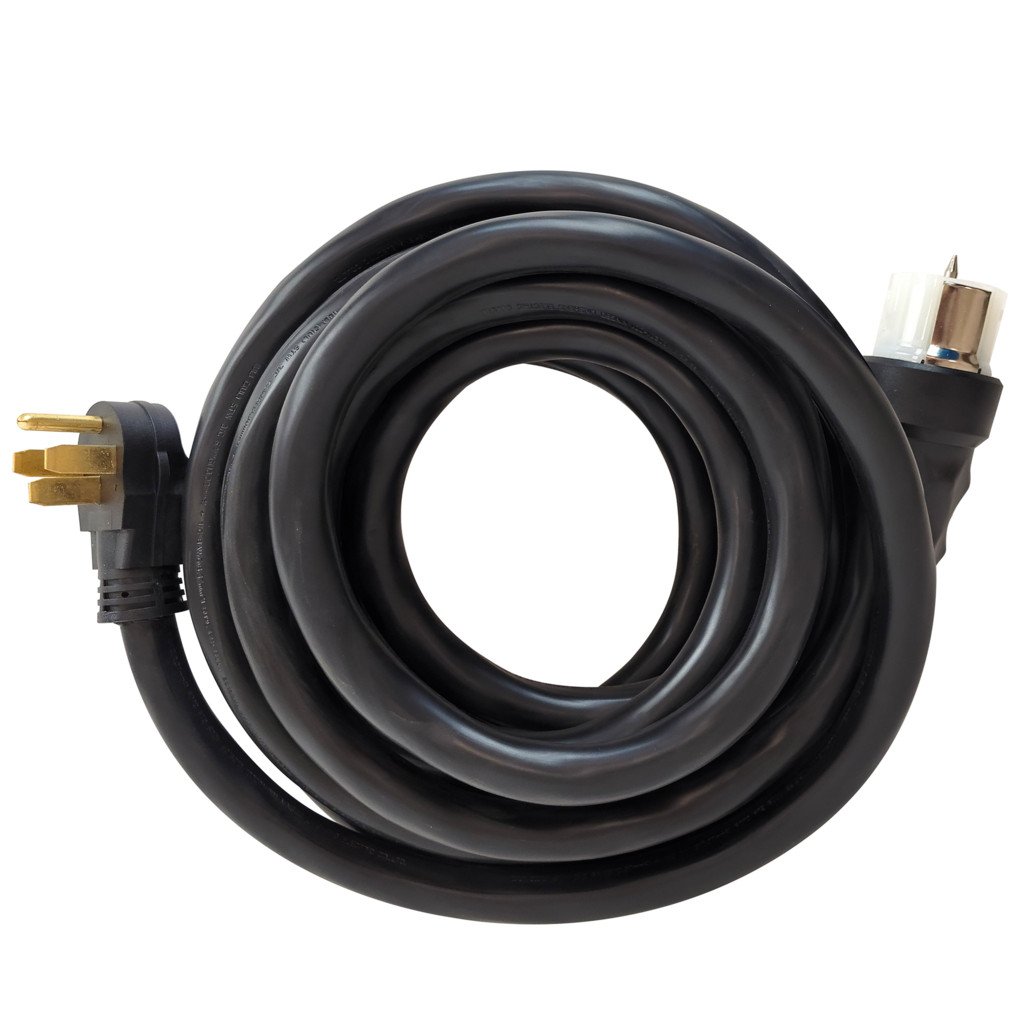
Imagine you’re in the middle of a power outage, and your reliable 5000W generator is your only source of electricity. But there’s a catch: it’s parked outside, and you need to run power inside your home.
Here comes the big question: can you use a 25 feet extension cord for the job? This is a scenario many face, and getting it right is crucial for both safety and efficiency. You might wonder about voltage drops, potential hazards, or if your setup will even work.
You’ll uncover the truth about using a 25 feet extension cord with your generator. By the end, you’ll feel confident and informed, ready to make the best decision for your power needs.
Generator Power Basics
A generator’s power is measured in wattsand amperes. Watts tell how much energy it can produce. Amperes show how much current flows through the wires.
The formula to know amps is simple: Amps = Watts ÷ Volts. For a 5000W generator at 120 volts, the current is about 41.7 amps. This helps to choose the right extension cord and devices.
Generators create power by turning mechanical energy into electrical energy. This energy flows as alternating current (AC). It moves through wires to supply power to your tools or appliances.
Power delivery depends on the generator size and load. If the load is too high, the generator can overload and stop working.

Credit: www.amazon.com
Extension Cord Specifications
Cord gaugeis very important for a 5000W generator. A lower gauge numbermeans a thicker wire. Thicker wires carry more power safely.
A 25 feet extension cordis usually fine for this power if it has the right gauge. For 5000 watts, a 10 or 12 gaugecord is best. Thinner cords can overheat or cause power loss.
| Extension Cord Type | Best Use | Gauge | Max Wattage |
|---|---|---|---|
| Light Duty | Small tools, lamps | 16 or 18 | Up to 1500W |
| Medium Duty | Home appliances | 14 | Up to 1875W |
| Heavy Duty | Generators, power tools | 10 or 12 | Up to 5000W+ |
- Thicker cords handle more power safely.
- Longer cords need thicker wire to avoid power drop.
- Check the cord’s watt ratingbefore use.
Matching Cord To Generator Load
The extension cordmust handle the power loadof the generator. A 5000W generator produces a lot of power. The cord should support this to avoid overheatingor fire risks.
Calculate the current by dividing watts by voltage. For example:
| Power (Watts) | Voltage (Volts) | Current (Amps) |
|---|---|---|
| 5000W | 120V | 41.7A |
The cord’s wire gauge must support this current. A 25-foot cord usually comes in different gauges:
- 12-gauge: good for up to 20 amps
- 10-gauge: supports up to 30 amps
- 8-gauge: handles 40+ amps
Using a cord with too small a gauge can cause voltage dropsand overload. Choose a cord that matches or exceeds the generator’s current.

Credit: www.amazon.com
Safety Concerns With Extension Cords
Heat buildupinside extension cords can cause serious fire risks. High power loads, like 5000W generators, increase the chance of cords getting hot. Using a cord too thin or too long worsens this issue. Overheated cords may melt, exposing wires and causing sparks.
Voltage drophappens when electricity travels through long or thin cords. This drop can harm your generator and connected devices. Low voltage may cause equipment to run poorly or stop working. It also may damage sensitive electronics.
| Risk | Cause | Effect |
|---|---|---|
| Heat buildup | High power load, thin or long cord | Cord melts, fire hazard |
| Voltage drop | Long or thin extension cord | Equipment damage, poor performance |
Best Practices For Using Extension Cords
Choosing the right cord gaugeis very important for safety and performance. A 25 feet extension cordmust have a thick wire to handle 5000W power. Usually, a 10 or 12 gaugecord is best. Thin cords can overheat and cause fires.
Proper cord handlinghelps avoid damage. Keep cords away from sharp edges and wet places. Don’t place cords under heavy objects or doors. Always uncoil the cord fully to prevent heat build-up.
Place the cord in a safe spot to avoid tripping. Use a cord with a grounded plugfor extra safety. Check cords regularly for cracks or wear before use.
Credit: www.walmart.com
Alternative Power Connection Methods
Direct generator outletsprovide a safe way to connect power. These outlets match the generator’s power output. Using the correct outlet helps avoid overloadingor damage. Many generators come with built-in outlets for easy plug-in. Extension cords can connect to these outlets but must match the power rating.
Hardwiring optionsoffer a more permanent power connection. This involves wiring the generator directly to a home’s electrical system. It requires a transfer switchfor safety and to prevent backfeed. Hiring a licensed electricianis important for this work. Hardwiring allows running many appliances without using multiple cords.
Frequently Asked Questions
Can I Use A 25 Feet Extension Cord With A 5000w Generator?
Yes, you can use a 25 feet extension cord with a 5000W generator. Ensure the cord is heavy-duty and rated for at least 25 amps to handle the power safely.
What Gauge Extension Cord Suits A 5000w Generator?
A 10-gauge extension cord is ideal for a 5000W generator. It supports higher current and minimizes voltage drop over 25 feet, ensuring efficient power delivery.
Will A 25 Feet Extension Cord Cause Power Loss?
A 25 feet extension cord may cause minimal power loss. Using the correct gauge cord helps reduce voltage drop and maintains stable power output from your generator.
How To Choose The Right Extension Cord For My Generator?
Select an extension cord rated for your generator’s wattage and amperage. For 5000W, use a 10 or 12-gauge cord with appropriate length to avoid overheating and power loss.
Conclusion
A 25 feet extension cord can work with a 5000W generator. The cord must be thick enough to handle high power. Using a thin cord may cause overheating or power loss. Always check the cord’s gauge and rating before use.
Safety is important to avoid damage or injury. Choose a heavy-duty extension cord made for high wattage. This keeps your generator running well and your devices safe. Simple steps make your setup reliable and efficient. Stay safe and enjoy your power needs without worry.