Calculating the right size for your standby generator can feel overwhelming, but it’s crucial for keeping your home powered during unexpected outages. You don’t want to be caught in the dark with a generator that’s too small to handle your needs.
On the other hand, investing in one that’s too large can be a costly mistake. By the end of this article, you’ll have a clear understanding of how to choose the perfect generator size for your home, ensuring peace of mind and uninterrupted comfort.
Keep reading to discover the simple steps that will empower you to make this important decision with confidence.

Credit: woodstockpower.com
Why Generator Size Matters
Choosing the right generator sizeis very important for safety and cost. A generator that is too small cannot power all needed appliances. This can cause the generator to overload and stop working.
A generator that is too large wastes money and fuel. It also wears out faster. The right size keeps the home or business running smoothly during power outages.
- Too small:Not enough power, risk of damage.
- Too large:Higher cost, more fuel use.
- Correct size:Reliable power, efficient operation.
Knowing your power needs helps find the perfect generator size. This means checking the wattage of all devices you want to run.

Credit: www.youtube.com
Assessing Your Power Needs
List all essential appliancesyou want to power. Think about lights, refrigerator, heater, and medical devices. Smaller items like phone chargers usually use very little power.
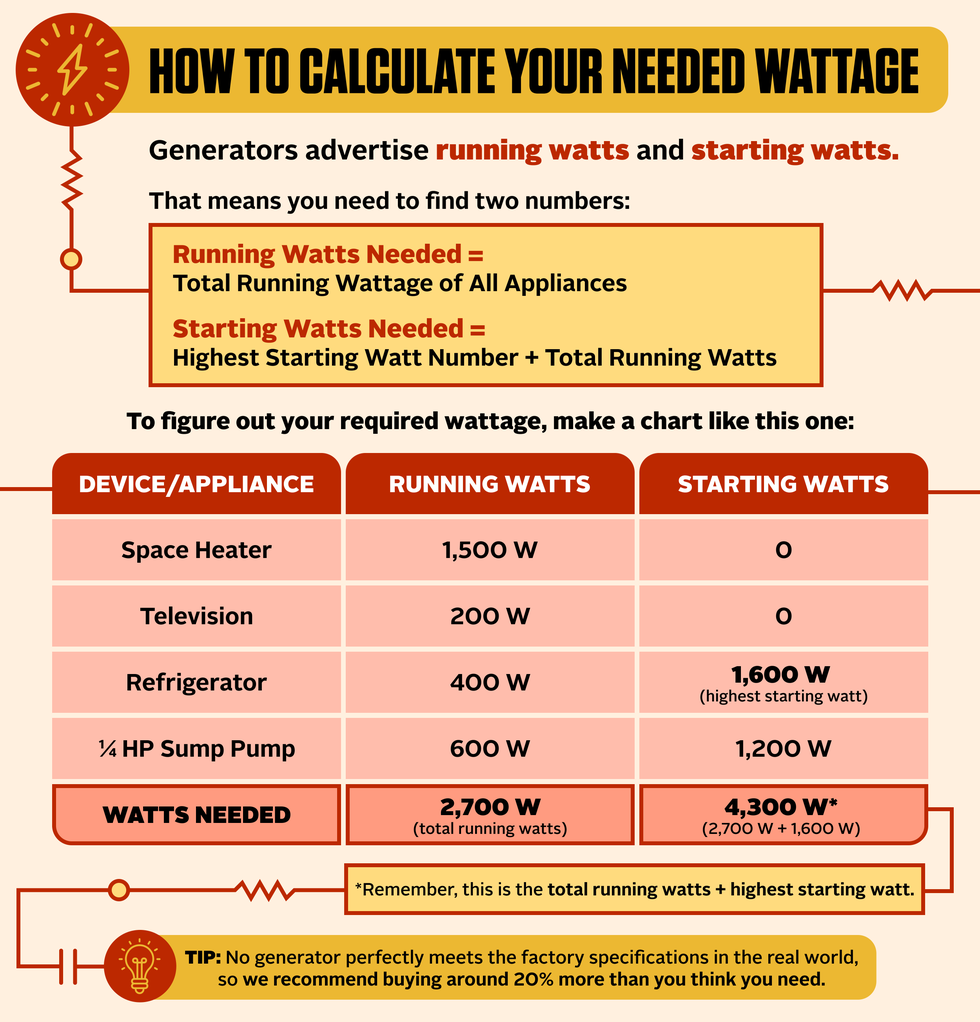
Calculate the total wattageby adding the power needed for each device. Check the label or manual for watt use. Add these numbers to get the total running watts.
Remember, some devices need more power to start. Starting wattscan be 2 to 3 times higher than running watts. Examples include refrigerators, pumps, and air conditioners.
| Device | Running Watts | Starting Watts |
|---|---|---|
| Refrigerator | 700 | 2100 |
| Air Conditioner | 1500 | 4500 |
| Lights | 300 | 300 |
Types Of Standby Generators
Portable generatorsare easy to move and use for short periods. They are usually smaller and less powerful. Portable types run on gasoline or propane. They are good for camping or small homes.
Permanent generatorsstay fixed outside a building. They start automatically during power cuts. These are larger and can power a whole house or business. They often use natural gas or diesel.
| Fuel Type | Advantages | Disadvantages |
|---|---|---|
| Gasoline | Easy to find, good for portable use | Short shelf life, not good for long outages |
| Propane | Cleaner burning, longer shelf life | Requires a tank, less common |
| Natural Gas | Continuous supply, low cost | Needs gas line, not portable |
| Diesel | Very powerful, good for big loads | Loud, needs maintenance |

Credit: www.micksgonebush.com.au
Calculating Generator Capacity
Calculate the total power needs of your home or business first. List all devices and appliances you want to power during an outage. Add their wattage to find the total load.
Use online calculators to simplify this process. Enter your appliance list and wattage. These tools provide an estimated generator size quickly and easily.
Include extra capacity for future additions. This allows your generator to handle more devices later without issues. It is wise to add about 20-25% more power than your current needs.
| Factor | Description | Example |
|---|---|---|
| Total Load | Sum of all appliance wattages | 5000 Watts |
| Online Calculator | Tool to estimate generator size | Input appliance list |
| Future Expansion | Extra capacity for new devices | +20% to 25% of total load |
Safety And Compliance Factors
Local codes and regulations set the rules for safe generator use. These rules protect your home and others nearby. Always check with your local office before installing a generator. Permits may be required to follow the law. Ignoring these rules can lead to fines or unsafe setups.
Proper installation helps avoid dangers like gas leaks or electric shocks. Place the generator in a dry, open area with good airflow. Keep it away from windows and doors to stop fumes from entering your home. Use a licensed electrician to connect the generator to your home’s power system.
- Follow the manufacturer’s instructions carefully.
- Install carbon monoxide detectors near the generator.
- Check all connections for tightness and safety.
- Use proper grounding to prevent electrical hazards.
Expert Tips For Choosing The Right Size
Avoiding oversizingis crucial to save money and space. A generator too big wastes fuel and costs more. Undersizingcan cause power outages or damage. Calculate your total wattage needs carefully. Add up all appliances and devices you want to power. Consider starting watts for motors and pumps, as these need more power initially.
Consulting professionalshelps ensure correct size selection. Experts can analyze your home or business power needs. They understand local codes and safety rules. They can also recommend the best generator type for your needs.
Maintenance considerationsaffect generator size choice. Bigger generators may need more frequent checks and fuel. Smaller units are easier to maintain but might not cover all power needs. Choose a size that fits your maintenance capacity and budget.
Frequently Asked Questions
What Factors Determine The Size Of A Standby Generator?
The size depends on your total power needs, including essential appliances and devices. Consider starting wattage and continuous running wattage for accuracy.
How Do I Calculate Total Wattage For My Generator?
Add up the wattage of all devices you want to power simultaneously. Include both running and starting watts to ensure the generator handles the load.
Why Is Starting Wattage Important For Generator Sizing?
Starting wattage is the extra power needed to start appliances. It’s often higher than running wattage and crucial for accurate generator sizing.
Can I Use A Generator Smaller Than Calculated Size?
Using a smaller generator risks overload and damage. It may not power all devices effectively or run continuously under heavy load.
Conclusion
Choosing the right standby generator size keeps your home safe and powered. Calculate your total power needs carefully. Include all essential appliances and devices. Avoid buying a generator that is too small or too large. A proper size saves money and prevents problems.
Take your time to review your calculations. This helps you stay prepared during power outages. A well-sized generator gives peace of mind and comfort. Ready to keep your lights on? Now you know how to find the right generator size.