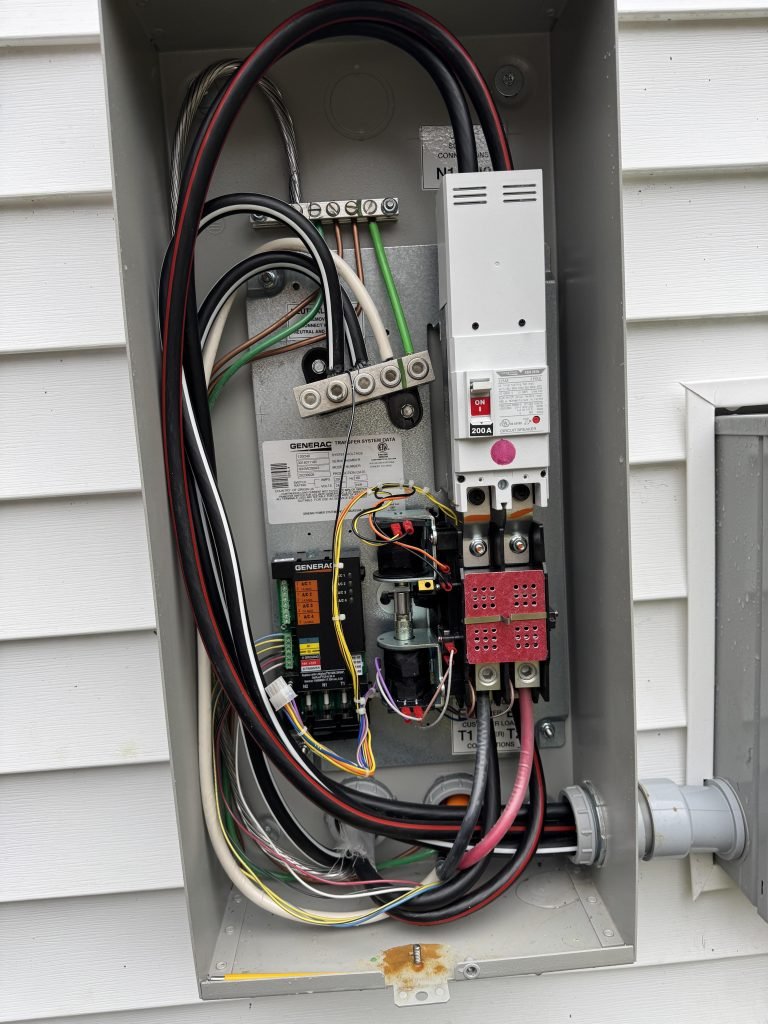
Are you planning to ensure your home or business never faces a power outage again? Connecting a generator Automatic Transfer Switch (ATS) to your main panel is the key to seamless electricity when the main power supply fails.
Imagine the peace of mind knowing that your lights, appliances, and essential systems will keep running smoothly, even during a blackout. In this guide, we’ll walk you through the straightforward steps to achieve this connection, making it easier than ever for you to safeguard your environment from unexpected power interruptions.
Stay with us to learn how you can make your life more convenient and secure, all with a few simple adjustments.
Choosing The Right Ats
An Automatic Transfer Switch (ATS) connects a generator to the main panel safely. There are two main types of ATS: open transition and closed transition. Open transition switches the power source instantly but may cause brief power loss. Closed transition switches transfer power without interruption, ideal for sensitive equipment.
Capacity is vital. The ATS must handle the total loadof the main panel and generator. Choose an ATS with a capacity equal to or greater than your electrical load. This prevents overload and damage.
Compatibility with the main panel is also key. Check the voltage, phase, and amperage ratingsof both devices. Matching these ensures smooth operation and safety. Most ATS units fit common panel sizes, but always confirm before purchase.
Gathering Required Tools And Materials
Gathering the right tools and materials is importantbefore starting. Safety should always come first.
For essential tools, you need:
- Screwdrivers (flathead and Phillips)
- Wire strippers and cutters
- Voltage tester
- Wrenches and pliers
- Drill with bits
Safety equipmenthelps protect you from accidents. Use:
- Insulated gloves
- Safety glasses
- Hard hat
- Hearing protection if needed
For wiring and connectors, gather:
- Appropriate gauge wires
- Wire nuts or connectors
- Cable clamps
- Electrical tape
- Conduit for protection
Preparing The Main Panel
Before working on the main panel, turn off all power sources. This stops any risk of electric shock or damage.
Check the panel for any visible signs of damage. Look for burn marks, loose wires, or corrosion. These issues must be fixed before connecting the ATS.
Use a marker to label all connection pointsclearly. This helps to avoid mistakes during wiring.
Double-check the labels with the panel’s wiring diagram. Accurate marking ensures safe and correct installation.
Mounting The Ats
Choose a dry, cool placeto mount the ATS. It should be near the main panel to keep wiring short. Avoid areas with heavy dust or moisture to protect the ATS from damage. Make sure the surface is solid and flat for stable installation.
Use strong screws or boltsto secure the ATS firmly. Check that it does not wobble or shift after mounting. This keeps connections safe and prevents hazards. Tighten all fasteners properly but avoid overtightening that can crack the ATS casing.
Keep the ATS easy to reach for maintenance or emergency use. Leave enough space around it for opening covers and accessing terminals. Clear any obstacles that block access. This ensures quick action if you need to switch or repair the ATS.
Wiring The Ats To The Generator
Connect the power cables from the generator to the ATS using thick wires. Use cables that match the generator’s output and ATS input ratings. Secure all connections tightly to avoid loose contacts. Check for any signs of damage or wear on cables before installation.
Ground the ATS properly to prevent electrical shocks and damage. Use a grounding wire connected to a grounding rod or metal water pipe. Ensure the grounding wire is continuous and not broken anywhere.
Control wiring links the ATS to the main panel and generator control. Use control cables that are shielded to avoid interference. Connect the start, stop, and signal wires as per the ATS manual. Label all wires to keep track of their functions.
Credit: www.electriciantalk.com
Connecting Ats To Main Panel
Connecting a generator ATS to the main panel ensures automatic power transfer during outages. Proper wiring and secure connections keep your system safe and reliable. Follow electrical codes closely for best results.
Input And Output Wiring
Connect the ATS input wires to the main power source. The output wires go to the main panel. Use proper wire sizes to handle the load safely. Ensure all connections are tight and secure to avoid loose contacts. Label each wire clearly for easy identification later.
Breaker Installation
Install breakers for both the generator and utility lines. Choose breakers that match the ATS and panel ratings. This protects the system from overload and short circuits. Make sure breakers are firmly seated in the panel slots.
Testing Connections
- Turn off all power sources before testing.
- Check for continuity in all wiring.
- Test the ATS switch by simulating a power outage.
- Verify the main panel receives power from the generator.
- Ensure the ATS switches back to utility power smoothly.
Configuring The Ats Settings
Setting the transfer parameterscorrectly ensures smooth switching between power sources. The ATS must detect when the main power fails and when to restore it. Adjusting the time delayshelps avoid quick switching that can damage equipment. Usually, a short delay before switching to the generator and a longer delay before switching back to the main power is set.
Safety features protect both the system and users. The ATS should have overload protectionand short circuit detection. Proper grounding is essential. Also, test the system to confirm the ATS works as expected before regular use.
Credit: www.diychatroom.com
Testing And Commissioning
Simulating power failures helps check if the ATS switches the load correctly. Cut off the main power source to see if the generator starts and supplies power to the panel. Restore power to confirm the ATS returns control to the main power smoothly.
Verifying transfer operation means making sure the ATS moves power between sources without delay or error. Watch for any unusual noises or delays during transfer. Confirm all connected circuits receive power as expected.
- Check wiring connections for loose or damaged parts.
- Test the ATS control panel for error codes or warnings.
- Ensure the generator starts automatically during power failure.
- Inspect the ATS for proper mechanical movement.
Common issues include failure to transfer power, delayed switching, or false alarms. Troubleshoot by resetting the ATS and checking battery voltage. Replace faulty sensors or contact a professional if problems persist.
Maintenance Tips
Regular inspection is key to keep the generator ATS and main panel working well. Check for loose wires, corrosion, and signs of wear. Look at connections and tighten any loose parts. Make sure the panel and ATS are free of dust and dirt. Dirt can cause overheatingand failures.
Cleaning procedures help keep the system safe and efficient. Use a soft brush or cloth to clean dust. Avoid using water or harsh chemicals. Clean the vents to stop dust build-up. This helps keep air flowing and prevents damage.
Periodic testing ensures the system works during power loss. Test the transfer switch and generator regularly. Simulate a power outage to see if the ATS switches power smoothly. Record results and fix any problems fast to avoid failure.

Credit: www.micksgonebush.com.au
Frequently Asked Questions
What Is An Ats In Generator Connection?
An ATS (Automatic Transfer Switch) automatically shifts power from the main panel to the generator. It ensures seamless power supply during outages. This device prevents manual switching and protects electrical equipment.
How To Wire A Generator Ats To Main Panel?
Turn off all power sources before wiring. Connect the ATS input to the main panel and output to the generator. Use proper cables and follow the manufacturer’s wiring diagram for safety.
Can I Install A Generator Ats Myself?
Yes, if you have electrical experience and follow safety codes. However, hiring a licensed electrician is recommended to avoid hazards and ensure proper installation.
Why Is Grounding Important For Generator Ats?
Grounding prevents electrical shock and protects equipment. It ensures safe operation by directing fault currents to the earth. Always connect the ATS and generator grounding wires properly.
Conclusion
Connecting a generator ATS to your main panel keeps power safe and steady. Follow each step carefully to avoid mistakes or hazards. Check all connections twice before turning on the system. Regular testing helps ensure your backup power works when needed.
This simple setup protects your home during outages. Stay prepared and keep your electricity running smoothly.