
Imagine this: a sudden power outage disrupts your day, but you confidently turn to your trusty generator, only to find it won’t start. Frustrating, right?
Ensuring your generator is in top-notch condition is crucial for avoiding these unexpected hiccups. Whether you’re relying on it for home use, business continuity, or outdoor adventures, regular inspections can save you from costly repairs and downtime. In this guide, we’ll walk you through the steps to perform a thorough generator inspection.
You’ll gain peace of mind knowing your backup power source is ready when you need it most. Let’s dive in and empower you to keep your generator running smoothly!
Importance Of Generator Inspection
A generator inspection helps find problems early. It keeps the generator working welland safe. Regular checks reduce the risk of breakdownsduring power outages. This saves timeand moneyon repairs.
Inspections check parts like the engine, fuel system, and batteries. They also ensure the oiland coolantlevels are correct. Proper care helps the generator run longerand better.
- Detect leaks or worn parts
- Check electrical connections
- Test start and run functions
- Ensure safety devices work
Skipping inspections can cause unexpected failures. This may lead to costly repairsor dangerous situations. Staying on schedule keeps the generator reliableand ready.
Safety Precautions Before Inspection
Personal Protective Equipment (PPE)is essential for safety. Always wear helmet, gloves, safety glasses, and steel-toed boots. PPE helps protect against electric shocks and sharp objects.
Power Shutdown Proceduresmust be followed. Ensure the generator is completely offbefore starting. Use lockout/tagout to prevent accidental restart. Confirm no power flows by testing with a meter.
Work Area Preparationis vital. Clear the area of debris and obstacles. Use barriers or signs to keep others away. Ensure good lighting to see all parts clearly. Keep fire extinguisher nearby for emergencies.
Visual Inspection Checklist
Check the generator’s exteriorfor any cracks, rust, or dents. Ensure all panels and covers are secure. Look for oil or fuel leaksoutside the unit.
Inspect the fuel systemby examining fuel lines for cracks or leaks. Verify the fuel tank is clean and free of debris. Confirm the fuel filter is not clogged or dirty.
Examine the battery and electrical connections. Check battery terminals for corrosion or loose wires. Make sure cables are tight and insulation is intact. Test the battery charge level to ensure it holds power.
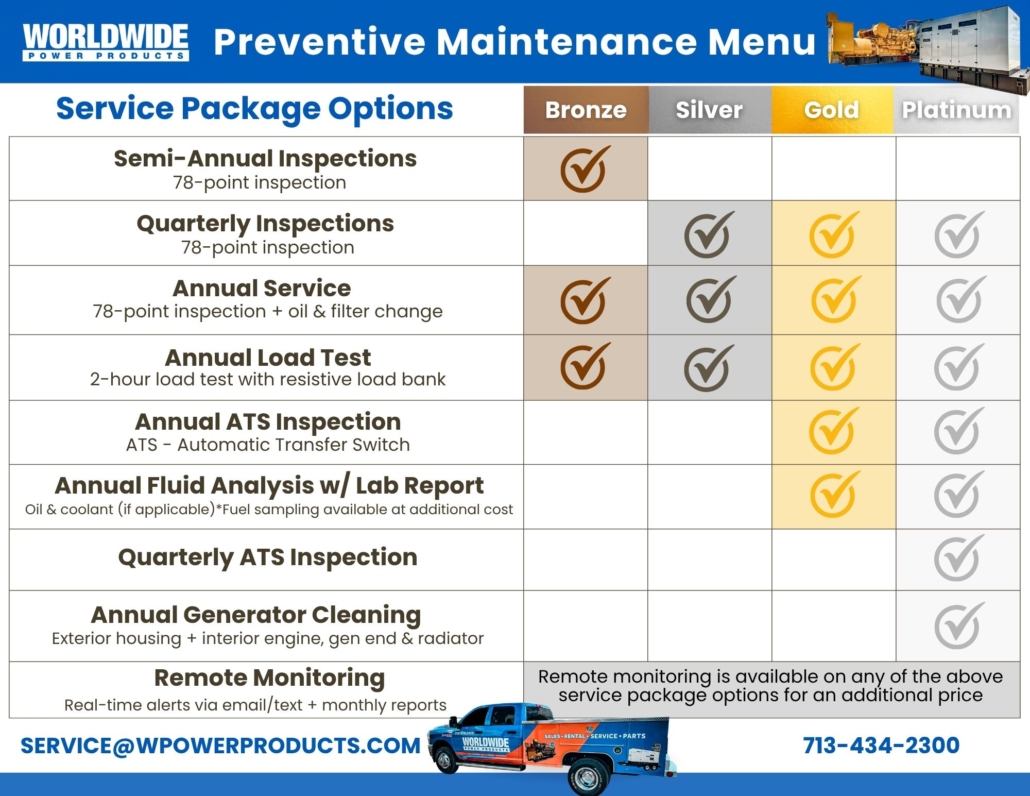
Credit: www.wpowerproducts.com
Mechanical Component Checks
Check the engine oil levelusing the dipstick. Pull it out, wipe clean, and reinsert fully. Pull it out again to see the oil level. The oil should be between the minimumand maximum marks. If low, add the recommended oil type.
Inspect the coolant systemfor leaks or cracks. Make sure the coolant level is between the lowand full markson the reservoir. The coolant should be clear, not rusty or dirty. Check hoses for soft spots or damage.
Look at the air filter. A dirty or clogged filter reduces engine power. Tap it gently to remove dust or replace it if very dirty. Clean filters help the engine breathe better and run smoothly.
Testing And Operational Checks
Start the generator by turning the key or pressing the start button. Listen for any unusual sounds during startup. Allow the generator to run for a few minutes to reach stable operation. Check for smooth running without shaking or vibrations.
Load testing ensures the generator can handle power demand. Connect appliances or equipment to apply a load. Monitor the generator’s response under different load levels. Avoid overloading, which can cause damage.
| Gauge/Indicator | What to Check |
|---|---|
| Oil Pressure | Should be within normal range, not too low |
| Coolant Temperature | Must stay steady, no overheating |
| Voltage Output | Check for consistent and correct voltage |
| Frequency | Ensure stable frequency matching load needs |
Common Issues And Troubleshooting
Fuel problemsoften cause generators to stop working. Dirty fuel or water in fuel can block the system. Check fuel filters and replace if clogged. Use fresh fuel to avoid issues. Keep fuel tanks clean and sealed.
Battery failuresstop the generator from starting. Check battery terminals for corrosion or loose connections. Charge the battery fully and test voltage. Replace old or weak batteries to ensure reliable starts.
Overheating causesinclude low coolant or blocked air vents. Check coolant levels and top up if low. Clean air filters and remove dust or debris around vents. Ensure the generator is in a cool, ventilated area to prevent heat build-up.
Documentation And Maintenance Records
Keep all recordsof generator inspections and maintenance. These documents help track the performanceand issuesover time. Store records like:
- Dates of inspections and repairs
- Parts replaced
- Test results
- Fuel and oil checks
Clear and organized records make it easier to spot patternsor recurring problems. Also, these help technicians understand what work was done before.
Good documentation supports safetyand ensures the generator runs well when needed. Keep paper or digital copies safe and easy to find.

Credit: tikweld.com

Credit: www.youtube.com
Frequently Asked Questions
What Tools Are Needed For Generator Inspection?
Essential tools include a multimeter, flashlight, wrench, screwdriver, and cleaning supplies. These help check electrical and mechanical components efficiently.
How Often Should A Generator Be Inspected?
Inspect generators every 6 months or after 100 hours of use. Regular checks ensure reliability and prevent unexpected failures.
What Are Common Generator Inspection Steps?
Check fuel, oil, battery, connections, filters, and running sound. These steps identify issues early and maintain optimal performance.
Can I Perform Generator Inspection Myself?
Yes, basic inspection tasks can be done safely by owners. For complex issues, consult a professional technician for repairs.
Conclusion
Regular generator inspections keep your machine running well. Check oil, fuel, and air filters often. Look for leaks, cracks, or loose parts. Clean dirt and debris from the generator. Test the battery and electrical connections too. These steps help avoid sudden breakdowns and costly repairs.
Stay safe by inspecting your generator carefully. A little effort now saves big problems later. Keep your power reliable and ready whenever you need it. Simple checks make a big difference.