
Are you tired of the constant worry about whether your RV appliances are getting the power they need? Choosing the right extension cord for your RV appliances can make a world of difference in ensuring everything runs smoothly on your adventures.
Imagine setting up camp with confidence, knowing you’ve got the ideal extension cord to power your appliances safely and efficiently. In this guide, we’ll simplify the process, helping you understand exactly what to look for when selecting an extension cord that meets your RV needs.
Let’s make sure you’re never left in the dark again. Read on to discover the essential tips that will transform the way you power your RV appliances.
Choosing The Right Cord Length
Choosing the right cord lengthis important for safety and convenience. Too long a cord can cause voltage drop, which may harm your RV appliances. Too short a cord may limit your setup options and cause strain on the cord or outlets.
Consider your travel needsand how far your RV will be from power sources. Measure the distance and add a little extra for flexibility. Avoid cords that are much longer than necessary to keep things safe and tidy.
- Short cords:Easier to handle but may not reach power.
- Long cords:Offer flexibility but risk voltage drop.
- Moderate length:Best balance for most setups.
Understanding Cord Gauge
Cord gaugemeans the thickness of the wire inside the extension cord. Lower numbers mean thicker wires. Thicker wires carry more power safely.
Appliances in an RV need different power amounts. Use a thicker cord for high-power devices like air conditioners or microwaves. Thin cords can overheat and cause fires.
| Appliance Power (Watts) | Recommended Gauge |
|---|---|
| Up to 1500 | 14 or 16 gauge |
| 1500 to 3000 | 12 gauge |
| 3000 and above | 10 gauge or thicker |
Using the wrong gauge can cause overheating. This is dangerousand can damage your RV or start fires. Always choose the right gauge for safe power use.
Checking Amperage Ratings
To check the amperage rating, first find the amps each appliance needs. This is usually on a label or in the manual. Add the amps of all appliances you plan to run at the same time. This sum is the total load.
Choose an extension cord with an amp ratinghigher than the total load. This keeps the cord from overheating and avoids damage. Cords with thicker wires can handle more amps.
- Use the cord’s gauge number to find its capacity. Lower gauge means thicker wire.
- For example, a 12-gauge cord can handle more amps than a 16-gauge cord.
- Always pick a cord that is rated higher than your total load for safety.
Credit: www.homehardware.ca
Selecting Suitable Cord Types
Outdoor cordshave thick insulation to protect against rain and sun. They are made with durable materialsfor rough use. Indoor cords are lighter and not made for wet or harsh conditions.
Choose weather-resistant cordsto avoid electric shocks and damage. Look for cords with rubber or plastic coatings. These stop water from entering and keep the cord safe.
| Cord Type | Use | Key Feature |
|---|---|---|
| Outdoor Cord | Outside RV, wet areas | Waterproof, thick insulation |
| Indoor Cord | Inside RV, dry areas | Lighter, less insulation |
Examining Plug And Connector Types
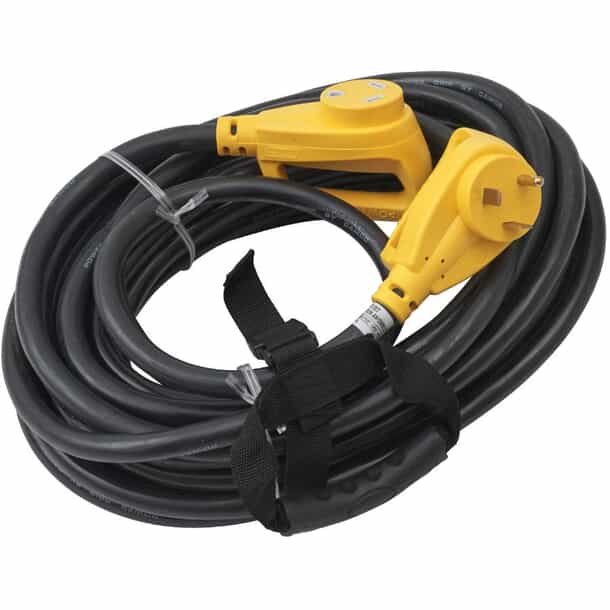
RV outlets often use different plug types. Common ones include TT-30and 15-ampor 30-ampconnectors. Check your RV outlet to choose the right extension cord.
Extension cords must fit securelyinto the RV outlet. Loose plugs can cause electric shocksor damage. Match the plug shape and size carefully.
| Connector Type | Common Use | Voltage | Amperage |
|---|---|---|---|
| TT-30 | Small RVs | 120V | 30A |
| 15-amp | Household appliances | 120V | 15A |
| 30-amp | Larger RVs | 120V | 30A |
Grounding is very important. It protects from electric shocks. Use cords with a third prongfor grounding.
Look for cords with safety featureslike thick insulationand weather resistance. These features help avoid electric hazards outdoors.

Credit: www.amazon.com
Avoiding Common Hazards
Preventing overheatingis key when choosing an extension cord for RV appliances. Select cords with a thicker gaugeto handle the appliance’s power needs. Using a cord with too small a gauge can cause heat buildup, leading to fire risks. Always check the amp ratingon the cord and match it to the appliance’s requirements. Avoid coiling cords during use, as this traps heat. Uncoil the cord fully to allow proper airflow. Make sure the cord is UL listedor certified for safety.
Protecting against physical damagekeeps the cord safe and extends its life. Use cords with durable outer jacketsto resist cuts, abrasions, and moisture. Avoid placing cords where they can be stepped on or crushed. Use cord covers or mats if running across walkways. Store cords properly by coiling gently without sharp bends. Inspect cords regularly for cracks or frayed wires. Replace damaged cords immediately to prevent shocks or fires.
Maintenance And Inspection Tips
Check the extension cord regularlyfor cuts, cracks, or worn spots. Damaged cords can cause electrical shocksor fires. Make sure the plug and connectors are clean and tight. Keep an eye out for frayed wiresor exposed metal. Replace any cord that shows these signs immediately.
Store the cord in a dry, cool placeaway from direct sunlight. Avoid sharp bends or kinks to prevent damage. Coil the cord loosely to stop tanglesand knots. Use a cord reelor strap to keep it neat. Proper storage helps the cord last longer and stay safe.
Additional Safety Precautions
Surge protectorsguard your RV appliances from power spikes. They help stop damage caused by sudden voltage changes. Using a surge protector adds an important layer of safety. It protects both your equipment and your RV’s electrical system.
Place the extension cord carefully to avoid accidents. Keep cords away from walkways to prevent tripping. Avoid sharp bends or pinching, which can damage the cord. Protect cords from water and heat sources to keep them safe.

Credit: www.campingworld.com
Frequently Asked Questions
What Gauge Extension Cord Is Best For Rv Appliances?
A 10 or 12 gauge extension cord is ideal for most RV appliances. Thicker wires reduce voltage drop and prevent overheating. Always check your appliance’s amperage and match the cord gauge accordingly for safety and efficiency.
How Long Can An Rv Extension Cord Be Safely?
Extension cords up to 25 feet are generally safe for RV use. Longer cords can cause voltage drops and power loss. Choose the shortest length that reaches your power source to maintain appliance performance and prevent overheating.
Can I Use A Regular Extension Cord For Rv Appliances?
No, regular extension cords are not recommended. RV cords are designed for higher amperage and outdoor use. Using the wrong cord can cause overheating and electrical hazards. Always use cords labeled for RV or heavy-duty outdoor use.
How To Determine The Right Amperage For Rv Extension Cords?
Check your RV appliances’ total amperage rating. Choose an extension cord that supports at least that amperage. Using a cord with a lower rating can cause overheating and damage. Always prioritize cords with higher amperage capacity for safety.
Conclusion
Choosing the right extension cord keeps your RV appliances safe and working well. Check the cord’s length, gauge, and power rating before buying. Use cords designed for outdoor and RV use only. Avoid cords that are too thin or too long for your appliance.
A good cord helps prevent electrical problems and saves you money. Take your time to pick the best cord for your needs. Stay safe and enjoy your RV trips with the right extension cord.