Have you ever faced a power outage while camping in your RV? Or perhaps you’re planning a trip and want to ensure everything runs smoothly?
Selecting the right generator extension cord for your RV is crucial for maintaining a seamless power supply. The wrong choice could lead to voltage drops or even damage your appliances. But don’t worry, you’re not alone in this! In this guide, you’ll discover how to choose the perfect generator extension cord tailored to your RV needs.
With the right cord, you’ll enjoy your adventures without a hitch. Keep reading to ensure you’re fully equipped for your next journey.

Credit: www.amazon.ca
Types Of Generator Extension Cords
Standard cordsare lighter and good for small loads. Heavy-duty cordshandle more power and last longer. Choose based on your RV’s power needs.
Cord materialsaffect durability. Rubbercords resist weather and are flexible. Vinylis cheaper but less durable. Pick a material that fits your camping style.
| Length | Best Use | Notes |
|---|---|---|
| 15-25 feet | Close generator setup | Less voltage drop, easy handling |
| 25-50 feet | Moderate distance | Balance of reach and power |
| 50+ feet | Long distance | May need thicker wire to avoid power loss |

Credit: www.amazon.ca
Key Features To Consider
Ampacityshows how much current a cord can carry safely. Always pick a cord with an amp rating that matches or exceeds your generator’s output. Power ratingsensure the cord handles your RV’s total wattage without overheating.
Wire gaugemeans the thickness of the wire inside the cord. Smaller gauge numbers mean thicker wires. Thicker wires carry more power and reduce voltage drop. For most RVs, 10 or 12 gauge cords work best.
Check your generator and RV plugs. Choose cords with matching plug and connector typesto avoid compatibility issues. Common types include TT-30, L14-30, and 30-amp connectors.
Weather resistanceis key for outdoor use. Look for cords with durable, water-resistant jackets. Safety features like grounding and circuit breakers protect you and your equipment.
Matching Cord To Generator And Rv
Check the generator’s outputbefore selecting the extension cord. The cord must handle the maximum wattageyour generator produces. Using a cord with too low a rating can cause overheatingand damage.
Know your RV’s power needs. Add the wattage of all devices and appliances you plan to run. This total helps pick a cord with the right capacity.
Use a cord with a higher rating than your RV’s needs. This prevents overload risksand ensures safe power transfer. A cord too thin can cause voltage dropsand fire hazards.
| Factor | What to Check | Why It Matters |
|---|---|---|
| Generator Output | Max wattage and voltage | Prevents cord overheating and damage |
| RV Power Needs | Total wattage of devices | Ensures cord can handle load |
| Cord Rating | Choose cord with higher rating | Avoids overload and voltage drops |
Safety Tips For Using Extension Cords
Place extension cordswhere people won’t trip over them. Avoid running cords under rugs or mats to prevent heat build-up. Keep cords away from sharp edges and wet areas to stop damage and shocks.
- Check cords often for cracks or frays.
- Do not bend or twist cords tightly.
- Store cords properly to avoid wear.
Use grounded extension cordswith three prongs for safety. Connect cords to a surge protector to guard against power spikes. Make sure the generator and all devices are properly grounded to avoid electric shock.
Maintenance And Storage
Keep the extension cord clean to avoid damage and poor connection. Wipe it with a dry cloth to remove dirt and dust. Check for cuts, cracks, or worn parts regularly. Look closely at plugs and sockets for signs of rust or damage.
Store the cord in a cool, dry place away from sunlight. Coil it loosely to stop kinks and tangles. Avoid sharp bends or heavy objects on top. Use a bag or box to protect from moisture and pests.
Replace cords that have any visible damage or do not work properly. Old cords can cause shorts or fires. It is safer to buy a new cord than fix broken parts.
Top Brands And Models
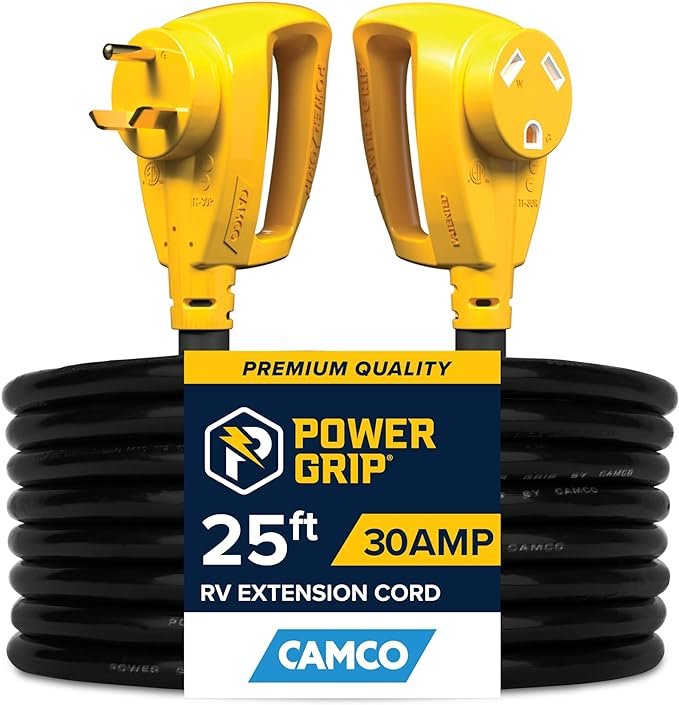
Many RV owners trust brands like Camco, Iron Forge Cable, and Southwire. These brands offer cords that are strong and safe. Popular models include Camco 55191 and Iron Forge 25ft 30 Amp.
Budget-friendly options still provide good quality. They often have shorter lengths and simpler designs. These cords suit basic RV power needs and lighter use.
- Camco 55191: Affordable and reliable for short trips.
- Iron Forge 25ft: Good balance of price and quality.
Premium cords have thicker wires and better insulation. They last longer and handle high power loads safely. Great for frequent RV users or harsh weather.
| Brand | Model | Features | Best For |
|---|---|---|---|
| Camco | 55191 | 25 ft, 30 Amp, Weather Resistant | Budget-Friendly, Short Trips |
| Iron Forge Cable | 25ft 30 Amp | Heavy Duty, Flexible, Durable | All-Purpose Use |
| Southwire | 50ft 30 Amp | Thick Wire, High Performance | Long Trips, Heavy Use |

Credit: www.vevor.ca
Frequently Asked Questions
What Length Extension Cord Is Best For Rv Generators?
Choose an extension cord length that reaches your RV safely without excess slack. Typically, 25 to 50 feet works well. Longer cords can cause voltage drops and reduce generator efficiency. Always measure the distance before buying to ensure optimal power delivery and safety.
What Gauge Extension Cord Should I Use For My Rv?
Use a heavy-duty extension cord with a lower gauge number for RV generators. A 10 or 12 gauge cord is ideal. Thicker wires handle higher power loads and prevent overheating. Check your generator’s wattage to match the cord gauge properly.
Can I Use A Regular Outdoor Extension Cord For My Rv?
No, regular outdoor cords often lack sufficient gauge and insulation. RV extension cords must handle high wattage and outdoor conditions. Use cords specifically rated for generators and RVs to ensure safety and prevent damage to your equipment.
How Do I Check If My Extension Cord Is Compatible With My Generator?
Verify the cord’s gauge and amperage rating matches your generator’s output. Check plug type compatibility as well. Using incompatible cords can cause power loss or hazards. Always refer to your generator’s manual for recommended extension cord specifications.
Conclusion
Choosing the right generator extension cord keeps your RV safe and powered. Check the cord’s length and thickness to match your generator’s power. Always pick a cord with the correct wattage rating. Avoid cords that are too thin or too short.
This prevents overheating and power loss. Remember, a good cord helps your RV run smoothly. Stay safe and enjoy your travels with the right extension cord.