
Imagine you’re in the middle of a crucial task, and suddenly, the power goes out. It’s frustrating, isn’t it?
That’s where a generator comes in handy, but to get the most out of it, you need the right extension cord. Choosing a heavy-duty generator extension cord might seem like a simple decision, but it’s crucial for ensuring safety and efficiency.
You want to make sure you’re getting the maximum power without risking any damage. This guide will help you navigate the options and pick the perfect cord for your needs. Stay with us, and you’ll learn how to make an informed choice that keeps your power flowing smoothly, no matter the situation.

Credit: www.amazon.com
Choosing The Right Cord Length
Measure the distance from the generator to your tools or appliances. Choose a cord slightly longer than this distance. This prevents stretching or pulling during use.
Long cords can cause voltage drop. This means less power reaches your device. To avoid this, use thicker wire cords for longer distances. Thicker wires carry power better.
| Distance (feet) | Recommended Wire Gauge |
|---|---|
| 0-50 | 12 gauge |
| 50-100 | 10 gauge |
| 100+ | 8 gauge |
Assessing Cord Gauge And Capacity
Wire gauge ratingsshow the thickness of the wire inside the cord. The smaller the number, the thicker the wire. Thicker wires carry more current safely. For heavy-duty generators, cords with 12-gaugeor lower numbers are best.
Matching the cord’s capacity to the generator’s output is key. Check the generator’s power in watts or amps. Choose a cord that can handle at least that much power. Using a cord with too low capacity can cause overheating or power loss.
| Wire Gauge | Max Amps | Use Case |
|---|---|---|
| 10 AWG | 30 | Heavy-duty tools, large generators |
| 12 AWG | 20 | Medium power generators, household tools |
| 14 AWG | 15 | Light tools, small generators |
Selecting Durable Materials
Weather-resistant jacketsprotect cords from rain, sun, and snow. Look for materials like rubber, PVC, or thermoplasticfor strong outer layers. These materials stop water and dirt from damaging wires inside. A thick jacket also guards against cuts and scrapes. This helps the cord last longer outdoors.
Heavy-duty plugs and connectorsshould fit tightly and not wiggle. Choose plugs made from durable materials like molded rubber or hard plastic. These resist cracking and breaking. Connectors with extra insulationprevent electric shocks. Some have locking featuresto keep cords connected securely. This is important for safety and stable power flow.
Considering Safety Certifications
Extension cords with UL (Underwriters Laboratories)and CSA (Canadian Standards Association)marks show they meet safety rules. These marks mean the cords are tested for qualityand safe use. Always choose cords with these labels to avoid risks.
Grounding helps stop electric shocks. It sends extra electricity safely into the earth. Cords with a third prongare grounded. This is very important for heavy-duty generators.
Circuit protection stops wires from overheatingor catching fire. Look for cords with built-in circuit breakersor fuses. These features help keep your home and tools safe.
Evaluating Connector Types
Choosing the right connector typeensures safe and efficient power transfer. Match the generator plugwith the device plug to avoid damage or poor connection. Plugs must fit securely and snugly.
Locking connectorstwist and lock into place. They offer a stronger holdand prevent accidental unplugging. Ideal for outdoor or moving equipment.
Standard connectorssimply plug in without twisting. They are easier to connect but can come loose more easily. Suitable for stationary setups.
| Connector Type | Feature | Best Use |
|---|---|---|
| Locking | Twist to lock, secure hold | Outdoor, moving devices |
| Standard | Plug in, no locking | Indoor, stationary devices |
Inspecting Flexibility And Storage
Cord flexibilityis key for easy use and safety. Choose cords that bend easily without cracking. Flexible cords prevent damage during setup and use. Stiff cords are hard to handle and may break faster.
For proper storage, keep cords coiled loosely. Avoid tight loops or sharp bends that damage wires. Store cords in a dry, cool place to stop wear and tear. Use hooks or reels to prevent tangling and kinks.
- Pick cords that flex smoothly
- Coil cords without tight bends
- Keep cords away from moisture and heat
- Use storage hooks or reels for neatness
Budgeting For Quality And Longevity
Balancing cost and performanceis key when choosing extension cords. Low-cost cords may seem good, but they often wear out fast. This can lead to safety risks and extra spending later. Quality cords last longer and handle heavy power loads better.
Investing in reliable brandsensures safety and durability. Known brands test their products for quality. They use better materials and follow safety rules. This means fewer problems and a safer work environment. Spending a bit more upfront saves money and stress over time.
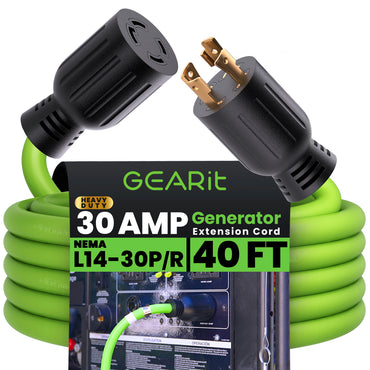
Credit: www.gearit.com

Credit: www.amazon.com
Frequently Asked Questions
What Gauge Extension Cord Is Best For Heavy-duty Generators?
A lower gauge number indicates a thicker wire. For heavy-duty generators, use 10 or 12 gauge cords. They handle higher amperage safely and reduce voltage drop. Always check your generator’s power output before choosing the gauge.
How Long Should A Generator Extension Cord Be?
Keep the cord as short as possible to avoid power loss. Ideally, use cords up to 50 feet. Longer cords can cause voltage drops and affect performance. Choose a length that balances reach and efficiency.
Can I Use Indoor Extension Cords With Generators?
No, indoor extension cords are not suitable for generators. Heavy-duty outdoor cords have better insulation and weather resistance. Using indoor cords risks overheating and fire hazards. Always select cords rated for outdoor and generator use.
What Connectors Are Compatible With Generator Extension Cords?
Match the cord connectors with your generator’s outlets. Common types include twist-lock and standard three-prong plugs. Check the voltage and amperage ratings to ensure compatibility. Proper connectors ensure safe and reliable power transfer.
Conclusion
Choosing the right heavy-duty generator extension cord matters a lot. It keeps your devices safe and working well. Check the cord’s length, thickness, and power rating carefully. Pick one that matches your generator and tools. Don’t forget to inspect the cord for damage before use.
A good extension cord makes your work easier and safer. Take your time to select the best fit. Your equipment will thank you with better performance and safety. Simple steps lead to smart choices.