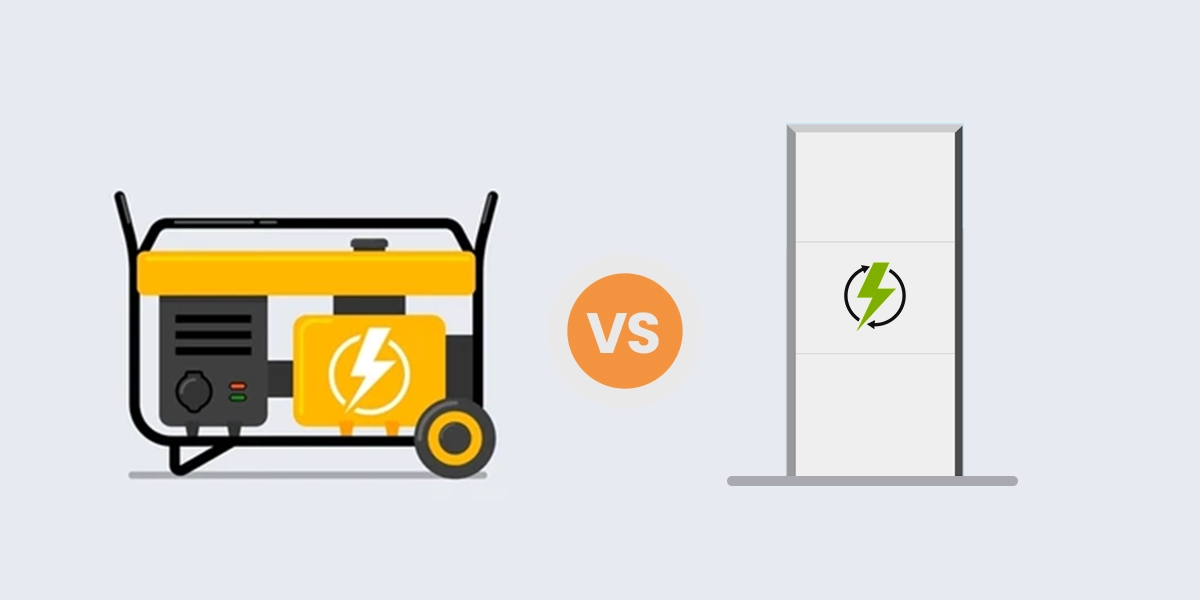
Are you tired of unexpected power outages or high fuel costs? Choosing between a solar system and a generator can feel confusing.
You want a reliable, cost-effective solution that fits your lifestyle and budget. But which one truly delivers the best value for your home or business? Keep reading to discover the surprising benefits and drawbacks of solar power versus generators—so you can make the smartest choice for your energy needs.
Your comfort and savings depend on it.
Credit: solarsme.com
Solar Power Basics
Solar panels change sunlight into electricity using special cells called photovoltaic cells. These cells catch sunlight and make direct current (DC) electricity. Then, an inverter changes DC into alternating current (AC), which homes use for power.
| Type of Solar System | Description |
|---|---|
| Grid-Tied | Connected to the electric grid; no battery needed. |
| Off-Grid | Independent system; uses batteries to store energy. |
| Hybrid | Works with grid and batteries for backup power. |
- Lead-Acid Batteries:Common and affordable, but heavy and need maintenance.
- Lithium-Ion Batteries:Light, last longer, and charge faster.
- Flow Batteries:Large capacity and long life, but expensive.
- Thermal Storage:Stores heat from the sun for later use.

Credit: www.tycorun.com
Generator Essentials
Generators create power by burning fuel. A motor inside spins to make electricity. This process can run many devices during power cuts.
| Fuel Type | Efficiency | Notes |
|---|---|---|
| Gasoline | Moderate | Easy to find, but burns fast and noisy |
| Diesel | High | More efficient, lasts longer, but smellier |
| Propane | Clean | Burns cleaner, quieter, but needs a tank |
- Portable generatorsare small and easy to move.
- Good for camping and short power needs.
- Standby generatorsstay fixed at home.
- Start automatically during outages.
- Better for long-term use and higher power needs.
Cost Comparison
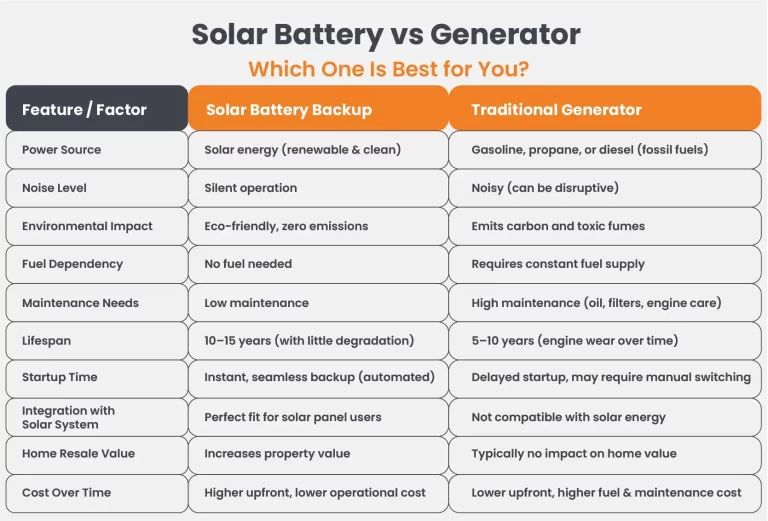
The initial investmentfor solar panels is usually higher than for generators. Solar systems need panels, batteries, and installation. Generators cost less to buy but need fuel.
Maintenance expensesare lower for solar. Solar panels need little care, mostly cleaning. Generators require regular fuel, oil changes, and repairs.
| Cost Type | Solar | Generator |
|---|---|---|
| Initial Investment | Higher (panels, batteries, setup) | Lower (purchase price) |
| Maintenance | Low (cleaning, minor checks) | High (fuel, oil, repairs) |
| Long-term Savings | Significant (free energy from sun) | Low (ongoing fuel costs) |
Solar can save money over time because sunlight is free. Generators cost money every time you buy fuel. This makes solar cheaper in the long run.

Credit: iallpowers.com
Environmental Impact
Solar powerproduces almost no carbon emissions. It uses sunlight, a clean and renewable source. Generators burn fuel, releasing carbon dioxideand other gases. This adds to air pollutionand climate change.
Generators make a lot of noise. They can disturb people and animals nearby. Solar panels work silently. This helps keep the environment peaceful.
- Solar energylasts long and uses no fuel.
- Generators need fuel, which may run out or be costly.
- Solar panels need little care and have long life spans.
- Generators need regular maintenance and parts replacement.
Reliability And Performance
Solar panels provide steady power without fuel, making them reliable over time. Generators deliver strong performance but depend on fuel and need regular maintenance. Choosing between them depends on your need for consistent energy or quick, powerful backup.
Power Availability
Generatorsprovide power anytime, day or night. They work well during power outages. Solar panels depend on sunlight. No sun means no power. This can be a big problemat night or on cloudy days.
Weather Dependence
Solar power works best on sunny days. Clouds, rain, or snow lower power output. Generators work any weather. They do not care about the weather outside.
Backup Capabilities
Generators offer instant backuppower during outages. Solar systems need batteries to store energy. Batteries can be expensiveand need time to charge. Generators are better for long outages.
Installation And Space Requirements
The setup processfor solar panels can take several days. Panels need to be fixed on the roof or ground. Electrical connections must be done carefully by experts. Generators are easier to install and can work quickly after setup.
Solar panels need more spacebecause they must catch sunlight. A large area is needed for enough power. Generators need less space but need fuel storage.
| Aspect | Solar Panels | Generators |
|---|---|---|
| Space Needed | Large area for panels | Small area for unit and fuel |
| Permits | Often require permits and inspections | May need fewer permits, depends on location |
| Regulations | Must follow local solar rules | Fuel storage and noise rules apply |
User Experience
Solar power systemsare very easy to use. Once set up, they need little attention daily. You just turn them on, and they work silently. Generators need more effort. You must fuel them and start manually each time.
Maintenancefor solar panels is low. Cleaning panels a few times a year is enough. Generators need regular oil changes, filter checks, and parts replacement. This means more time and money.
| Aspect | Solar Power | Generator |
|---|---|---|
| Ease of Use | Simple, automatic operation | Manual start and refuel needed |
| Maintenance Needs | Low; occasional cleaning | High; oil changes and repairs |
| Safety Considerations | No fuel or fumes; safe indoors | Fuel risks; must be outdoors |
Solar energy has no fuel or exhaust fumes. It is safer inside homes. Generators produce smoke and can cause fire hazards. They must be used outside and away from windows.
Best Use Cases
Home Applications:Solar panels provide clean energy to power lights, fans, and small appliances. Generators work well during power cuts but need fuel and make noise. Solar is quiet and saves money over time. Generators give quick power but can be costly.
Outdoor Activities:Portable solar chargers are great for camping and hiking. They charge phones and small devices using sunlight. Generators can power bigger equipment but are heavy and noisy. Solar is better for quiet, light trips. Generators suit longer stays with more power needs.
Emergency Situations:Generators supply strong power fast for homes or hospitals. They need fuel, which may run out. Solar systems work during long outages if the sun shines. Batteries store solar energy for night use. Solar is good for long-term help. Generators fit short, strong power needs.
Frequently Asked Questions
Is Solar Energy Cheaper Than Generators Long-term?
Solar energy has lower long-term costs due to free sunlight and low maintenance. Generators require fuel and regular upkeep, increasing expenses over time. Solar panels offer a one-time investment with savings, making them more cost-effective in the long run.
How Reliable Is Solar Power Compared To Generators?
Solar power depends on sunlight, which can be inconsistent during cloudy days or nights. Generators provide continuous power as long as fuel is available. However, solar systems with batteries can store energy to ensure reliable power backup.
Are Solar Panels Environmentally Friendlier Than Generators?
Yes, solar panels produce clean energy without emissions. Generators burn fuel, releasing harmful pollutants and greenhouse gases. Using solar reduces your carbon footprint and supports sustainable energy use, benefiting the environment significantly.
Can Solar Power Run Heavy Appliances Like Generators?
Solar power can run heavy appliances if the system is sized correctly. Large solar setups with sufficient batteries handle high energy demands. Generators provide instant power for heavy loads but consume fuel and produce noise.
Conclusion
Choosing between solar power and generators depends on your needs. Solar offers clean, renewable energy. Generators provide quick power but emit pollution. Solar systems require higher initial costs. Generators are cheaper upfront but cost more to run. Maintenance for solar is low compared to generators.
Consider your budget and environmental impact. Solar fits well for long-term savings. Generators work well for immediate and temporary needs. Each option has benefits and drawbacks. Weigh them carefully to decide. Think about future energy needs and sustainability. Make the choice that suits your lifestyle best.