Have you ever wondered how the sunlight hitting your solar panels turns into electricity for your home? Is that power created as AC or DC?
Understanding this can help you make smarter choices about your energy use and save money. You’ll discover the simple truth about how solar power is generated and what it means for your daily life. Keep reading—you’ll be surprised at how easy it is to grasp and how it can change the way you think about energy.

Credit: powerfullygreen.com
Basics Of Solar Power
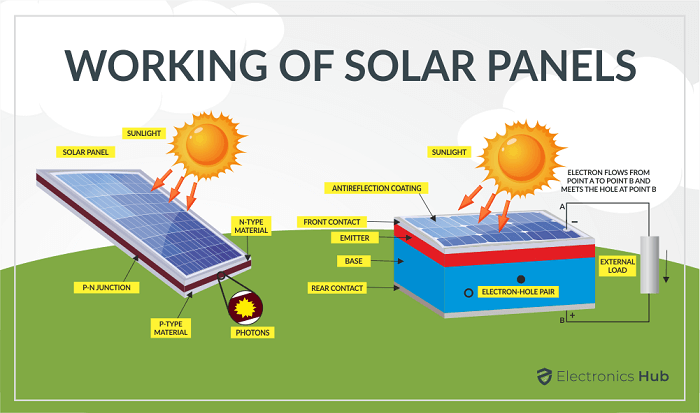
Solar panels convert sunlight into electricity using special materials called semiconductors. These semiconductors absorb sunlight and release tiny particles known as electrons. This flow of electrons creates direct current (DC) electricity. DC electricity means the electric charge flows in one direction only.
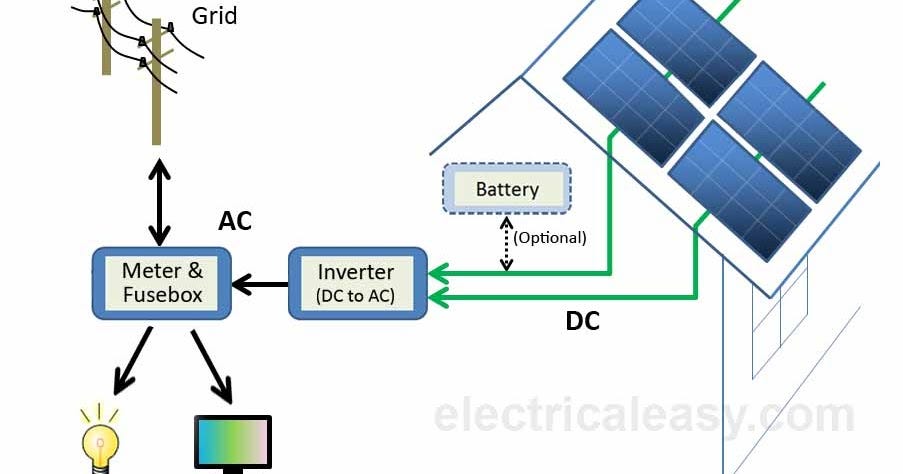
Most homes and devices use alternating current (AC) electricity. AC changes direction many times per second. To use solar power in homes, an inverterchanges DC into AC. This way, solar energy powers your lights, TV, and other appliances.
Direct Current In Solar Panels
Solar panels create Direct Current (DC) electricityby converting sunlight. Inside each panel, sunlight hits silicon cells and makes electrons move in one direction. This flow of electrons forms DC power. The power is then ready to be used or changed to AC.
DC power has some clear characteristics:
- Electricity flows in a single, steady direction.
- Voltage stays constantover time.
- It works well with batteries and electronics that need steady power.
- It is not directly usablefor most home appliances without conversion.
Role Of Inverters
Solar panels produce direct current (DC)electricity. Most homes and devices use alternating current (AC). Inverters play a key roleby changing DC to AC power. This makes solar energy usable for everyday appliances and the power grid.
Different types of inverters serve various needs. They vary by size, function, and efficiency.
| Type of Inverter | Description |
|---|---|
| String Inverter | Common for home solar systems. Converts DC from many panels at once. |
| Microinverter | Attached to each panel. Converts DC to AC individually. |
| Hybrid Inverter | Works with solar panels and batteries. Manages energy storage. |
Why Ac Is Preferred For Homes
Most home appliancesrun on AC power. Using AC makes it easy to plug solar systems into these devices. Solar panels produce DC power. An inverter changes this DC into AC for home use. This conversion is essential for appliances to work properly.
Utility grids also use AC power. Homes connect to these grids to get or send electricity. Solar systems must match grid power type to work safely. This is why AC is preferred for homes with solar setups.
| Aspect | Why AC is Preferred |
|---|---|
| Compatibility with Appliances | Most home devices use AC power for normal function. |
| Grid Connection Requirements | Grid systems supply AC power, requiring solar inverters. |
Off-grid Solar Systems
Off-grid solar systems often use direct current (DC)power without converting it to alternating current (AC). Solar panels produce DC electricity, which can power many small devices directly. This avoids energy loss that happens during conversion to AC.
Battery storageis key for off-grid systems. Batteries store DC power for use when the sun is not shining. A charge controllerhelps manage the power flow, protecting the batteries from overcharging.
Power management tools keep energy use efficient. Some devices in homes work well on DC, which saves energy. Using DC directly is simpler and often more reliable for off-grid solar setups.
Credit: medium.com
Safety And Efficiency Factors
AC poweris easier to transport over long distances. It uses transformers to change voltage levels. This helps reduce energy loss during transmission. DC poweris more efficient for short distances and storage. It works well with batteries and solar panels.
Advantages of AC:
- Simple to convert voltage levels
- Works well with household devices
- Less expensive for grid use
Advantages of DC:
- Better for energy storage
- More efficient for electronics
- Directly produced by solar panels
Potential risks include electric shock and equipment damage. Mitigationinvolves using proper insulation and circuit breakers. Using quality componentsalso helps prevent failures. Regular maintenance ensures safety and efficiency.
Future Trends In Solar Power Conversion
Inverter technologyis getting better and smaller. New inverters work more efficiently. They convert DC solar powerto AC with less energy loss. This helps save money on electricity bills. Some inverters can also connect to the internet for easy monitoring.
Direct Current (DC) applicationsare growing in homes and businesses. Devices like LED lights and electric cars use DC power directly. This reduces the need to convert power back and forth, saving energy. Solar systems are starting to supply more DC power for these uses.
- Inverters now support smart grid connections.
- Better cooling systems make inverters last longer.
- DC power is used in battery storage systems.
- Solar panels can connect directly to DC appliances.

Credit: medium.com
Frequently Asked Questions
Is Solar Power Generated As Ac Or Dc?
Solar panels generate electricity as direct current (DC). This DC power is converted to alternating current (AC) using an inverter. AC is suitable for home use and grid connection because most appliances and power grids operate on AC.
Why Does Solar Power Need Conversion To Ac?
Solar panels produce DC electricity, which cannot power most home appliances directly. An inverter converts DC to AC, allowing compatibility with household devices and the electrical grid. This conversion ensures efficient and safe usage of solar energy in homes.
Can Solar Power Be Used Directly As Dc?
Solar power can be used directly as DC for specific applications like battery charging and DC appliances. However, most home and commercial uses require AC power, so an inverter is essential for broader solar power utilization.
What Role Does An Inverter Play In Solar Power Systems?
An inverter converts solar-generated DC electricity into AC electricity. It ensures the solar power matches the voltage and frequency of the electrical grid or home appliances, enabling efficient energy use and grid synchronization.
Conclusion
Solar power offers both AC and DC electricity. Solar panels create DC power. To use AC devices, an inverter is needed. This converts DC to AC. Homes and businesses often rely on AC. Understanding this helps in making informed energy choices.
Solar energy is clean and sustainable. It reduces electricity bills and environmental impact. Knowing about AC and DC can guide your solar decisions. Make sure to choose the right setup for your needs. Embrace solar for a brighter, greener future.