
Are you curious about how solar technology is evolving? If you’ve ever wondered about the advancements in solar cells, you’re not alone.
The world of solar energy is rapidly advancing, and understanding the different generations of solar cells can give you a peek into the future of renewable energy. Imagine harnessing the sun’s power more efficiently and cost-effectively. How does that sound?
With four distinct generations of solar cells currently in use or development, each brings unique innovations and possibilities. Dive into this exploration to discover which generation might be powering your home next and why it matters to your energy choices. Understanding these advancements could change how you think about energy and savings. Let’s unravel the mystery of solar generations together.
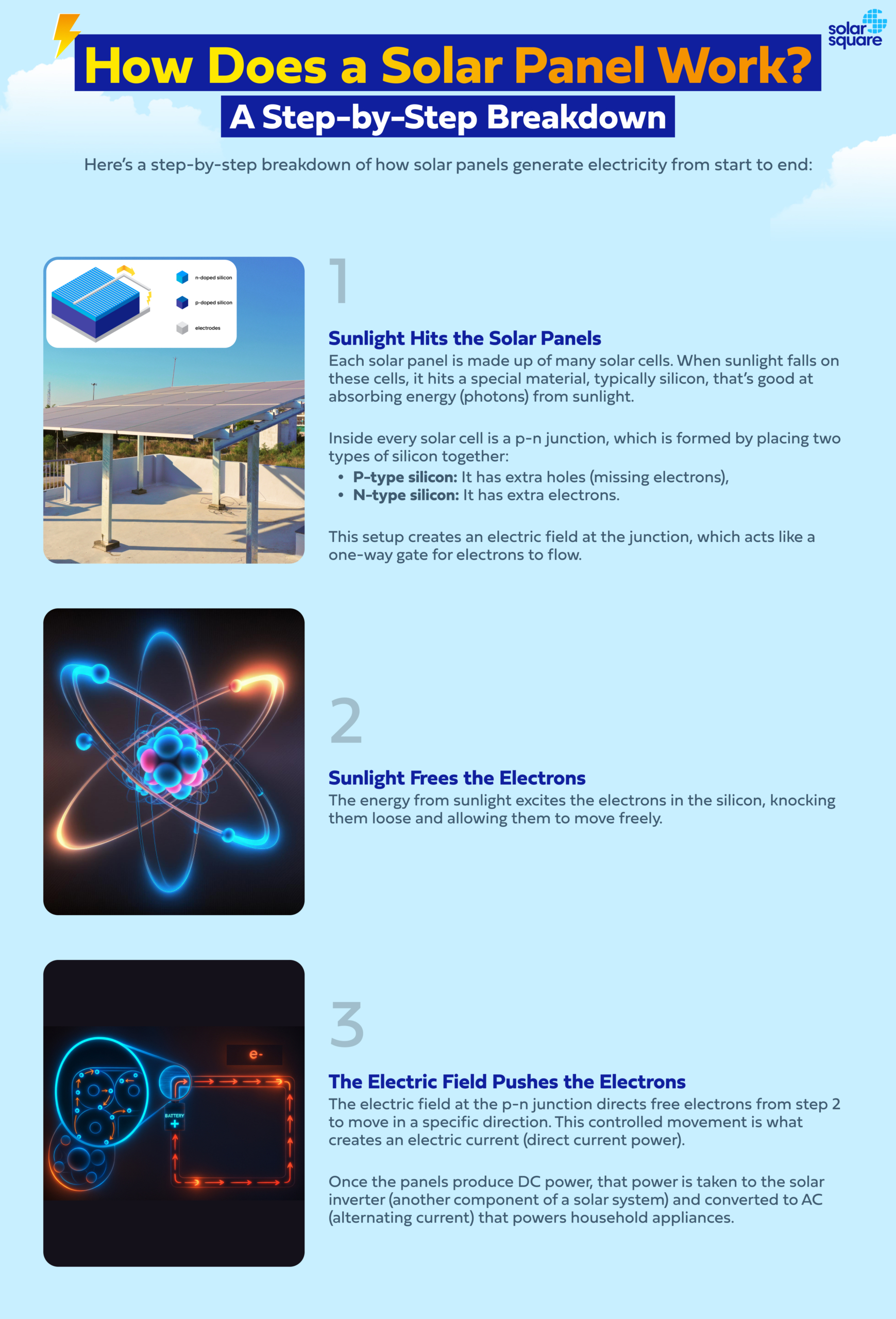
Credit: www.solarsquare.in
First Generation Solar Cells
First generation solar cells use silicon-based technology. These cells are mostly made from crystalline silicon, which is common and well-tested. They have high efficiency, usually between 15% and 20%. That means they convert sunlight to electricity fairly well.
Some limitationsinclude high production cost and rigid design. They are less flexible, which limits their use on curved surfaces. Also, their efficiency can drop in very hot conditions.
Common applications include:
- Residential rooftops
- Commercial buildings
- Solar farms
- Space satellites
Second Generation Solar Cells
Second generation solar cells use thin-film technology. This means the solar cells are made by depositing very thin layers of light-absorbing materials. These layers are much thinner than in first-generation cells, making them lighter and more flexible.
Materials usedin thin-film solar cells include cadmium telluride (CdTe), amorphous silicon (a-Si), and copper indium gallium selenide (CIGS). Each material has different costs and efficiencies.
| Material | Advantages | Challenges |
|---|---|---|
| CdTe | Low cost, good efficiency | Contains toxic cadmium |
| a-Si | Cheap, flexible | Lower efficiency, degrades faster |
| CIGS | High efficiency, lightweight | Complex manufacturing process |
Third Generation Solar Cells
Third generation solar cells aim to improve efficiency using new materials and technologies. They go beyond traditional silicon cells by capturing more sunlight. Some experts say there might be a fourth generation, blending flexibility with better performance.
Emerging Technologies
Third generation solar cellsfocus on new materials and designs. They aim to improve efficiencyand lower costs. These cells try to capture more sunlight than older types.
Multi-junction Cells
Multi-junction cells stack several layers of solar materials. Each layer catches different sunlight parts. This design can reach very high efficiency. They are used in special places like space.
Organic And Perovskite Cells
Organic cells use carbon-based materials. They are flexibleand cheap to make. Perovskite cells are made from a crystal structure that absorbs light well. Both types are still being tested for long-term use.

Credit: www.mdpi.com
Fourth Generation Solar Cells
Four generations of solar cells exist, each improving efficiency and materials. Fourth generation combines organic and inorganic parts for better performance. These cells aim to be cheaper and more flexible than earlier types.
Hybrid And Nanotechnology
Fourth generation solar cellscombine different materials to improve performance. They use hybrid materialslike polymers mixed with nanoparticles. Nanotechnologyhelps by making tiny structures that capture more sunlight. These cells are flexible and cheaper to produce. They can be used in many places where traditional solar cells can’t fit.
Improved Efficiency
This generation shows better energy conversion ratesthan older types. They can convert more sunlight into electricity using new designs. These cells work well even in low light or cloudy conditions. Their stabilityalso lasts longer, making them useful for everyday use.
Future Potential
- Possible to make solar power more affordable.
- Could lead to new, lightweight solar panels.
- May integrate into windows, clothes, and devices.
- Offers hope for cleaner, renewable energy worldwide.
Comparing The Generations
Efficiencyimproves with each new generation of solar cells. First-generation cells have efficiency around 15-20%. Second-generation cells reach about 20-25%. Third-generation cells aim for 30% or more. Fourth-generation cells are still experimental but promise even higher efficiency.
Cost and scalabilityvary widely. First-generation cells are expensive but reliable. Second-generation cells are cheaper and easier to produce. Third-generation cells may cost more due to advanced materials. Fourth-generation cells focus on low cost and flexible use.
| Generation | Efficiency | Cost | Scalability | Environmental Impact |
|---|---|---|---|---|
| First | 15-20% | High | Moderate | Uses toxic materials |
| Second | 20-25% | Lower | High | Less toxic, some waste |
| Third | 30%+ | Moderate to High | Growing | Mostly safe materials |
| Fourth | Potentially 30%+ | Low | Very High | Eco-friendly, sustainable |
Choosing The Right Solar Cell
Different solar cells suit different needs. Application-based selectionhelps find the right one. For example, some solar cells work best for portable devices. Others suit large power plantsor rooftops.
Budget considerationsare key. Basic solar cells cost less but may last shorter. Advanced cells cost more but give better output and durability.
Long-term performancematters for savings. Cells with higher efficiency produce more energy over time. Durability affects how often you replace or fix them.
| Factor | Low Cost Cells | High Performance Cells |
|---|---|---|
| Price | Affordable | Expensive |
| Efficiency | Lower | Higher |
| Durability | Moderate | Long-lasting |
| Best Use | Small scale or short term | Large scale or long term |

Credit: www.perovskite-info.com
Frequently Asked Questions
What Are The Four Current Generations Of Solar Cells?
The four generations of solar cells include first-generation silicon, second-generation thin-film, third-generation emerging technologies, and fourth-generation hybrid cells. Each generation offers different efficiency levels, costs, and material types, advancing solar energy technology progressively.
How Do First-generation Solar Cells Work?
First-generation solar cells are made from crystalline silicon. They convert sunlight directly into electricity using a p-n junction. These cells are highly efficient and widely used in residential and commercial solar panels.
What Materials Are Used In Second-generation Solar Cells?
Second-generation solar cells use thin-film materials like cadmium telluride (CdTe) and copper indium gallium selenide (CIGS). These materials allow flexible, lightweight panels that are cheaper but generally less efficient than first-generation cells.
Why Are Third-generation Solar Cells Important?
Third-generation solar cells focus on improving efficiency beyond traditional limits. They use advanced materials like perovskites and organic compounds. These cells aim to reduce costs and enhance performance for future solar technologies.
Conclusion
Solar cells have evolved through four main generations. Each generation offers unique benefits and challenges. New technology keeps improving solar energy use. Solar power becomes more affordable and efficient. People can choose the best solar cell for their needs. Understanding these generations helps in making smart energy decisions.
Solar energy will play a bigger role in the future. Clean energy is important for our planet’s health. Keep learning about solar technology to stay informed.