Imagine you’re planning a picnic. You check the weather forecast to see if it will be sunny or windy.
Now, think about how crucial accurate forecasts are for energy companies when they rely on nature’s elements to produce electricity. As we shift towards renewable energy, understanding the predictability of these sources becomes vital. You might be wondering, is it trickier to forecast wind-generated electricity compared to solar?
This question isn’t just for the experts; it affects you and your energy bills too. Dive into this topic to discover why forecasting wind might be more complex than solar and how it impacts your everyday life. Stay with us to uncover the surprising details and insights that could change how you think about renewable energy.

Credit: ourfiniteworld.com
Challenges In Wind Power Forecasting
Variable wind patternsmake predicting wind power hard. Wind speed and direction can change fast. This affects how much electricity turbines generate. Forecasts must adjust to these quick changes.
Topographyplays a big role. Hills, valleys, and mountains can block or speed up wind. This creates areas of strong or weak wind, making it tough to predict power output.
Turbulence and wake effectsadd more challenges. Turbines create turbulent air behind them, called wakes. These wakes reduce wind speed and cause unstable flow for turbines downwind. This lowers power and makes forecasts less accurate.
Solar Power Forecasting Factors
Sunlight variabilityaffects solar power forecasting greatly. Clouds can block sunlight suddenly. This makes it hard to predict how much power solar panels will produce. Bright days with clear skies give more steady energy output.
Cloud cover influencechanges solar power fast. Thick clouds reduce sunlight sharply. Thin clouds let some light through but still lower power. Cloud movement speed and density are key to forecasts.
Seasonal and daily cyclesalso impact solar energy. Days are longer in summer and shorter in winter. Sun angle changes with seasons. Solar panels get different sunlight amounts across the year. Daytime hours affect power too. Morning and evening light is less strong than midday sun.
Comparing Forecasting Techniques
Numerical Weather Prediction (NWP) modelsuse math and physics to predict weather. They need lots of data and computer power. Wind is harder to forecast because it changes fast and in small areas. Solar power is easier since sunlight is more steady and clear.
Machine learninghelps improve forecasts by learning from past data. It finds patterns in weather and energy output. Wind data is more complex, so machine learning models must be smarter. Solar data is simpler, making predictions easier and faster.
Satellite and ground data integrationcombines images from space and sensors on Earth. This mix gives a clearer weather picture. Wind forecasting needs more detailed data from different heights. Solar forecasting mostly uses sunlight and cloud cover info, which is easier to gather.

Credit: biomassproducer.com.au
Accuracy And Reliability Metrics
Error measurement methodshelp check how close forecasts are to real output. Common ways include Mean Absolute Error (MAE)and Root Mean Square Error (RMSE). These methods show the size of mistakes made by forecast models. Smaller errors mean better predictions.
Forecast horizon impactmeans the time between prediction and actual power generation. Short-term forecasts are usually more accurate than long-term ones. Wind power can be harder to predict for longer times due to sudden weather changes. Solar forecasts often rely on clear sky models, which work well but can miss clouds.
| Region | Wind Forecast Challenges | Solar Forecast Challenges |
|---|---|---|
| Coastal Areas | Strong gusts cause quick changes | Cloud cover changes fast |
| Mountainous Regions | Wind patterns are complex | Shadows and terrain affect sunlight |
| Plains | More stable but can have sudden storms | Generally stable sunlight, fewer clouds |
Grid Integration Challenges
Balancing supply and demand with wind energy is tricky. The wind changes fast. This makes it hard to predict how much power will be made. The electric grid must stay stable. Too much or too little power causes problems.
Reserve requirements mean extra power must be ready. This backup power helps if wind drops suddenly. Keeping reserves costs money and needs careful planning.
| Aspect | Challenge | Effect on Market |
|---|---|---|
| Balancing Supply | Wind speed varies quickly | Hard to match demand |
| Reserve Power | Extra power needed | Increases costs |
| Market Operations | Unpredictable output | Complicates trading and pricing |
Future Trends In Renewable Forecasting
Advanced sensor technologies help track weather changes more accurately. Sensors measure wind speed, direction, and solar radiation. This data gives clearer pictures of energy potential. Sensors placed in many locations improve forecasts.
Improved data analytics uses smart computer programs. These programs study large sets of weather data quickly. They find patterns to predict energy output better. This helps reduce errors in wind and solar forecasts.
Hybrid forecasting models combine many prediction methods. They mix weather data, sensor info, and machine learning. This blend creates stronger and more reliable energy forecasts. It helps balance the limits of each method alone.

Credit: www.energyconnects.com
Frequently Asked Questions
Is Wind Power Harder To Predict Than Solar Energy?
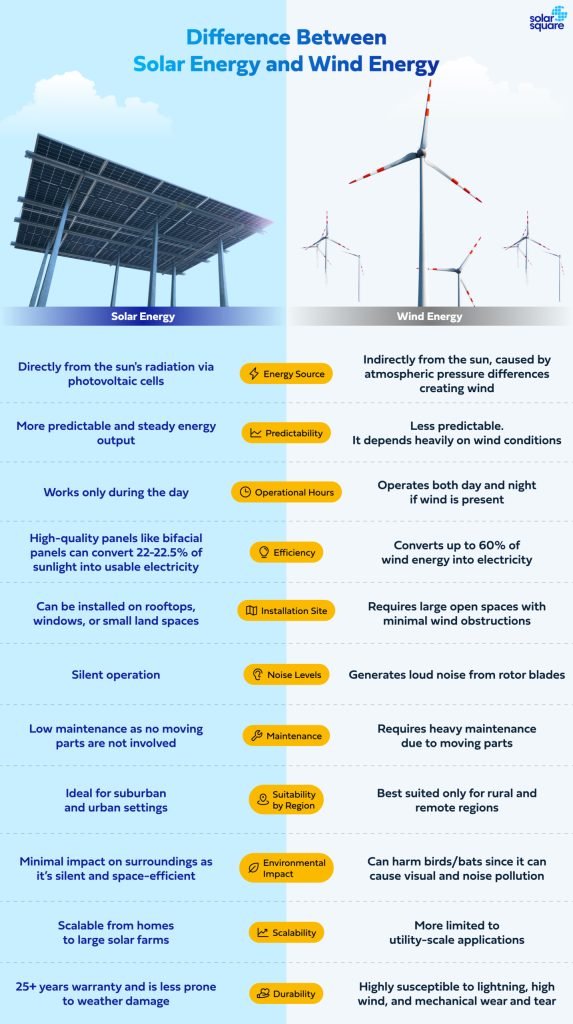
Yes, wind power is generally harder to forecast due to its variability. Wind speeds change rapidly and are influenced by complex weather patterns. Solar energy is more predictable because sunlight follows a daily and seasonal cycle. This makes solar output easier to estimate.
What Factors Make Wind Energy Forecasting Challenging?
Wind forecasting is affected by sudden gusts, turbulence, and local geography. These factors cause rapid changes in wind speed and direction. Accurate predictions require advanced models and real-time data. Solar forecasting mainly depends on cloud cover, which is more stable and easier to track.
How Accurate Are Current Wind Energy Forecasts?
Modern wind forecasts have improved but still vary between 70% to 90% accuracy. Short-term forecasts are more reliable than long-term ones. Accuracy depends on the quality of weather models and measurement tools. Solar forecasts typically achieve higher accuracy due to consistent sunlight patterns.
Does Solar Energy Forecasting Have Limitations?
Yes, solar forecasting can be affected by unexpected cloud cover and weather changes. However, these variations are usually less abrupt than wind changes. Satellite and ground sensors help improve solar prediction accuracy. Overall, solar forecasts tend to be more stable and reliable than wind.
Conclusion
Wind electricity is harder to predict than solar power. Wind changes quickly and in many ways. Solar energy depends mostly on sunlight, which is easier to estimate. Weather forecasts help, but wind remains less steady. Both types need good planning for the grid.
Understanding these differences helps improve energy use. Reliable forecasts support cleaner, smarter electricity choices. The future depends on balancing both sources well.