Have you ever wondered how old our solar system really is? Knowing its “generation” can change the way you see the planets, the sun, and even your place in the universe.
This isn’t just about numbers or dates—it’s about uncovering a story that stretches billions of years into the past. By understanding the age and origin of our solar system, you’ll gain a fresh perspective on everything from the stars above to the ground beneath your feet.
Keep reading, and you’ll discover surprising facts that make our cosmic neighborhood feel closer and more personal than ever before.
Credit: medium.com
Solar System Formation
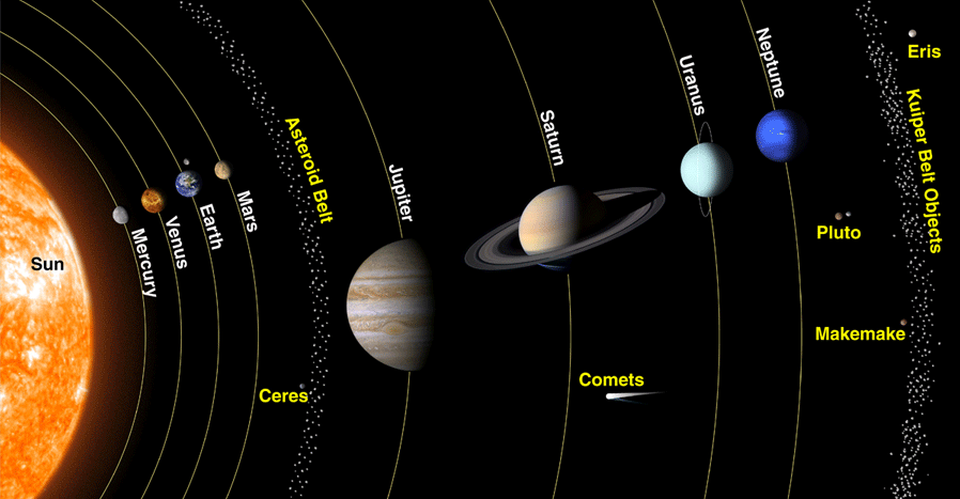
The Nebular Hypothesisexplains how our solar system was born. A big cloud of gas and dust in space started to shrink. Gravity pulled the cloud inward, making it spin faster. This spinning cloud formed a flat, round shape called a Protoplanetary Disk. The center of the disk became very hot and formed the Sun.
Inside the disk, tiny particles stuck together. These grew bigger by hitting and joining with other particles. Over millions of years, this process formed small rocks, called planetesimals. Some planetesimals grew larger and became planets. This is the Planet Formation Process. It shows how the planets in our solar system came to be.
Age Of The Solar System
Radiometric datinghelps scientists find the age of rocks and meteorites. It measures the decay of radioactive elements inside them. This method shows that the Solar System is about 4.6 billion years old.
Meteorites are pieces of rock from space that fell to Earth. They are very old and contain clues about the Solar System’s birth. Studying meteorites confirms the age found by radiometric dating.
| Method | Purpose | Age Estimate |
|---|---|---|
| Radiometric Dating | Measures decay of radioactive elements | 4.6 billion years |
| Meteorite Analysis | Studies ancient space rocks | 4.5 – 4.6 billion years |
| Sun’s Age Estimation | Calculates based on star models | About 4.6 billion years |
The Sun’s ageis found using models of how stars burn fuel. These models match the age of meteorites and rocks. All evidence agrees on the Solar System’s age.
Cosmic Generations Explained
The universe has different types of stars called Population I, II, and III stars. They show the age and makeup of the stars. Population III stars are the oldest and have almost no metals. Population II stars have some metals and are older than our Sun. Population I stars, like the Sun, have many metals and are the youngest.
Stellar nucleosynthesisis the process where stars make new elements. Stars fuse simple atoms like hydrogen into heavier elements like helium, carbon, and iron. This process creates the metals found in younger stars.
| Star Type | Age | Metallicity | Examples |
|---|---|---|---|
| Population III | Oldest | Almost none | First stars in the universe |
| Population II | Older | Low | Stars in globular clusters |
| Population I | Youngest | High | Our Sun, stars in the Milky Way disk |
Metallicitymeans the amount of elements heavier than helium in stars. Higher metallicity means younger stars. Our solar system belongs to Population I stars with high metallicity.

Credit: en.wikipedia.org
Solar System’s Generation
The solar systemis part of the third generationof star systems. This means it formed from gas and dust that had more metals than older stars. Metals are elements heavier than hydrogen and helium. These metals come from earlier stars that exploded and spread these elements.
Classification Based On Metal Content
Stars and systems are classified by their metal content. Older stars have fewer metals, called Population II. Younger stars, like our Sun, have more metals, called Population I. The solar system belongs to Population I.
Comparison With Other Star Systems
| Star Population | Metal Content | Age | Example |
|---|---|---|---|
| Population III | Very low | Oldest | First stars (no metals) |
| Population II | Low | Older | Many globular clusters |
| Population I | High | Youngest | Our Sun and solar system |
Implications For Planet Formation
Higher metal content helps form planets. Metals build rocky planets like Earth. Systems with more metals often have more planets. This metal richness helped our solar system form a variety of planets. Gas giants and rocky planets could form because of this.
Galactic Environment Impact
The Solar Systemis located in a quiet part of the Milky Way, called the Orion Arm. This spot is far from the crowded center of the galaxy. It helps protect the Solar System from many cosmic dangers.
Nearby supernovaecan impact the Solar System by sending shock waves and radiation. These blasts can affect the formation of planets and even life on Earth. Scientists study these explosions to understand their role in shaping our system.
The interstellar mediumis the space filled with gas and dust between stars. This material moves around and sometimes enters the Solar System. It can influence the Sun’s activity and the paths of comets and asteroids.
Future Research Directions
Advances in telescope technologyhelp us see far into space. New telescopes can spot faint stars and planets. They provide clearer images and better data. This helps scientists learn about our solar system’s past and future.
Sample return missionsbring pieces of asteroids and comets back to Earth. These samples tell us about the solar system’s materials. Studying them helps us understand how planets formed and changed over time.
Modeling cosmic evolutionuses computers to simulate how stars and planets grow. It shows how dust and gas form solar systems. These models help predict what might happen to our solar system in the future.
Credit: medium.com
Frequently Asked Questions
What Generation Does Our Solar System Belong To?
Our solar system belongs to the third generation of stars. It formed about 4. 6 billion years ago from a giant molecular cloud. This generation contains heavier elements created by previous star explosions, essential for planet formation.
How Old Is Our Solar System’s Generation?
Our solar system’s generation is approximately 4. 6 billion years old. It formed after earlier star generations enriched space with heavy elements. These materials helped create planets, moons, and other solar system bodies.
What Defines A Star System’s Generation?
A star system’s generation is defined by its elemental composition and age. Older generations have fewer heavy elements, while newer ones have more. Our solar system is a third-generation system, rich in elements from past supernovae.
Why Is Our Solar System A Third-generation System?
It’s a third-generation system because it formed from recycled star material. Previous stars produced heavy elements through supernova explosions. These elements combined to create planets and life-supporting conditions in our solar system.
Conclusion
Our solar system’s generation offers fascinating insights. It’s a second-generation system. Formed from remnants of older stars. This tells us about cosmic recycling. New stars and planets arise. Understanding our solar system’s place helps us learn more. It connects us to the universe’s history.
Future discoveries await. Scientists continue exploring. They seek answers to our solar system’s mysteries. Each discovery adds a piece to the puzzle. The journey of understanding never ends. Embrace the wonders of our cosmic neighborhood. Curiosity leads the way. Keep exploring and learning.
The universe holds endless stories.