
Are you tired of unexpected power outages disrupting your daily life? Or maybe you’re simply looking to cut down on those ever-increasing electricity bills.
Either way, you’re probably considering alternative energy solutions for your home. But with so many options out there, how do you decide which one is right for you? Two popular choices often come to mind: solar panels and generators. Each has its own set of benefits and drawbacks.
But which one truly stands out as the better option for your needs? By the end of this article, you’ll have a clear understanding of what makes solar and generators tick, helping you make an informed decision that aligns perfectly with your lifestyle and budget. Keep reading to discover the surprising truth about these power sources and how they can transform your energy consumption.

Credit: www.goodhousekeeping.com
Solar Energy Basics
Solar panels use sunlight to make electricity. They have small parts called photovoltaic cells. These cells catch sunlight and turn it into electric power. The power can run homes, lights, and small devices.
Solar systems come in different types:
- Grid-tied systemsconnect to the local power grid.
- Off-grid systemswork alone without a grid.
- Hybrid systemscombine solar with a generator or battery backup.
Storing solar energy is important for night or cloudy days. Here are common options:
| Storage Type | Description |
|---|---|
| Lead-acid batteries | Affordable but heavy and need more care. |
| Lithium-ion batteries | Light, last longer, cost more upfront. |
| Thermal storage | Stores heat energy for later use. |
Generator Fundamentals
Generators come in different typesbased on their use and design. Portable generators are small and easy to move. Standby generators are bigger and connect directly to your home. Inverter generators create clean power, good for sensitive devices.
Fuel sources for generators vary. They can run on gasoline, diesel, propane, or natural gas. Gasoline is common but less efficient for long use. Diesel is strong and lasts longer. Propane and natural gas burn cleaner and are good for standby use.
| Generator Type | Fuel Source | Power Output Range |
|---|---|---|
| Portable | Gasoline, Propane | 1,000 – 8,000 Watts |
| Standby | Diesel, Natural Gas, Propane | 7,000 – 20,000+ Watts |
| Inverter | Gasoline, Propane | 1,000 – 4,000 Watts |
Cost Comparison
Solar panelsusually have a higher initial costthan generators. Solar systems need more parts like panels, inverters, and batteries. Generators cost less upfront but need fuel to run.
Solar panels have very low maintenance costs. Rain cleans the panels, and they last many years. Generators need regular oil changes and fuel, which adds to costs over time.
| Cost Type | Solar | Generator |
|---|---|---|
| Initial Investment | High | Low |
| Operating Costs | Low (no fuel needed) | High (fuel and maintenance) |
| Long-Term Savings | Significant (no fuel) | Limited (fuel costs add up) |
Environmental Impact
Solar powerhas a very low carbon footprint. It uses sunlight, a clean and endless resource. Once solar panels are made, they do not release harmful gases. This helps reduce air pollutionand fight climate change.
Generatorsburn fuel like gas or diesel. This creates carbon emissionsand other pollutants. These gases harm the air and can cause health problems. Using generators adds to global warming.
Sustainabilityis key. Solar energy is renewable and does not run out. Solar panels last many years and need little care. Generators depend on fuel, which is limited and expensive. Fuel use also creates noise and waste.
| Aspect | Solar Power | Generator |
|---|---|---|
| Carbon Footprint | Very low | High |
| Pollution | None during use | Air and noise pollution |
| Fuel Source | Sunlight (renewable) | Gas or diesel (non-renewable) |
| Long-term Sustainability | High | Low |
Reliability And Performance
Power availabilityis key for both solar and generators. Solar panels work only during the day with sunlight. At night or on cloudy days, solar power drops. Generators can run anytime if they have fuel. This makes generators more reliable for constant power needs.
Solar power depends on the weather. Sunny days give the best energy. Rain, snow, or clouds reduce solar output. Generators do not care about weather and can work in any condition.
For backup and emergencies, generators provide quick and steady power. They start instantly when power goes out. Solar systems need batteries to store power for night use. Batteries can run out, limiting backup time.
Installation And Maintenance
Solar panel setup can be tricky and needs space on the roof or yard. Generators are easier to install. They just need a fuel source and a safe spot outside the house.
Solar systems need cleaning and checks for damage. Generators require regular oil changes and fuel refills. Both need some care to work well.
| Feature | Solar Panels | Generators |
|---|---|---|
| Lifespan | Usually 25 years or more | About 10 to 15 years |
| Durability | Resistant to weather, low wear | Can wear out faster due to moving parts |
Best Use Cases
Solar powerfits well for homes with good sunlight. It cuts electricity bills and needs little care. Solar panels work best for daily use and small appliances. Generators are handy during power cuts and can run many devices. They need fuel and more upkeep.
Businesses with steady power needs favor generators for quick energy. They keep machines running even during outages. Solar suits places where sunlight is strong and helps lower energy costs over time.
For remote spots, solar panels offer clean, quiet power without fuel. They are great for cabins or farms far from the grid. Generators serve well when solar power is low or backup is needed. They run on gas or diesel, which must be refilled.

Credit: www.youtube.com
Future Trends
Solar technologyis getting better with new panels that capture more sunlight. These panels work well even on cloudy days. Batteries for solar systems now store energy longer and charge faster. This makes solar power more reliable at night or during bad weather.
Generatorsare also improving. New models use less fuel and make less noise. Some run on cleaner fuels, which helps reduce pollution. These changes make generators easier and safer to use.
Smart grids help connect solar panels and generators to the power system. They manage energy use smartly to save money and reduce waste. Homes and businesses can share energy and stay powered during outages.
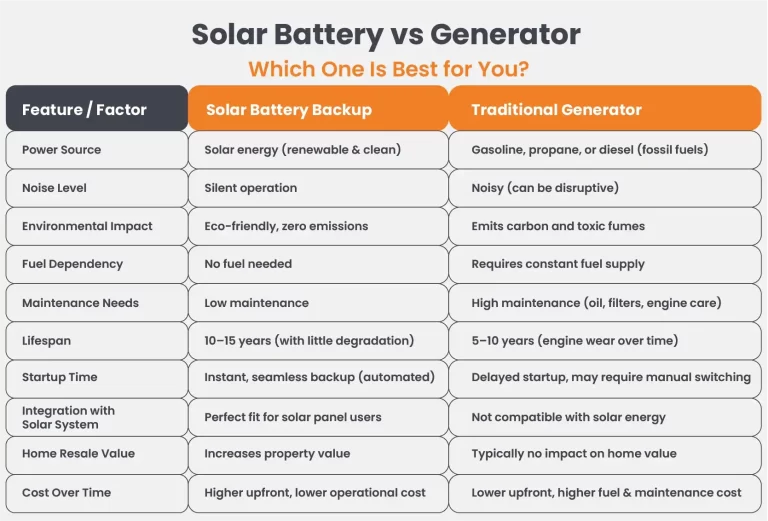
Credit: solarsme.com
Frequently Asked Questions
Is Solar Power Better Than A Generator For Home Use?
Solar power is cleaner, quieter, and cost-effective long-term. Generators provide reliable backup but emit noise and pollution. Solar suits regular use; generators excel in emergencies.
How Do Solar Panels Compare To Generators In Cost?
Solar panels have higher upfront costs but lower maintenance and zero fuel costs. Generators are cheaper initially but incur ongoing fuel and repair expenses.
Can Solar Power Replace A Generator Completely?
Solar can replace generators if sunlight is sufficient and battery storage is adequate. For continuous, high power needs, generators remain more reliable.
Which Is More Eco-friendly: Solar Or Generator?
Solar energy is renewable and emits no pollution, making it eco-friendly. Generators burn fossil fuels, releasing harmful emissions and noise pollution.
Conclusion
Choosing between solar and generators depends on your needs and budget. Solar power saves money over time and is eco-friendly. Generators provide quick power during outages but need fuel. Think about how often you need power and your location. Solar suits sunny areas and long-term use.
Generators work well for emergencies and short-term needs. Both have pros and cons. Decide what fits your lifestyle best.