
Have you ever wondered why a metal rod feels hot when placed near a flame or why your smartphone heats up during heavy use? Understanding what heat generation in a solid means can unlock answers to these everyday puzzles.
This concept is key to improving everything from the gadgets you use to the buildings you live in. By exploring how heat forms and moves inside solid materials, you’ll gain insights that could help you make smarter choices about energy, safety, and comfort.
Keep reading, and you’ll discover the simple science behind heat generation and why it matters to you.

Credit: reference.wolfram.com
Heat Generation Basics
Heat generationin solids happens due to various sources. Some common sources include:
- Friction:When two solid surfaces rub together, heat forms.
- Electrical currents:Passing electricity through a solid creates heat.
- Chemical reactions:Some reactions inside solids release heat.
- Mechanical deformation:Bending or stretching solids can produce heat.
These sources lead to different mechanisms of heat productioninside solids:
- Joule heating:Electric current causes atoms to vibrate, creating heat.
- Plastic deformation:Changing shape of solid releases energy as heat.
- Internal friction:Tiny movements inside material create heat.
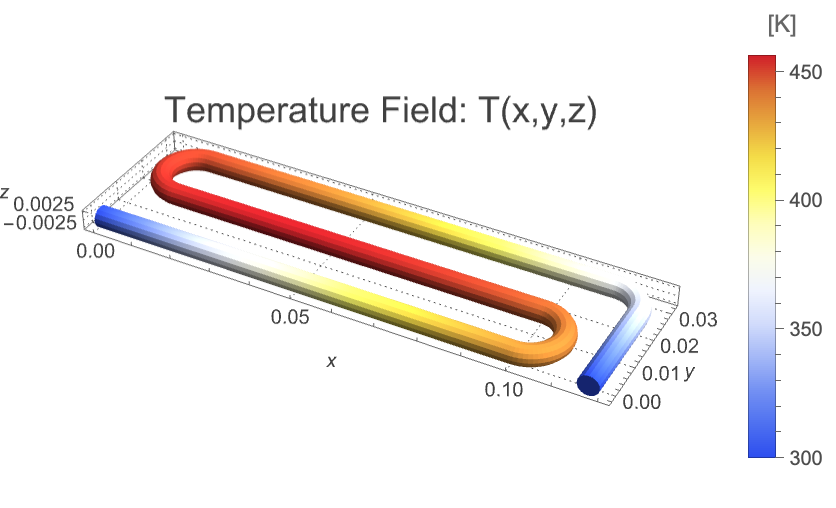
Credit: reference.wolfram.com
Thermal Conductivity And Heat Flow
Thermal conductivityis a key property of solids. It shows how well heat moves through a material. A solid with high thermal conductivity moves heat quickly. Metals usually have high thermal conductivity. Insulators like wood or plastic have low thermal conductivity. This means they slow down heat flow.
Heat flows from hot areas to cold areas inside solids. The speed depends on the solid’s thermal conductivity. Heat flow can be steady or change with time. Understanding this helps in designing better machines and buildings.
- Conduction:Heat moves through direct contact of atoms.
- Convection:Rare in solids but can happen if the solid contains fluids.
- Radiation:Heat transfers as waves, even in space.
In solids, conductionis the main way heat moves. Knowing this helps us control temperature and energy use.
Internal Heat Sources
Internal heat sourcescause heat inside solids. One major source is electrical resistance heating. When electric current passes through a solid, it meets resistance. This resistance changes electrical energy into heat. This process warms the solid from inside.
Chemical reactionsalso generate heat. Some solids have chemicals that react inside. These reactions release energy as heat. For example, burning or rusting causes heat inside the solid.
Mechanical deformationmeans changing shape by force. When a solid bends or stretches, it creates heat. This happens because internal friction converts movement energy into heat. The more force, the more heat is made.

Credit: www.sciencedirect.com
Mathematical Modeling
The heat equation shows how heat moves inside a solid. It is a type of math formula called a partial differential equation. This equation helps us find the temperature at any point in the solid over time. It depends on the heat conductivity, heat capacity, and density of the material.
Boundary conditions tell us the temperature or heat flow at the edges of the solid. Initial conditions give the temperature inside the solid at the start time. Both are needed to solve the heat equation correctly.
| Condition Type | Description |
|---|---|
| Initial Condition | Temperature inside the solid at time zero |
| Boundary Condition | Temperature or heat flow at the solid’s surface |
Practical Applications
Heat generation in solids plays a key role in many practical fields. Electronics coolingis vital because devices create heat that can damage parts. Cooling systems help keep temperatures safe and improve device life.
Material processinguses heat generated inside solids to change their shape or properties. This includes welding, casting, and forging metals. Controlled heat ensures strong and quality products.
Energy systemsrely on heat generation to work efficiently. For example, in power plants, heat moves through solids to create electricity. Managing this heat is important for safety and performance.
Measurement Techniques
Temperature sensorsmeasure heat by detecting changes in temperature. They are small devices placed on or inside solids. These sensors give accurate readingsof how much heat is made. Common types include thermocouples, resistance temperature detectors (RTDs), and thermistors. Each sensor works by converting heat into an electrical signal.
Thermal imaginguses special cameras to see heat patterns. These cameras show heat as colors on a screen. This helps spot hot spots or uneven heat in solids. It is a non-contact method, so it can measure heat without touching the object. Thermal imaging works well for checking large or moving objects.
Factors Affecting Heat Generation
Material propertiesgreatly influence heat generation in solids. Thermal conductivity controls how fast heat moves through a material. Materials with high thermal conductivityspread heat quickly, reducing buildup. Specific heat capacity shows how much heat a material can store. A higher value means the material heats up slower. Electrical resistivity causes heat when current passes through. Materials with high resistivitygenerate more heat due to resistance.
Environmental conditionsalso affect heat generation. Temperature differences between the solid and surroundings create heat flow. Higher external temperatures can raise the solid’s temperature. Airflow around the solid helps remove heat, lowering temperature. Humidity and pressure may change the heat transfer rates slightly. Sunlight or radiation adds external heat, increasing internal heat generation.
Frequently Asked Questions
What Is Heat Generation In A Solid?
Heat generation in a solid refers to the internal production of heat due to processes like electrical resistance or chemical reactions. It causes temperature rise within the material, affecting its properties and performance.
How Does Heat Generation Affect Solid Materials?
Heat generation raises the temperature inside solids, leading to thermal expansion and possible structural changes. It can influence strength, conductivity, and durability of the material.
What Causes Heat Generation Inside Solids?
Heat generation in solids is mainly caused by electrical currents, friction, chemical reactions, or mechanical deformation. These processes convert energy into heat within the material.
How Is Heat Generation Measured In Solids?
Heat generation is measured by monitoring temperature changes, using sensors or thermal analysis. Mathematical models also estimate heat produced based on material properties and conditions.
Conclusion
Understanding heat generation in solids is crucial. It impacts many processes. Managing heat ensures efficiency and safety. Different materials respond uniquely to heat. Engineers must consider this in design. Proper heat management extends equipment life. It also prevents failures. Learning about heat behavior aids innovation.
Industries rely on this knowledge daily. So, focus on these principles for success. Whether in electronics or manufacturing, heat control matters. Keep exploring this topic. It enhances both understanding and application. This knowledge benefits personal projects and professional work. Stay informed.
Keep learning.