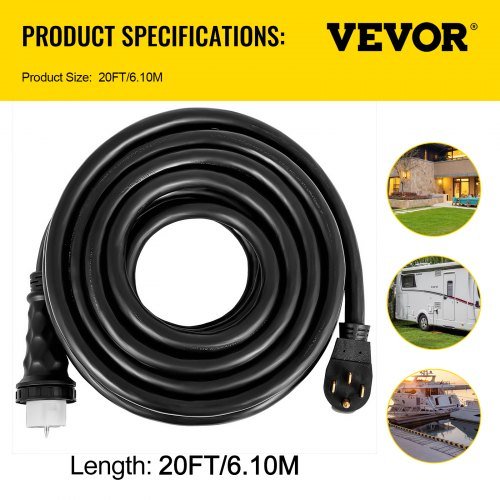
Picture this: a sudden power outage leaves you in the dark, and your trusty generator becomes your lifeline. But as you reach for an extension cord to power your essentials, a question pops into your mind: “How long is too long?”
You’re not alone in wondering about the safe maximum extension cord length for your generator. Using the wrong cord can lead to power loss, overheating, or even a fire hazard. Understanding the right length isn’t just about convenience—it’s about safety and efficiency.
In this guide, we’ll explore the ins and outs of choosing the right extension cord to ensure your generator runs smoothly and safely. Stick with us, and you’ll have the knowledge to keep your home powered without a hitch.

Credit: www.premium-electric.ca
Why Cord Length Matters
Extension cord length affects power deliveryto your generator. Longer cords cause voltage drop, which means less power reaches your device. This can make appliances run poorly or not at all.
Using cords that are too long can lead to overheatingand fire risks. The cord’s wires get hot because they carry more current than designed. This is unsafe for your home and equipment.
Voltage drophappens when electricity loses energy over distance. The longer the cord, the more energy is lost. This reduces the efficiencyof your generator and can damage tools.
| Extension Cord Length | Voltage Drop Effect | Risk Level |
|---|---|---|
| Up to 25 feet | Minimal voltage drop | Low |
| 25 to 50 feet | Moderate voltage drop | Medium |
| Over 50 feet | High voltage drop | High |

Credit: www.amazon.com
Recommended Cord Lengths
Extension cords have limits to keep power safe and strong. Most standard extension cordsshould not be longer than 100 feet. Longer cords can cause voltage dropsthat may damage your generator or tools.
Generators need cords that match their power output. Using cords that are too thin or too long can make the generator work harder. This can lead to overheatingor power loss. Choose cords with the right gaugeto handle your generator’s wattage.
Check your generator’s manual for the best cord length and type. Most manufacturers recommendcords that are 50 to 100 feetlong with a thick wire gauge. Always follow these guidelines to keep your generator safe and working well.
Choosing The Right Cord Gauge
Wire gaugeshows how thick the cord’s wire is. Thicker wires carry more power safely. Thin wires can get hot and cause fire risks.
The longer the cord, the thicker the wire should be. Long cords with thin wires lose power and can be dangerous. A shorter cord can use thinner wire.
Choose the cord gauge based on the load or poweryour generator needs to supply. Higher power needs thicker wires. Check the generator’s wattage and match the cord size.
| Wire Gauge (AWG) | Maximum Length (feet) | Typical Load Capacity (Watts) |
|---|---|---|
| 12 | 100 | 15 amps / 1800 watts |
| 10 | 150 | 30 amps / 3600 watts |
| 8 | 200 | 40 amps / 4800 watts |

Credit: www.amazon.com
Safety Tips For Using Extension Cords
Inspect extension cords regularlyfor cuts, frays, or damage. Damaged cords can cause shocks or fires. Check plugs for cracks or bent prongs. Replace cords that show wear. Store cords properly to avoid damage.
- Never overload cords.Overloads cause overheating and fires.
- Know the cord’s power ratingand the generator’s output.
- Use cords with the correct gaugefor your generator.
- Avoid plugging too many devices into one cord.
Make proper connectionsby firmly plugging cords into outlets. Avoid loose or partial connections. Do not use cords with damaged plugs. Keep connections dry and away from water. Use outdoor-rated cords for outside use.
Common Mistakes To Avoid
Using cords that are too thin can cause overheatingand fire risks. Always choose cords with the right thicknessfor your generator’s power. Thin cords cannot carry enough current safely.
Ignoring voltage dropcan damage your devices. Voltage drops happen when electricity travels far through a cord. The longer the cord, the more power is lost. This can cause poor performanceor equipment damage.
Overextending the cord length is dangerous. Extra-long cords reduce power and increase risk of sparks. Always stick to the safe maximum lengthrecommended for your generator. Avoid using multiple cords joined together.
Alternative Solutions
Installing dedicated circuits helps deliver power safely from generators. This reduces the need for long extension cords. Dedicated circuits protect devices from overloads and voltage drops.
Using heavy-duty cords is important for long distances. These cords have thicker wires that carry more power. They reduce the risk of overheating and power loss. Always choose cords rated for your generator’s wattage.
Placing the generator close to the power source lowers extension cord length. It keeps cords short and safer to use. Also, placing generators in dry, ventilated areas prevents hazards.
Frequently Asked Questions
What Is The Safe Maximum Extension Cord Length For A Generator?
The safe maximum extension cord length depends on the cord gauge and power load. Generally, a 12-gauge cord can safely extend up to 100 feet for most generators. Longer cords may cause voltage drop, reducing generator efficiency and risking damage to connected devices.
How Does Extension Cord Length Affect Generator Performance?
Longer extension cords increase resistance, causing voltage drop. This reduces power output and can damage equipment. Using a thicker gauge cord for longer distances helps maintain performance and safety. Always match cord length and gauge to your generator’s wattage requirements.
What Gauge Extension Cord Is Best For Generators?
A 12-gauge extension cord is ideal for most generator uses up to 100 feet. For shorter distances or lighter loads, 14-gauge may suffice. For heavy loads or lengths over 100 feet, 10-gauge cords ensure safe power delivery and minimal voltage drop.
Can Using A Longer Extension Cord Damage My Generator?
Yes, using an excessively long or thin extension cord can cause voltage drop. This stresses the generator, reducing efficiency and potentially damaging the generator and connected appliances. Always use the correct cord gauge and length to prevent damage and ensure safety.
Conclusion
Choosing the right extension cord length keeps your generator safe and efficient. Too long cords can cause power loss and overheating. Always check the cord’s gauge and rating before use. Use only cords made for heavy-duty and outdoor use. Keep cords as short as possible to avoid hazards.
Following these tips helps protect your equipment and home. Stay safe and get the most from your generator. Simple steps make a big difference in power safety.