
Have you ever wondered how much electricity a solar panel can actually produce for your home or business? Understanding the power generating capacity of a solar panel is key to making smart decisions about going solar.
This knowledge helps you know what to expect, how much energy you can save, and how to choose the right system for your needs. Keep reading, and you’ll discover exactly what determines a solar panel’s power, why it matters to you, and how to make the most of this clean energy source.
Your journey to smarter energy starts here.
Basics Of Solar Panel Capacity
The power outputof a solar panel shows how much energy it can make. It depends on sunlight strengthand panel size. The output is measured under standard test conditions.
The common unitfor solar panel power is watt (W). A 100-watt panel can produce 100 watts of power in perfect sunlight. Panels often list power in watts peak (Wp), which means the maximum power.
| Unit | What It Means |
|---|---|
| Watt (W) | Power the panel can produce |
| Watt peak (Wp) | Maximum power under ideal sunlight |
| Kilowatt-hour (kWh) | Energy produced over time |
Understanding these units helps compare different solar panels easily.
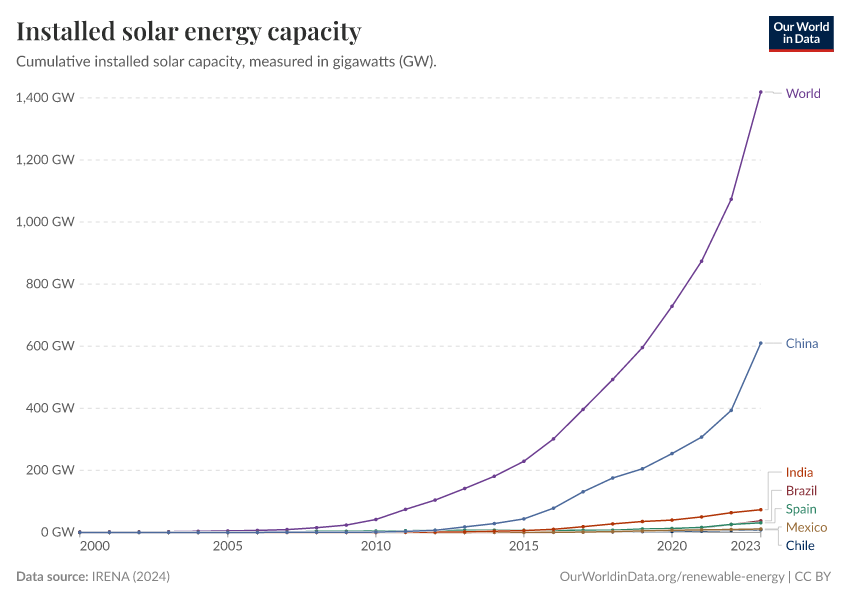
Credit: ourworldindata.org
Factors Affecting Power Generation
The type of solar panelimpacts how much power it can produce. Monocrystalline panels are more efficient than polycrystalline ones. Thin-film panels are less efficient but cheaper.
Sunlight intensityaffects power generation greatly. More sunlight means more power. Clouds, shade, or dirt on panels reduce sunlight and lower power output.
Temperatureplays an important role too. Solar panels work best at cooler temperatures. High heat can reduce their efficiency and power output.
Panel orientation and tiltaffect how much sunlight hits the panel. Panels should face the sun directly. The correct tilt angle depends on your location and season.
Rated Power Vs Actual Power
Rated poweris the maximum output a solar panel can produce under ideal conditions. These conditions include perfect sunlight, clear skies, and a specific temperature. This value helps compare different panels easily.
Actual power is usually lower than rated power. Real-world factors like clouds, dirt, and temperature affect panel output. Panels rarely run at full capacity all day.
- Sunlight intensity changes during the day
- Shadows from trees or buildings reduce power
- Dust and dirt block sunlight
- High temperatures lower efficiency
Understanding these differences helps set realistic expectations for solar energy generation.

Credit: www.nsenergybusiness.com
Calculating Solar Panel Capacity
The power outputof a solar panel depends on its capacityand sunlightreceived. Use this formula:
Power Output (Watts) = Panel Capacity (Watts) × Sunlight Hours × Efficiency
Panel capacity is the maximum powerthe panel can produce under ideal conditions. Sunlight hours vary by location and weather. Efficiency shows how well the panel converts sunlight to electricity.
| Panel Capacity (Watts) | Sunlight Hours | Efficiency (%) | Power Output (Watts) |
|---|---|---|---|
| 100 | 5 | 80 | 100 × 5 × 0.8 = 400 |
| 250 | 6 | 85 | 250 × 6 × 0.85 = 1275 |
| 300 | 4 | 90 | 300 × 4 × 0.9 = 1080 |
Improving Solar Panel Efficiency
Technological advanceshave made solar panels more efficient. New materials like perovskitecan capture more sunlight. Solar cells now convert sunlight to electricity with less loss. Tracking systemsmove panels to follow the sun’s path. This increases the energy they produce each day. Thin-film solar panels are lighter and flexible. They can be used in places where traditional panels do not fit.
Maintenance tipshelp keep panels working well. Clean the panels regularly to remove dust and dirt. Check for any cracks or damage on the surface. Make sure the panels have no shade during the peak sun hours. Trim trees or plants that block sunlight. Inspect wiring and connections to avoid energy loss. Proper care ensures the panels last longer and produce more power.
Applications Of Solar Power Capacity
Solar panel power capacity shows how much electricity it can produce under ideal sunlight. This capacity helps determine the size of the solar system needed for homes or businesses. It plays a key role in planning energy use and cost savings.
Residential Use
Solar panels help homes save money on electricity bills. They produce clean and renewable energy. Many houses use solar power for lighting, heating, and appliances. Small systems can power an entire home or reduce energy costs. Solar power also increases home value and helps the environment.
Commercial And Industrial Use
Businesses use solar panels to cut energy costs and lower pollution. Large solar systems power offices, factories, and warehouses. This helps companies run machines and lights with clean energy. Solar power also reduces dependency on the grid. It supports sustainable business practices and saves money in the long run.
Grid Integration
Solar power can connect to the main electric grid. This allows extra energy to be sent back to the grid for others to use. It helps balance power supply and demand. Grid integration supports clean energy growth and reduces fossil fuel use. It creates a more reliable and green electricity system.
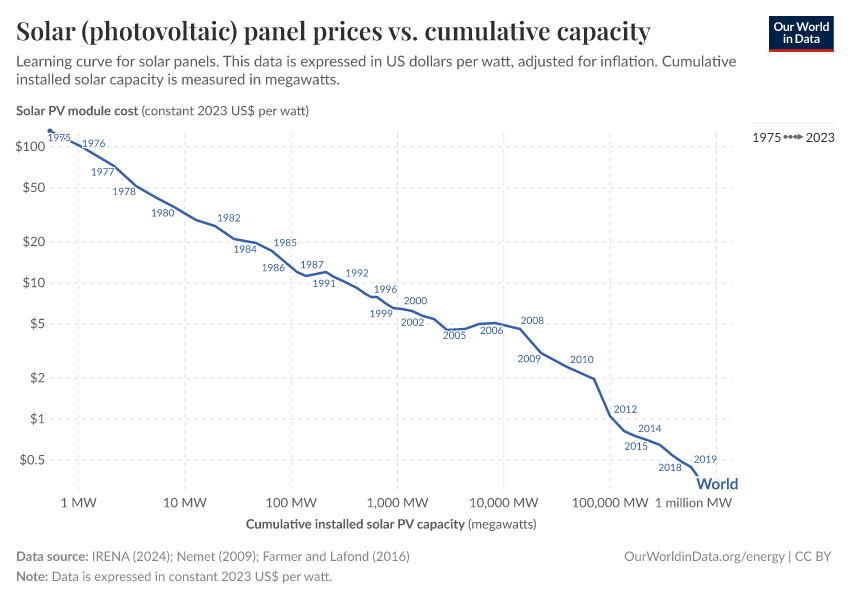
Credit: ourworldindata.org
Frequently Asked Questions
How Much Power Can A Solar Panel Generate?
A typical solar panel generates between 250 and 400 watts per hour. The actual power depends on factors like panel size, efficiency, and sunlight exposure. Optimal conditions can maximize power output.
What Affects A Solar Panel’s Power Capacity?
A solar panel’s power capacity is influenced by size, efficiency, and sunlight exposure. Geographic location and weather conditions also play significant roles. Regular maintenance ensures optimal performance.
How Do I Calculate Solar Panel Power Output?
To calculate solar panel power output, multiply the panel’s wattage by sunlight hours. Consider efficiency loss factors. This formula gives an estimate of daily energy production.
Can Solar Panels Generate Power In Cloudy Weather?
Yes, solar panels can generate power in cloudy weather, but at reduced efficiency. Clouds diffuse sunlight, decreasing the panel’s power output. However, modern panels are designed to perform efficiently in varying conditions.
Conclusion
Solar panels produce power based on size and sunlight. More sunlight means more electricity generated. Efficiency and weather also affect power output. Knowing capacity helps plan energy needs better. Solar power offers a clean, renewable energy source. It can reduce electricity bills over time.
Choosing the right panel ensures good energy results. Start small, then expand as needed. Solar energy fits many homes and budgets. Understanding capacity makes solar choices clearer and smarter.