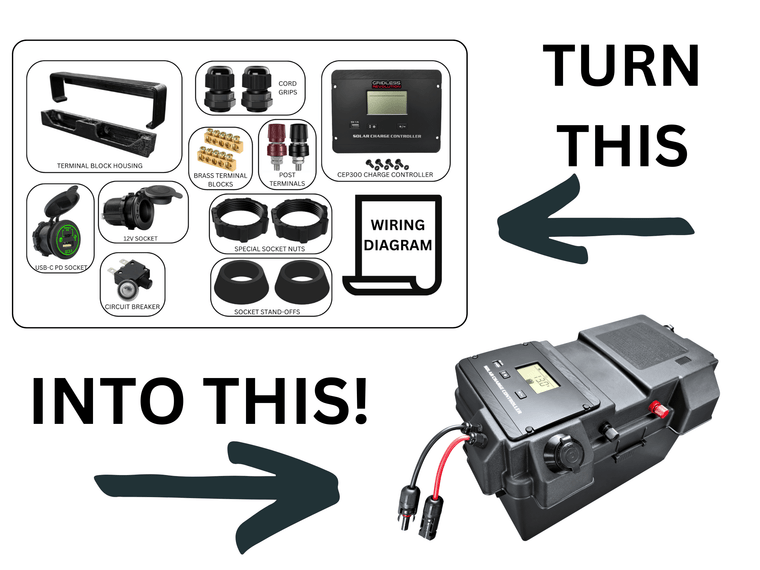
Are you ready to take control of your energy and build your own solar generator? Knowing exactly what items you need can save you time, money, and frustration.
Whether you’re preparing for emergencies or just want to enjoy clean, renewable power, having the right parts is key. You’ll discover the essential components that make a solar generator work smoothly and efficiently. By the end, you’ll feel confident to start your project and power up your life with the sun.
Keep reading—your future self will thank you.
Key Components
Solar panelscatch sunlight and turn it into electricity. Choose panels with enough power for your needs. Quality panels last longer and work better.
A battery bankstores the electricity made by solar panels. Deep cycle batteries are best. They give power over a long time and can be charged many times.
The charge controllerstops batteries from getting too much power. This keeps batteries safe and helps them last longer. It controls the flow of electricity.
An inverterchanges stored power from batteries into usable electricity. This lets you run normal devices like lights and phones. Pick an inverter that matches your power needs.
Cables and connectorslink all parts. Use strong cables that fit your system’s power. Good connectors ensure safe and steady flow of electricity.
Choosing Solar Panels
Solar panels come in different types. The three main ones are monocrystalline, polycrystalline, and thin-film. Monocrystalline panels are the most efficient but cost more. Polycrystalline panels are less expensive but also less efficient. Thin-film panels are lightweight and flexible but have the lowest efficiency.
Panel wattage shows how much power a panel can produce. Higher wattage means more power. Choose panels based on how much energy you need.
| Type | Efficiency | Cost | Best Use |
|---|---|---|---|
| Monocrystalline | High (15%-20%) | High | Small space, high power |
| Polycrystalline | Medium (13%-16%) | Medium | Budget-friendly, moderate power |
| Thin-film | Low (10%-12%) | Low | Flexible, lightweight uses |
Selecting The Right Battery
Battery typesinclude lead-acid, lithium-ion, and nickel-based batteries. Lead-acid batteries are cheaper but heavier. Lithium-ion batteries are lighter and last longer. Nickel-based batteries are less common and have moderate lifespan.
Capacity and voltagedecide how long and powerful your solar generator will be. Capacity is measured in ampere-hours (Ah). Voltage is usually 12V or 24V for solar generators. Higher capacity means longer use. Match voltage with your solar panels and devices.
| Battery Type | Capacity | Voltage | Lifespan | Maintenance |
|---|---|---|---|---|
| Lead-Acid | Low to Medium | 12V or 24V | 3-5 years | Requires water refill |
| Lithium-Ion | Medium to High | 12V or 24V | 7-10 years | Low maintenance |
| Nickel-Based | Medium | 12V | 5-7 years | Moderate maintenance |
Charge Controller Options
Choosing the right charge controller protects your solar generator’s battery from overcharging. PWM and MPPT are common types, each with different efficiency and cost. Selecting the best option depends on your solar panel size and power needs.
Pwm Vs Mppt
PWMcontrollers are simple and cost less. They work well with small solar panels. MPPTcontrollers are smarter. They can get more power from the panels, especially on cold or cloudy days. MPPT is best for bigger systems and higher voltage panels. It adjusts voltage to match the battery, so it charges faster and better.
Sizing Your Controller
Choose a controller that can handle the solar panel’s current and voltage. The controller must be bigger than the panel’s output. For example, if your panel produces 10 amps, get a controller that can handle 15 amps or more. This helps avoid overheating and damage. Check your battery voltage and match it with the controller’s rating. Proper sizing keeps the system safe and working well.
Inverter Choices
Pure sine wave invertersproduce clean, smooth power. They are best for sensitive electronics like laptops and medical devices. Modified sine wave invertersare cheaper but less smooth. They work fine for simple tools and lights but may cause noise or damage to some devices.
Choose an inverter with the right power rating. It must handle the total wattage of all devices you want to run. Check the starting wattsfor devices like refrigerators or power tools, as they need more power to start.
| Type | Best For | Cost | Power Quality |
|---|---|---|---|
| Pure Sine Wave | Sensitive electronics, medical devices | Higher | Clean, smooth |
| Modified Sine Wave | Simple tools, lights | Lower | Less smooth, may cause noise |

Credit: www.bioliteenergy.com
Wiring And Safety Gear
Cabling specificationsare key for a solar generator’s safety and function. Use thick, insulated wiresthat match your system’s voltage and current. Copper wires are best for conductivity and durability. Keep wire lengths short to reduce power loss. Use proper connectorsto avoid loose connections.
| Component | Purpose | Recommendation |
|---|---|---|
| Fuses | Protect wires from overcurrent | Use inline fuses rated for your system’s max current |
| Breakers | Cut power during faults or overloads | Choose circuit breakers compatible with system voltage |
Safety precautions include wearing insulated glovesand eye protection. Always disconnect power before working on wiring. Avoid water or damp places. Double-check connections to prevent shorts. Use clear labelson wires and components to avoid mistakes.
Optional Accessories
Battery monitorshelp you track your solar generator’s power use. They show how much energy you have left and how fast you are using it. This helps to avoid running out of power unexpectedly.
Mounting hardwareis needed to fix solar panels safely. It keeps panels stable and at the right angle to catch sunlight. Good mounting means better energy collection and less risk of damage.
Portable casesprotect your solar generator and parts during travel. They make it easy to carry everything in one place. Cases also keep your equipment safe from dust and bumps.

Credit: www.youtube.com
Budgeting Tips
Building a solar generator needs a clear cost breakdown. Key parts include solar panels, batteries, an inverter, and wiring. Solar panels can cost a lot but last long. Batteries vary in price based on type and capacity. An inverter changes solar power to usable electricity. Wiring and connectors are usually cheaper but still needed.
Saving money is possible by comparing prices online. Buying used or refurbished parts can reduce costs but check quality. Avoid the cheapest parts for batteries and inverters as they wear out fast. Focus on quality vs priceto get the best value. Good parts last longer and work better.
| Item | Typical Cost | Where to Save | Quality Advice |
|---|---|---|---|
| Solar Panels | $100 – $300 each | Buy mid-range brands | Choose panels with good reviews |
| Batteries | $100 – $500+ | Consider used or refurbished | Pick deep cycle, reliable brands |
| Inverter | $50 – $200 | Shop for sales | Ensure it matches power needs |
| Wiring & Connectors | $20 – $50 | Buy in bulk | Use good quality cables |
Assembly Tools
Basic tools help make the solar generator build easier and safer. Common tools include:
- Screwdriversto tighten screws and bolts.
- Wire cuttersto cut wires cleanly.
- Electrical tapeto insulate wire connections.
- Multimeterto check voltage and current.
- Drillfor making holes in the frame or box.
Specialized equipment helps with precise work. Examples are:
- Soldering ironto join wires firmly.
- Crimping toolfor secure wire connectors.
- Heat shrink tubingto protect wire joints.
Having these tools ready saves time and avoids mistakes.

Credit: revopower.us
Frequently Asked Questions
What Are The Essential Parts Of A Solar Generator?
A solar generator needs solar panels, a charge controller, a battery, and an inverter. These parts work together to capture, store, and convert solar energy into usable power efficiently.
How Do I Choose The Right Battery For My Solar Generator?
Choose a deep-cycle battery with high capacity and long lifespan. Lithium-ion batteries are popular for their efficiency and durability in solar generators.
Why Is A Charge Controller Necessary For Solar Generators?
A charge controller regulates voltage and current from solar panels. It prevents battery overcharging and extends battery life, ensuring safe and efficient operation.
Can I Use Any Inverter With My Solar Generator?
Use a pure sine wave inverter for compatibility and clean power output. It ensures safe operation of sensitive electronics and maximizes generator efficiency.
Conclusion
Building a solar generator can be rewarding. It offers clean energy. You need solar panels, an inverter, and a battery. Also, get a charge controller and cables. These components work together. They harness the sun’s power effectively. Creating your own system saves money.
Plus, it supports sustainable living. Remember, every piece plays a role. Choose quality materials for best results. Start small, then expand as needed. Enjoy the benefits of solar power. It’s simple, efficient, and eco-friendly. Embrace the future of energy today.
Happy building!