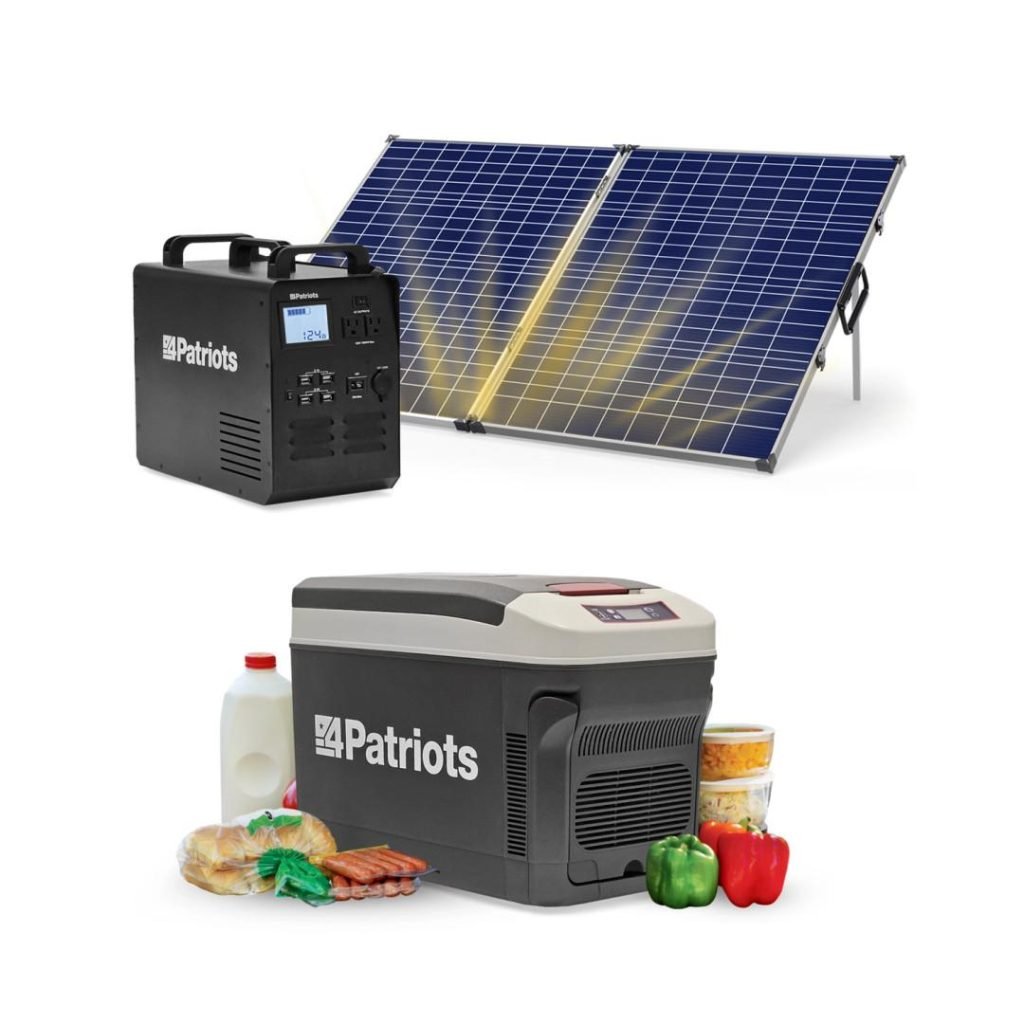
Are you wondering if a solar generator can keep your refrigerator running smoothly? You’re not alone.
Finding the right solar generator to power a fridge can be tricky. It’s all about matching the generator’s strength with your fridge’s energy needs. If you get it right, you’ll enjoy fresh food even when the power goes out or you’re off the grid.
Keep reading, and you’ll discover exactly what kind of solar generator fits your fridge and how to choose the best one for your needs.

Credit: www.jackery.com
Solar Generators For Refrigerators
Solar generators come in different types. The main ones are portable solar generatorsand stationary solar generators. Portable units are small and easy to move. They are good for small fridges or short trips. Stationary generators are larger and stay in one place. They can power bigger fridges for longer times.
Key features to considerinclude battery capacity, power output, and charging speed. Battery capacity tells how long the generator can run. Power output shows how much energy the generator can give at once. Charging speed tells how fast the battery refills.
| Feature | Why It Matters |
|---|---|
| Battery Capacity | Determines how long the fridge can run |
| Power Output | Must match or exceed fridge power needs |
| Charging Speed | Faster charging means less downtime |
Power output requirementsdepend on the refrigerator size. Small fridges need about 100-200 watts. Larger fridges may require 400 watts or more. Check the fridge label for exact power use. Choose a solar generator with a bit more power than the fridge needs. This ensures smooth running without overload.
Calculating Refrigerator Power Needs
Refrigerators need more power at startupthan during normal running. This is called startup surge. Check your fridge’s label for the wattageit uses when running and the surge wattagefor starting up.
Calculate your fridge’s daily energy useby looking at the watt-hours or kilowatt-hours on the label. This shows how much energy the fridge uses in a day. Multiply this by the number of days you want to run the fridge without sun or charging.
Battery capacityis important for how long your solar generator runs the fridge. It is measured in watt-hours (Wh). Make sure the battery has enough Wh to cover the fridge’s daily use and the startup surge.
| Factor | Description |
|---|---|
| Wattage | Power used by fridge during normal running |
| Startup Surge | Extra power needed when fridge starts up |
| Daily Energy Use | Total energy fridge uses in one day |
| Battery Capacity | Amount of energy solar generator battery can store |
| Runtime | How long the battery can power the fridge |
Choosing The Right Battery
Choosing a battery with enough capacity ensures your solar generator can keep a refrigerator running smoothly. Look for batteries that offer steady power and long runtime for reliable cooling.
Lithium Vs. Lead-acid Batteries
Lithium batteriesare lighter and last longer than lead-acid ones. They charge faster and hold more energy. Lead-acid batteries cost less but are heavier and need more care. For a solar generator powering a fridge, lithium is often better. It works well in cold and hot weather. Lead-acid batteries lose power faster and need regular water checks.
Battery Life And Maintenance
Lithium batteries can last for 2000 to 5000 cycles. Lead-acid batteries last about 300 to 500 cycles. Lithium needs less care, no watering or cleaning. Lead-acid batteries need regular checks and cleaning. Proper care can make both last longer.
Charging And Discharging Rates
Lithium batteries can charge and discharge quickly without damage. This means they are good for sudden power needs. Lead-acid batteries charge slowly and can be damaged if drained too much. For a fridge, a battery that handles quick power changes is better.

Credit: growattportable.com
Solar Panel Options
Solar panels come in different types and efficiencies. Monocrystalline panels are the most efficient but cost more. Polycrystalline panels are cheaper but less efficient. Thin-film panels are lightweight but need more space.
Sizing solar panelsdepends on the refrigerator’s power use. Check the fridge’s wattage and daily hours of use. Multiply these to find the total watt-hours needed. Add extra watts for cloudy days and energy loss.
Placement and orientationaffect solar panel output. Panels should face south in the northern hemispherefor max sun. Tilt the panels at an angle close to your latitude. Avoid shade from trees or buildings.
Inverter Selection
A pure sine wave inverterproduces clean power like the grid. It works best for refrigerators and sensitive devices. A modified sine wave inverteris cheaper but can cause noise and harm some appliances. Choose pure sine wave for better safety and efficiency.
The inverter capacitymust be enough to handle the fridge’s starting surge and running power. Most refrigerators need between 500 to 1000 watts. Check the fridge label for exact watts. Pick an inverter with 20-30% extra capacity for safety.
| Safety Feature | Purpose |
|---|---|
| Overload Protection | Prevents damage from too much power draw |
| Short Circuit Protection | Stops electrical shorts that can cause fires |
| Overheat Protection | Shuts down inverter if it gets too hot |
| Low Voltage Alarm | Warns when battery power is low |
Credit: generatorpeak.com
Setting Up Your Solar Generator System
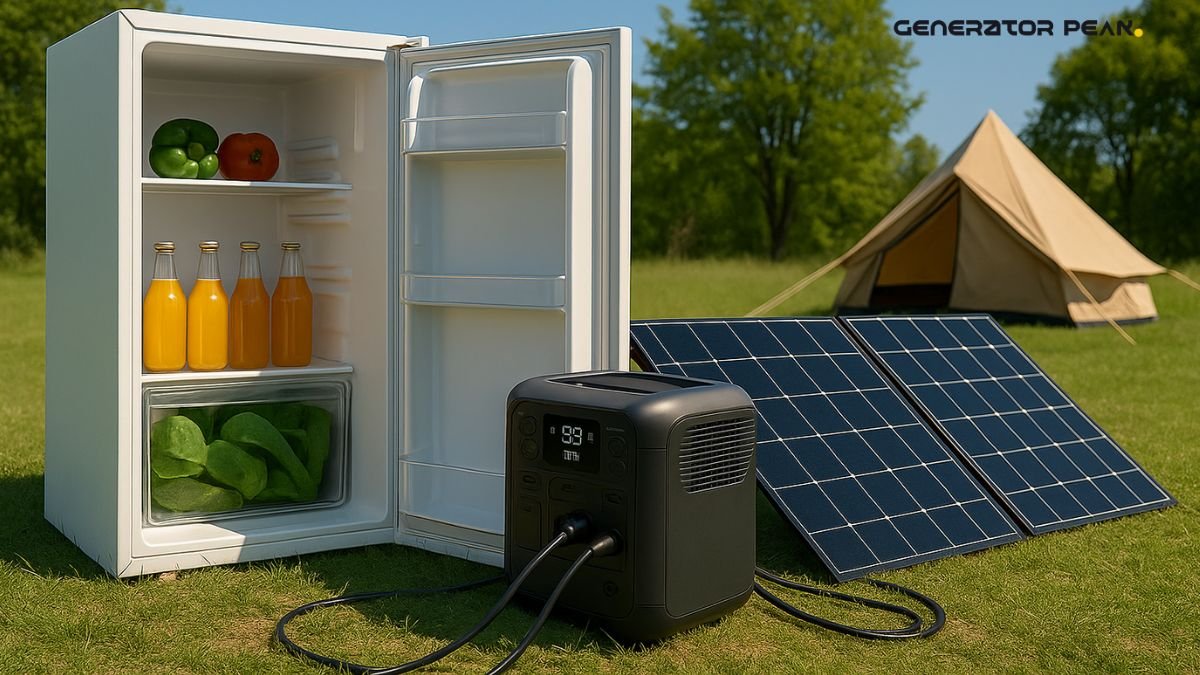
Connect the solar panels to the charge controller first. The charge controller protects the battery from overcharging. Then connect the battery to the inverter. The inverter changes the battery’s power to run the refrigerator. Use quality cables to avoid power loss. Check all connections are tight and secure.
Monitor the system daily. Check battery voltage and solar panel output. Keep the panels clean for better sunlight capture. Watch the inverter display for any error codes. Regular checks help catch issues early.
Common problems include low battery power and loose connections. A low battery can cause the fridge to stop. Make sure the battery is fully charged. Tighten any loose wires to prevent interruptions. Reset the inverter if it stops working. Replace damaged parts quickly to keep the system running.
Portable Vs. Stationary Solar Generators
Portable solar generatorsare easy to move and use outdoors. They work well for camping or short power needs. These generators are usually lighter but have less power. Stationary solar generatorsare bigger and stay in one place. They can power a refrigerator for a long time. These generators have larger batteries and panels.
| Advantages | Disadvantages | |
|---|---|---|
| Portable |
|
|
| Stationary |
|
|
Portable generatorssuit camping, tailgating, or emergencies. Stationary generatorswork best for home backup or off-grid living.
| Type | Best Use Cases | Cost Range |
|---|---|---|
| Portable | Camping, outdoor trips, short power needs | $300 – $1,500 |
| Stationary | Home backup, off-grid power, long-term use | $1,500 – $5,000+ |
Cost And Budget Planning
The initial investmentfor a solar generator includes the cost of the generator, batteries, and solar panels. Prices vary based on power capacity and brand. A higher capacity generator costs more but powers the refrigerator longer.
Long-term savingscome from reducing electricity bills. Solar energy is free after setup. Maintenance costs are low, and generators can last many years.
| Incentives and Rebates | Details |
|---|---|
| Government Rebates | Many places offer money back to lower upfront costs. |
| Tax Credits | Reduce the amount of tax you owe on your income. |
| Local Programs | Utilities or communities may provide extra savings. |
Real-life Examples And Case Studies
Off-grid homes often use solar generators with 500 to 1500 watts capacity. These models can run small to medium refrigerators all day. They store energy in batteries to keep food cold at night.
Emergency backup solar generators usually have higher wattage, around 2000 watts or more. They power full-size refrigerators during power outages. These generators provide reliable energy for hours without fuel.
RV and camping solar generators are compact and lightweight. They usually have 300 to 1000 watts power. These units keep mini-fridges running while traveling. Easy to carry and recharge with solar panels.
| Use Case | Power Range (Watts) | Typical Refrigerator Size | Key Feature |
|---|---|---|---|
| Off-Grid Homes | 500 – 1500 | Small to Medium | Battery storage for all-day use |
| Emergency Backup | 2000+ | Full-Size | Long runtime without fuel |
| RV and Camping | 300 – 1000 | Mini-Fridge | Portable and easy to recharge |
Frequently Asked Questions
What Size Solar Generator Powers A Refrigerator Efficiently?
A 1000 to 1500-watt solar generator typically powers a standard refrigerator. It provides enough startup surge and continuous power. Always check your fridge’s wattage before choosing a generator. Higher-capacity models ensure reliable, long-term operation during power outages or off-grid use.
Can Solar Generators Run Refrigerators Overnight?
Yes, solar generators with sufficient battery capacity can run refrigerators overnight. Choose models with large batteries to store excess solar energy. Proper sizing ensures continuous cooling without interruption. This is ideal for camping, emergencies, or off-grid living.
How Long Can A Solar Generator Power A Fridge?
A solar generator can power a fridge from 6 to 24 hours. Duration depends on battery size, fridge efficiency, and power consumption. Larger batteries and energy-efficient fridges extend runtime. Always calculate your fridge’s watt-hours for accurate estimates.
Are Solar Generators Safe For Refrigerator Use?
Solar generators are safe for refrigerators when properly sized. They provide clean, stable power without fluctuations. Use pure sine wave inverters to protect sensitive fridge electronics. Follow manufacturer guidelines to avoid damage and ensure efficiency.
Conclusion
Choosing the right solar generator is crucial for powering your refrigerator. Consider the generator’s wattage and battery capacity. Make sure it matches your refrigerator’s needs. Examine the solar panel efficiency too. High efficiency means better power supply. Portability is also essential for ease of use.
Check the runtime to ensure continuous operation. A good match saves energy and money. It also supports sustainability efforts. With the right solar generator, your refrigerator runs smoothly. Enjoy reliable, eco-friendly power for your home. Investing in solar is a smart choice for the future.
Stay powered and sustainable!