Have you ever wondered what kind of voltage those shiny solar panels on rooftops really generate? If you’re curious about how these eco-friendly power sources work, you’re in the right place.
Understanding the voltage generated by solar cells is key to knowing how they power everything from small gadgets to your entire home. By the end of this article, you’ll have a clear picture of how solar cells contribute to a cleaner, more sustainable energy future.
So, if you’re ready to get the facts and dispel any myths, let’s dive into the electrifying world of solar energy.
Credit: medium.com
Solar Cell Voltage Basics
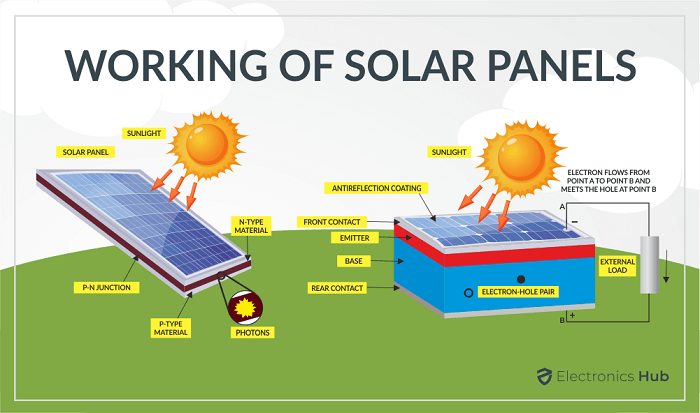
Solar cells create voltageby converting sunlight into electricity. They have two layers of material, usually silicon. When sunlight hits the cell, it makes tiny particles called electrons move. This movement creates an electric current and a voltage difference between the layers.
The voltage from a single solar cell is usually about 0.5 to 0.6 volts. To get higher voltages, many cells are linked together in a panel.
- Light intensity:More sunlight means higher voltage.
- Temperature:Hotter cells produce less voltage.
- Cell quality:Better materials give better voltage output.
- Age of cell:Older cells may lose voltage over time.

Credit: powmr.com
Typical Voltage Ranges
Solar cells usually produce low voltage, around 0. 5 volts each. Connecting many cells raises total voltage to power homes or devices. Voltage varies with sunlight and cell type.
Voltage Of Single Solar Cells
A single solar cell usually generates about 0.5 volts. This voltage is quite low for most uses. Solar cells are often connected in series to increase the voltage. Each cell adds its voltage to the total.
Voltage In Solar Panels And Arrays
Solar panels combine many cells. A panel can produce 12 to 24 volts. Larger arrays, made of many panels, create higher voltages. These can reach up to hundreds of volts. Higher voltage means more power for homes and businesses.
Impact Of Light Intensity
The voltage from solar cellschanges with the amount of sunlight. More light means more energy, so the voltage goes up. Less light means less voltage. This is why solar panels work best on bright, sunny days.
Shadingon even a small part of the solar cell can cause a big drop in voltage. Shadows from trees, buildings, or clouds reduce the light that hits the cells. This makes the voltage fall and lowers the power output.
- Bright sunlight gives the highest voltage.
- Cloudy or dim light lowers the voltage.
- Shadows can cause sudden voltage drops.
- Solar cells need clear light for best voltage.
Temperature Effects On Voltage
Heatmakes solar cell voltage drop. As temperature rises, the voltage gets lower. This happens because heat increases the energy in the cell, causing more electrons to move and reduce voltage. Solar cells work best in cooler weatherwith lots of sunlight.
Too much heat can reduce power output. It affects the cell’s ability to convert sunlight into electricity well. To keep voltage high, temperature must be controlled.
- Use materials that help cool the solar cells.
- Place panels where air can flow around them.
- Install solar panels at an angle to avoid heat buildup.
- Regularly clean panels to keep them efficient.
| Temperature | Voltage Effect | Output |
|---|---|---|
| Low (Below 25°C) | High voltage | Better power output |
| Moderate (25°C – 40°C) | Normal voltage | Stable power output |
| High (Above 40°C) | Lower voltage | Reduced power output |
Voltage Measurement Techniques
To measure solar voltage, use a multimeteror a voltage tester. A multimeter shows the exact voltage and current. A voltage tester is simpler but less precise. Both tools connect to the solar cell terminals to read voltage.
For best results, measure under direct sunlight. Make sure all connections are clean and secure. Avoid touching the probes together during measurement. Take multiple readings to check for consistency. Record the highest stable voltage for accuracy.
- Use a multimeter for detailed voltage and current readings.
- Keep solar panels in full sunlight during measurement.
- Secure all wire connections to avoid errors.
- Check voltage multiple times for steady results.
- Handle tools carefully to prevent false readings.

Credit: medium.com
Applications Based On Voltage Output
Low voltage solar cells usually produce less than 12 volts. These cells are ideal for small devices like garden lights, calculators, and chargers for phones. They work well for off-grid uses where only a little power is needed.
High voltage solar systems can generate hundreds of volts. These systems are used in homes and businesses to power many appliances. They connect to the electrical grid or large battery banks for storing energy. High voltage setups need special equipment to handle the power safely.
| Voltage Type | Typical Voltage | Common Uses |
|---|---|---|
| Low Voltage | Below 12V | Garden lights, calculators, small chargers |
| High Voltage | Above 100V | Home power systems, business electricity, grid connection |
Frequently Asked Questions
What Voltage Do Standard Solar Cells Produce?
Standard solar cells typically produce around 0. 5 volts each under ideal sunlight. This voltage is direct current (DC) and low in magnitude, requiring multiple cells connected in series to reach usable voltage levels for homes or devices.
How Is Solar Cell Voltage Measured?
Solar cell voltage is measured using a voltmeter across the cell’s terminals. The open-circuit voltage (Voc) indicates maximum voltage without load, while the voltage under load is usually lower due to current flow and resistance.
Can Solar Cells Generate Ac Voltage?
No, solar cells generate direct current (DC) voltage only. To convert this DC voltage into alternating current (AC) for home use, an inverter is required. This process enables compatibility with standard electrical systems.
What Affects The Voltage Output Of Solar Cells?
Voltage output depends on sunlight intensity, temperature, and cell quality. Higher sunlight increases voltage, while higher temperatures can reduce it. Manufacturing variations also influence the exact voltage each solar cell produces.
Conclusion
Solar cells create a small voltage, usually around 0. 5 to 0. 6 volts each. Many cells connect to increase total voltage for practical use. This voltage powers homes, gadgets, and more. Understanding this helps you see how solar energy works daily.
Solar power offers a clean, renewable energy source for everyone. It’s simple but powerful technology changing our energy use.