Have you ever wondered where exactly the energy that powers your solar panels comes from? Understanding what region of the Sun generates solar energy can change how you see this incredible source of power.
Knowing this helps you appreciate the science behind the sunlight that fuels your home or gadgets. By the end of this article, you’ll not only know which part of the Sun creates this energy but also why it matters to you.
Keep reading, and uncover the secret at the heart of our star that makes clean energy possible.

Credit: bioengineer.org
Sun’s Internal Structure
The Sun has several layers, each with a special role. The coreis the center and the main source of solar energy. Here, nuclear fusionhappens, turning hydrogen into helium and releasing huge energy.
Outside the core is the radiative zone. Energy moves slowly here, passing from atom to atom as light. It can take thousands of years to cross this zone.
The convective zonelies above. Hot gases move in currents, carrying energy to the surface. This movement helps heat the Sun’s outer layers.
The photosphereis the visible surface. It gives off light and heat that reach Earth. Above it are the chromosphereand corona, layers seen during a solar eclipse.
| Layer | Role |
|---|---|
| Core | Produces solar energy through nuclear fusion |
| Radiative Zone | Transfers energy slowly outward by radiation |
| Convective Zone | Moves energy to the surface by convection currents |
| Photosphere | Emits light and heat visible from Earth |
| Chromosphere & Corona | Outer layers seen during solar eclipses |
Credit: ourworldindata.org
The Core As Energy Source
The coreis the centerof the Sun. It is very hot and dense. The temperature reaches about 15 million degrees Celsius. The pressure is extremely high, much more than on Earth. These tough conditions allow the Sun to produce energy.
Inside the core, hydrogen atomssmash together. This process is called nuclear fusion. It makes the Sun’s energy by turning hydrogen into helium. During fusion, a small amount of mass changes into a huge amount of energy.
This energy moves out from the core and eventually reaches Earth as solar energy. It gives us light and heat.
Energy Transport Mechanisms
The Radiative Zoneis where energy moves outwards through light. Photons travel slowly, bouncing around many times. This process takes thousands of years. The energy moves as radiation, passing through the plasma. The zone is very dense, so light cannot travel in a straight line.
The Convective Zonelies above the Radiative Zone. Hot plasma rises while cooler plasma sinks. This movement carries energy to the Sun’s surface. It works like boiling water in a pot. This zone helps release energy into space.
Solar Energy’s Journey To Surface
The Sun makes energy deep inside its core. This energy moves out slowly toward the surface. It takes a very long time to travel through the Sun’s layers.
Energy created in the core moves through the radiative zone by a process called radiation. This can take about 100,000 years. Then, energy moves through the convective zone faster by rising and falling gases.
| Sun’s Layer | Energy Transfer Method | Approximate Time |
|---|---|---|
| Core | Energy created by nuclear fusion | Instant |
| Radiative Zone | Energy moves by radiation | ~100,000 years |
| Convective Zone | Energy moves by convection | Days to weeks |
| Surface (Photosphere) | Energy released as sunlight | Minutes |
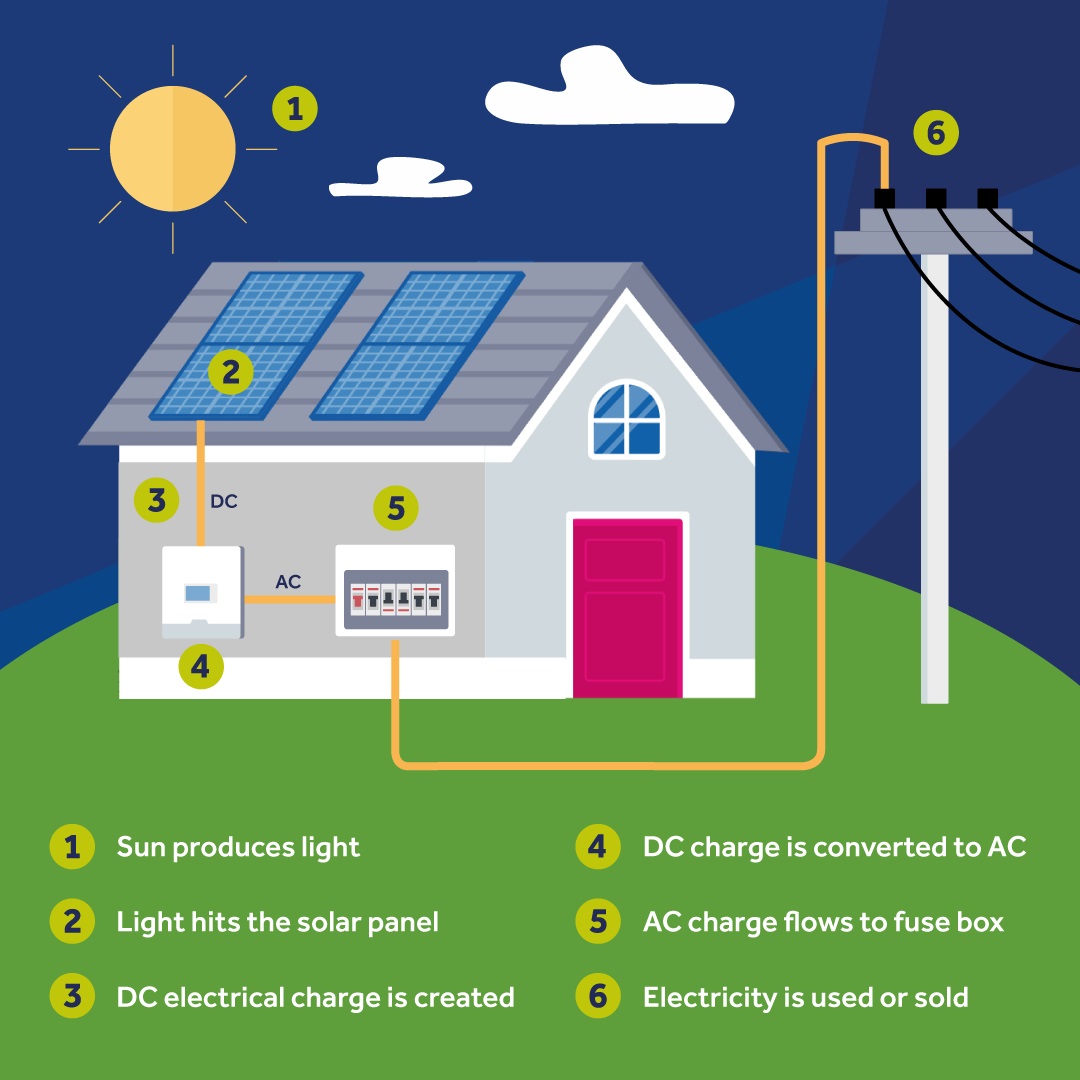
The Sun’s surface emits energy as light and heat. This is called solar radiation. It travels to Earth and powers solar panels.
Importance Of Solar Energy Generation
Solar energycomes from the core of the Sun, where intense heat and pressure create energy. This energy travels to Earth as sunlight. It plays a big role in Earth’s climateby warming the planet and helping plants grow.
Using solar energy helps reduce pollution. It lowers the amount of harmful gases in the air. This is good for our health and the environment. Solar power also helps save money on electricity bills.
| Impact on Earth’s Climate | Relevance to Solar Power Technology |
|---|---|
| Warms the planet naturally | Solar panels convert sunlight into electricity |
| Supports plant growth and life cycles | Clean energy source with no pollution |
| Controls weather and water cycles | Reduces reliance on fossil fuels |
Credit: powerni.co.uk
Frequently Asked Questions
Which Part Of The Sun Produces Solar Energy?
Solar energy is produced in the Sun’s core. Nuclear fusion occurs here, converting hydrogen into helium. This process releases immense energy as light and heat.
How Does The Sun’s Core Generate Energy?
The Sun’s core generates energy through nuclear fusion. Hydrogen atoms fuse, forming helium and releasing energy. This energy powers the Sun and radiates outward.
Why Is The Sun’s Core Critical For Solar Energy?
The core’s extreme pressure and temperature enable fusion. This fusion creates the Sun’s vast energy output. Without the core, solar energy wouldn’t exist.
Can Solar Energy Come From Other Sun Regions?
No, solar energy is only generated in the core. Other regions like the radiative and convective zones transfer energy but don’t create it. The core is the sole energy source.
Conclusion
Solar energy originates from the sun’s core. This core is the powerhouse. It creates energy through nuclear fusion. The sun’s energy travels to Earth as sunlight. This sunlight powers our solar panels. It gives us renewable energy. Understanding solar energy’s source is essential.
It helps in harnessing its full potential. With simple technology, we can capture it. This energy is sustainable and clean. It benefits our planet immensely. So, let’s embrace solar energy. It’s a step towards a greener future.