
Are you tired of worrying about power outages or high electricity bills while trying to keep your refrigerator running? Finding the right solar generator to power your fridge can solve that problem and give you peace of mind.
But with so many options out there, how do you know which one is best for your needs? You’ll discover exactly what to look for in a solar generator to keep your refrigerator cold and your food fresh—no matter where you are.
Keep reading, and you’ll learn how to choose a reliable, efficient solar power solution that fits your lifestyle perfectly.
How Refrigerators Use Power
Refrigerators use two types of power: starting wattsand running watts. Starting watts are high because the compressor needs extra power to start. Running watts are lower and keep the fridge cold over time.
| Type | Description | Watts Range |
|---|---|---|
| Starting Watts | Power needed to start the compressor | 600 – 1200 watts |
| Running Watts | Power used during normal operation | 100 – 400 watts |
Energy efficiency ratings show how much power a fridge uses. Models with high efficiencyuse less energy. Look for labels like Energy Starto find efficient refrigerators. Efficient models save power and make solar generators work longer.

Credit: generatorpeak.com
Choosing The Right Solar Generator
Battery capacityis key to running a refrigerator with a solar generator. It must store enough power to keep the fridge running overnight or during cloudy days. Choose a battery with at least 1000 watt-hours (Wh)for a small fridge. Larger fridges need more capacity.
The inverterconverts stored power to useable electricity. Pick one that supports the fridge’s starting and running watts. A pure sine wave inverteris best for sensitive appliances like refrigerators. Check the fridge’s watt needs, usually between 100 to 800 watts.
Solar panels must match the battery and inverter system. Panels should provide enough power daily to recharge the battery fully. A typical setup might use 100 to 300 wattsof solar panels. Panels work best in direct sunlight, so position them properly for max output.
Calculating Your Refrigerator’s Power Needs
Check the wattagelabel on your refrigerator. It shows how much power it uses. Most fridges use between 100 to 800 wattswhen running. This number is the running wattage. But, fridges need more power to start up. This is called surge power. It can be 2 to 3 times higher than running wattage.
Estimate how long your fridge runs each day. It usually runs for about 8 to 12 hoursdaily. Multiply the running wattage by the hours used. This gives you the daily energy consumptionin watt-hours (Wh).
| Power Type | Description | Example |
|---|---|---|
| Running Wattage | Power used while fridge is running | 150 Watts |
| Surge Wattage | Extra power needed to start the fridge | 450 Watts (3 times running wattage) |
| Daily Usage | Hours fridge runs per day | 10 hours |
| Daily Energy | Running wattage × hours | 150 Watts × 10 = 1500 Wh |
Top Solar Generators For Refrigerators
High-capacity solar generators offer strong power output. They can run large refrigerators for hours. These models usually have batteries over 1000Wh. Ideal for long trips or home backup power.
Portable options are lighter and easy to carry. They fit small fridges and mini coolers well. Often less than 500Wh, perfect for camping or short outages.
Budget-friendly choices provide basic power without high cost. They work with energy-efficient fridges. Good for occasional use or small appliances.
| Type | Battery Capacity | Suitable For | Portability | Price Range |
|---|---|---|---|---|
| High-Capacity Models | 1000Wh+ | Large refrigerators, long use | Heavy | High |
| Portable Options | 200-500Wh | Small fridges, camping | Light | Medium |
| Budget-Friendly Choices | Below 300Wh | Energy-efficient fridges | Light to medium | Low |
Setting Up Your Solar Generator System
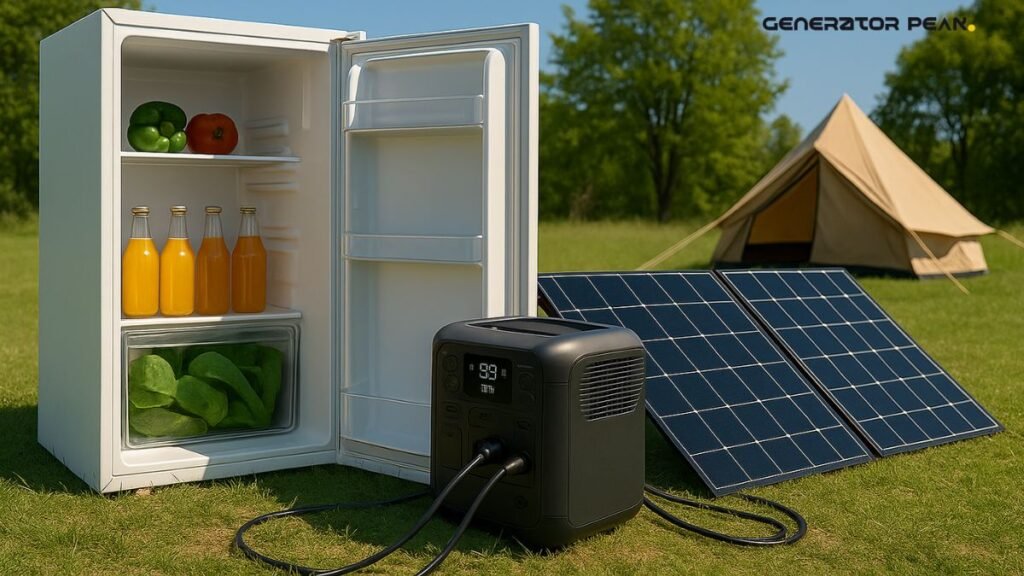
Connecting solar panelscorrectly is key to powering a refrigerator. Use proper cablesand connectors. Panels should face the sun directly for the best energy. Arrange panels in a way to maximize sunlightexposure.
- Use a charge controllerto protect batteries.
- Keep cables short and tidy to reduce power loss.
- Check all connections regularly for safety and efficiency.
Battery care is important. Avoid deep dischargesto extend battery life. Store batteries in a cool, dry place. Charge batteries fully but avoid overcharging.
Maintain the system by cleaning panels often. Dust and dirt block sunlight. Inspect batteries and cables for damage. Replace worn parts to keep performance high.
Credit: generatorpeak.com
Troubleshooting Common Issues
Power fluctuationscan cause your refrigerator to stop working properly. These happen when the solar generator output changes quickly. This can harm the fridge’s compressor. Use a stable inverterand make sure solar panels get enough sunlight.
Battery drain problemsoften occur if the battery is too small or old. It might not hold enough charge for the fridge. Check battery health and use a battery with enough capacityto run the fridge for hours.
Inverter overloadshappen when the fridge needs more power than the inverter can handle. This causes the inverter to shut off. Select an inverter with higher wattagethan the fridge’s peak power use.

Credit: growattportable.com
Frequently Asked Questions
What Size Solar Generator Powers A Refrigerator?
A solar generator with at least 500-1000 watts can power a typical refrigerator. It depends on your fridge’s wattage and usage duration.
How Long Can A Solar Generator Run A Fridge?
A solar generator can run a fridge for 4-12 hours, depending on battery capacity and fridge energy consumption.
Can A Solar Generator Handle A Fridge’s Startup Surge?
Yes, a solar generator with a high surge watt rating can handle the fridge’s startup power spike safely.
What Solar Panel Wattage Is Needed For A Fridge?
You need solar panels producing around 200-400 watts to recharge the generator while powering a refrigerator efficiently.
Conclusion
Choosing the right solar generator ensures your refrigerator runs smoothly. Consider power needs and generator capacity. Match your fridge’s wattage with the generator’s output. Portable options are great for small fridges. Larger generators suit full-sized models. Solar panels and battery capacity matter too.
Good planning saves energy and money. Enjoy eco-friendly and reliable power. Keep food fresh and reduce electricity bills. Solar generators are a smart choice for off-grid living. With careful selection, you’ll have peace of mind. Sustainable power is within reach.
Make the switch today for a greener tomorrow.