Are you curious about how much voltage a solar farm generating 3-phase power usually produces? Understanding this can help you grasp how solar energy moves from panels to your home or business.
Whether you’re planning a solar project or just want to know more about clean energy, getting clear answers about voltage levels is key. Keep reading, and you’ll discover the typical voltage ranges, why they matter, and how they impact the efficiency and safety of solar farms like yours.
This knowledge will empower you to make smarter decisions when it comes to solar power.

Credit: www.tycorunenergy.com
Solar Farm Voltage Basics
A solar farmcan use single-phaseor three-phase power. Single-phase power has one voltage wave. It is common in small homes or farms. Three-phase power has three voltage waves, each 120 degrees apart. This type is more stable and used in big solar farms.
Typical voltage levels in solar farms vary based on size and design. Small solar farms might use voltages around 400V to 600V. Larger farms often use 11kV, 33kV, or even 66kVfor better efficiency and less energy loss over long distances.
| Type of Power | Voltage Range | Common Use |
|---|---|---|
| Single-Phase | 120V – 240V | Small solar installations |
| Three-Phase | 400V – 600V (low voltage) | Medium solar farms |
| Three-Phase | 11kV – 66kV (high voltage) | Large solar farms |

Credit: www.xindun-power.com
Voltage Standards For 3-phase Solar Farms
Solar farms using 3-phase power often follow standard voltage ratings. These help keep the system safe and efficient. Common voltages include 400V, 600V, and 1000V. These numbers describe the voltage between phases or from phase to neutral.
Voltage levels depend on the farm’s sizeand the local grid requirements. Higher voltages allow power to travel longer distances with less loss. Smaller farms may use lower voltages for easier equipment handling.
| Region | Typical Voltage (Line-to-Line) | Notes |
|---|---|---|
| North America | 480V – 600V | Common for commercial solar farms |
| Europe | 400V | Standard voltage for 3-phase systems |
| Asia | 400V – 690V | Varies by country and grid rules |
Regional voltage variationsoccur due to different grid standards. Solar farms must match the local grid voltage for safe connection. This ensures smooth power delivery and prevents damage.
Components Influencing Voltage Output
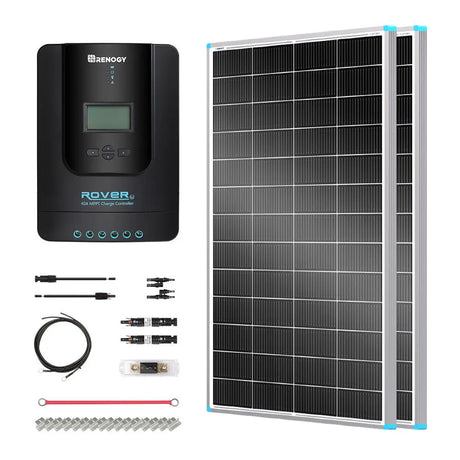
Solar panelsproduce direct current (DC) voltage. Panels are linked in stringsto reach the needed voltage. The number of panels in a string affects the total voltage output.
Inverterschange DC to three-phase alternating current (AC). They have voltage settingsto match grid needs. Setting these correctly is key to stable power.
Transformersraise voltage to higher levels for long-distance transmission. This step-up voltagereduces energy loss. Transformers ensure the voltage fits grid standards.
Credit: www.renogy.com
Voltage Regulation And Safety Measures
Overvoltage protectionhelps keep solar farms safe. It stops damage from voltage spikes. These spikes can come from lightning or switching faults. Devices like surge arresters and circuit breakers are common. They act quickly to cut off extra voltage. This prevents harm to equipment and workers.
Voltage monitoring systemstrack the voltage in real time. They use sensors and meters at different points. This helps spot any voltage changes early. Alerts can be sent automatically to operators. Quick action can then fix problems before they grow. This system keeps the power output stable and safe.
Grid Connection And Voltage Compatibility
Solar farms generating 3-phase powermust match the utility grid voltage. This ensures safe and efficient power flow. The common voltages for such farms range from 11 kV to 33 kV. These values depend on the local grid standards and farm size.
Voltage synchronizationis crucial. The solar farm’s voltage, frequency, and phase must align with the grid. Mismatches cause power loss or damage.
- Use transformers to adjust voltage levels.
- Employ synchronization equipment for phase matching.
- Monitor voltage continuously for stability.
The grid interface often includes protection systems. These detect faults and disconnect the farm if needed. This protects both the solar farm and the grid.
Optimizing Voltage For Performance
Solar farms with 3-phase systems usually operate around 400 to 600 volts. Proper voltage ensures efficient power delivery and stable performance. Adjusting voltage helps balance energy output and equipment safety.
Maximizing Efficiency Through Voltage Control
Voltage controlis key for solar farm efficiency. Maintaining the right voltage ensures solar panels work well and produce more energy. Solar farms usually generate 3-phase voltagebetween 400V and 690V. This range supports stable power flow and reduces energy loss. Too high or too low voltage can harm devices and cut power output.
Smart voltage management helps keep the system safe and reliable. Using transformersand invertersoptimizes voltage for different parts of the grid. This balance improves the energy yieldand lowers maintenance costs.
Impact Of Voltage On Energy Yield
- Correct voltage increases solar panel output.
- Voltage fluctuations cause energy loss and damage.
- Stable voltage improves system lifetime and safety.
- Using voltage regulators keeps power steady.
- Proper voltage control helps meet grid standards.
Frequently Asked Questions
What Voltage Level Does A 3-phase Solar Farm Use?
A 3-phase solar farm typically uses voltages between 400V to 690V. This range supports efficient power distribution and grid connection. Voltage depends on the farm size and design, ensuring optimal energy transfer and minimal losses.
How Is The Voltage Of A Solar Farm Determined?
Voltage is determined by solar panel configuration and inverter specifications. It balances safety, efficiency, and compatibility with the local grid standards. Proper voltage ensures stable power output and reliable operation of the solar farm.
Why Are 3-phase Voltages Used In Solar Farms?
3-phase voltages provide balanced power flow and higher efficiency. They reduce transmission losses and support large-scale energy distribution. This makes solar farms more reliable and cost-effective in delivering electricity to the grid.
Can Solar Farm Voltage Vary With Location?
Yes, solar farm voltage varies by country and grid requirements. Local electrical codes and infrastructure influence voltage choices. Adapting voltage ensures compliance and efficient integration into regional power systems.
Conclusion
Understanding solar farm voltages is crucial. It impacts efficiency and safety. Most solar farms produce 3-phase power. This often ranges between 400 and 800 volts. Knowing the voltage helps in planning installations. It also aids in managing energy distribution effectively.
Always consult with professionals for precise details. They ensure compliance with regulations. Solar energy continues to grow in importance. Harnessing it safely benefits everyone. Keep learning about solar power. It’s a vital part of our future energy landscape.