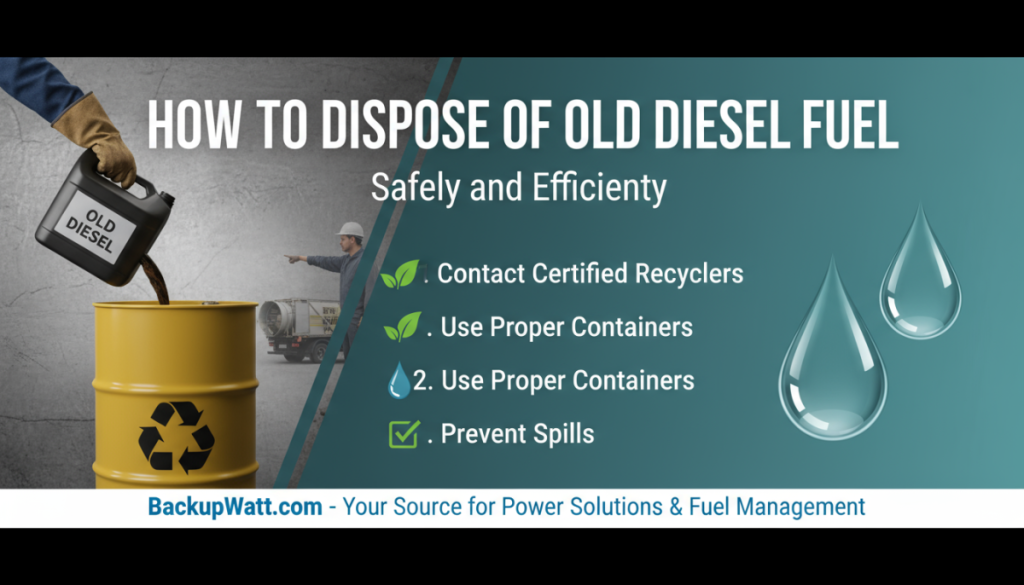
Are you staring at a tank of old diesel fuel from your generator, unsure of what to do with it? You’re not alone.
Many people face the challenge of disposing of outdated fuel safely and efficiently. With environmental concerns and safety hazards on the line, getting it right is crucial. But don’t worry—this guide is here to help you navigate through the process smoothly.
Discover the best methods to dispose of old diesel fuel while keeping your safety and the environment in mind. Read on to learn how you can handle this task with confidence and peace of mind.
Environmental Impact Of Diesel Fuel
Old diesel fuel can harm nature. It can leak into the ground. This makes soil and water dirty. Plants and animals can suffer. The air can become polluted. Burning diesel fuel creates smoke. This smoke contains harmful chemicals. People can breathe in these chemicals. This is bad for health.
Improper disposal can lead to big problems. It can cause fires. Fires can spread quickly. They destroy habitats and homes. Safe disposal is very important. It helps protect the planet. Everyone should care about the environment. Keeping it clean is our duty.
Assessing Fuel Quality
Check the fuel color and smell. Fresh diesel is clear and has no strong smell. Old fuel looks dark and smells bad. Use a fuel testing kit for a better check. These kits can show water or dirt in the fuel.
Look for sediment at the bottom of the container. Sediment means the fuel is old. Shake the container and watch for bubbles. Bubbles show there is water mixed in. Water in fuel is bad for generators.
Feel the fuel with your fingers. Good fuel feels smooth. If it feels sticky, it is not good. Sticky fuel can harm engines. Dispose of sticky fuel safely.
Local Regulations And Guidelines
Understanding local regulations is very important. Many areas have specific rules for disposing of old diesel fuel. These rules help keep the environment safe. Check with your local waste management authority. They can provide the correct guidelines.
Some places require special disposal facilities. It’s important to follow these guidelines to avoid fines. Never pour diesel fuel down drains or on the ground. This can harm the environment and water supply. Always use the recommended disposal methods. This ensures that the fuel is handled safely.
Contact local recycling centers to see if they accept diesel fuel. Some centers offer pickup services for hazardous waste. Always store old diesel fuel in a safe container. Label it properly before disposal. This helps prevent accidents and keeps everyone safe.
Preparation For Disposal
Properly disposing of old diesel fuel from a generator is crucial for safety and environmental protection. Begin by storing the fuel in a sealed, labeled container. Contact local waste management services for guidance on disposal locations and procedures.
Gathering Necessary Materials
Gathering the right materials is important. You will need sturdy containers. These containers should be marked for hazardous waste. A funnel can help pour fuel safely. Have absorbent materials on hand. These can include rags or kitty litter. They help with any spills. A pair of gloves and goggles are a must. They keep you safe from harm. Lastly, a transport cart is useful. It helps move the fuel easily.
Safety Precautions
Safety is the top priority. Wear gloves and goggles at all times. They protect your skin and eyes. Work in a well-ventilated area. This prevents harmful fumes from building up. Keep a fire extinguisher nearby. Diesel fuel is flammable. Make sure the area is free from sparks. Keep children and pets away from the site. Always have a phone handy. You might need to call for help.
Disposal Methods
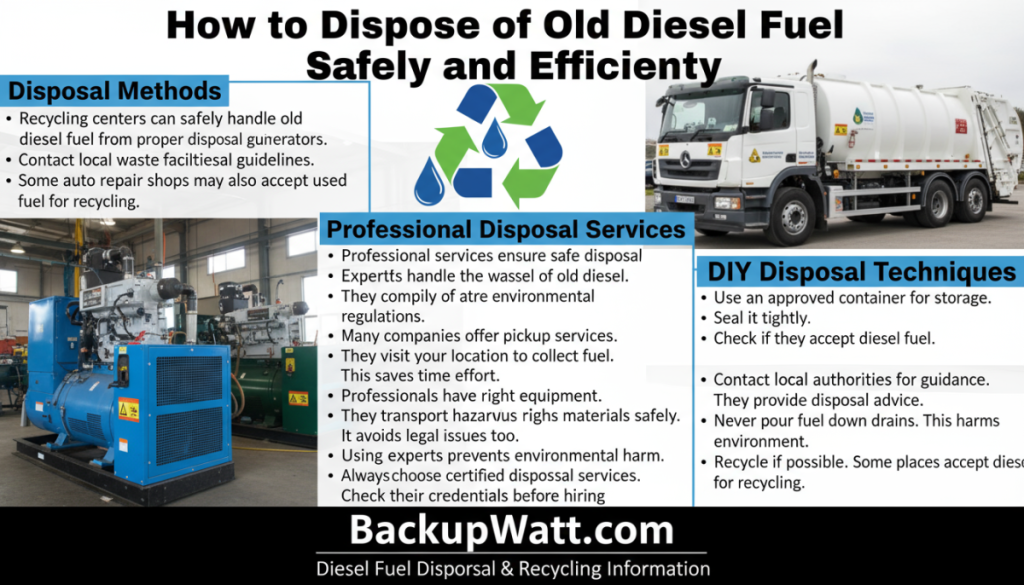
Recycling centers can safely handle old diesel fuel from generators. Contact local waste facilities for proper disposal guidelines. Some auto repair shops may also accept used fuel for recycling.
Professional Disposal Services
Professional services ensure safe disposal of old diesel fuel. Experts handle the waste properly. They comply with environmental regulations. Many companies offer pickup services. They visit your location to collect the fuel. This saves time and effort. Professionals have the right equipment. They transport hazardous materials safely. Using experts prevents environmental harm. It avoids legal issues too. Always choose certified disposal services. Check their credentials before hiring.
Diy Disposal Techniques
- Use an approved container for storage. Seal it tightly.
- Find a local waste facility. Check if they accept diesel fuel.
- Contact local authorities for guidance. They provide disposal advice.
- Never pour fuel down drains. This harms the environment.
- Recycle if possible. Some places accept diesel for recycling.
Recycling And Reuse Options
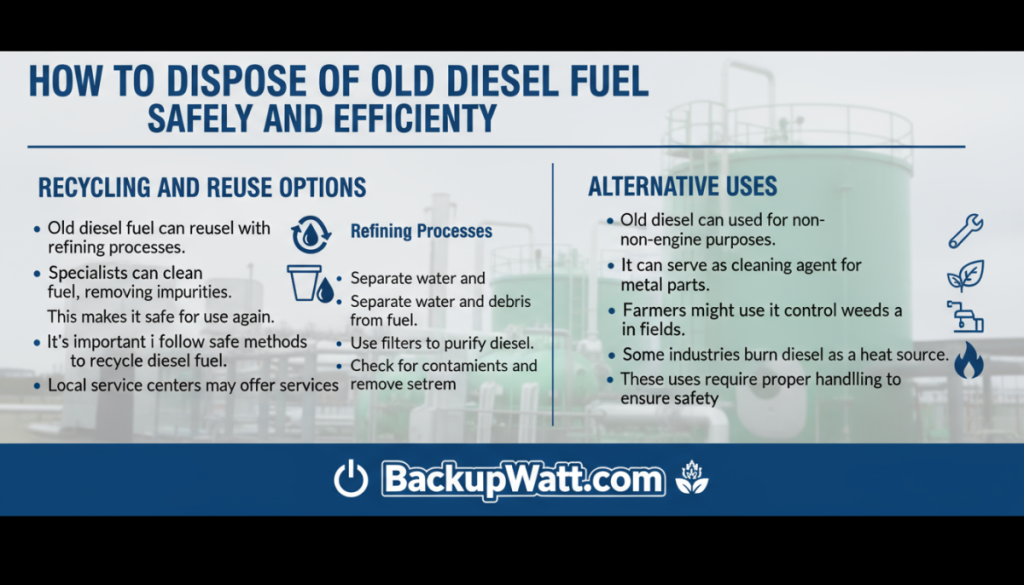
Old diesel fuel can be reused with proper refining processes. Specialists can clean the fuel, removing impurities. This makes it safe for use again. It’s important to follow safe methods to recycle diesel fuel. Local service centers may offer refining services.
Refining Processes
- Separate water and debris from the fuel.
- Use filters to purify the diesel.
- Check for contaminants and remove them.
Alternative Uses
Old diesel can be used for non-engine purposes. It can serve as a cleaning agent for metal parts. Farmers might use it to control weeds in fields. Some industries burn diesel as a heat source. These uses require proper handling to ensure safety.
Preventing Future Waste
Safely dispose of old diesel fuel to prevent environmental harm. Contact local waste management for proper handling. Use certified disposal sites to ensure compliance with regulations and reduce pollution risks.
Proper Storage Practices
Store diesel fuel in a cool, dry place. Use airtight containers to keep fuel fresh. Label containers with date and type of fuel. Avoid direct sunlight as it spoils fuel. Check for leaks regularly. Use approved fuel cans for safety. Keep away from children and pets.
Regular Maintenance
Inspect the generator every few months. Clean the fuel tank to prevent dirt. Replace old fuel with fresh fuel. Check fuel lines for cracks or wear. Ensure filters are clean and working. Run the generator monthly to keep fuel fresh. Schedule professional checks annually.
Community Initiatives
Safe disposal of old diesel fuel protects the environment. Contact local waste facilities for proper procedures. Consider recycling options to minimize waste and promote sustainability.
Local Collection Events
Many towns host collection events for old diesel fuel. These events help keep the environment clean. People bring their old fuel to a central spot. Trained staff handle the disposal safely. Safety is a top priority during these events. Local governments often support these initiatives. It’s a team effort to protect nature.
Public Awareness Campaigns
Public campaigns teach people about safe fuel disposal. Flyers and posters share important info. Schools may hold lessons on the topic. Community centers often have workshops. These campaigns focus on environmental safety. Everyone learns the risks of improper disposal. Knowledge helps keep our world clean.
Frequently Asked Questions
How Do I Get Rid Of Old Diesel Fuel?
Dispose of old diesel fuel at a hazardous waste facility. Contact local waste management for guidance. Never pour it down drains or on the ground. Store in sealed containers until disposal. Follow local regulations to ensure safe and responsible handling.
How Long Can Diesel Fuel Sit In A Generator?
Diesel fuel can sit in a generator for up to 6-12 months. Regular maintenance and fuel stabilizers help extend lifespan. Monitor for contamination, water, and microbial growth to ensure optimal performance. Proper storage conditions, like cool temperatures and sealed tanks, also play a key role in maintaining fuel quality.
How To Get Rid Of Unwanted Diesel?
Dispose of unwanted diesel at a certified waste disposal facility. Contact local waste management services for guidance. Ensure compliance with environmental regulations to prevent contamination. Avoid dumping or burning diesel to protect the environment. Consider recycling options if available in your area for responsible disposal.
Is 3 Year Old Diesel Fuel Still Good?
Three-year-old diesel fuel may degrade, causing engine issues. Check for water, sediment, and clarity. Consider professional testing for quality assurance. Use fuel stabilizers for future storage to extend diesel lifespan.
Conclusion
Safely disposing of old diesel fuel protects our environment. Simple steps make a big difference. First, store fuel in a sealed container. Then, contact local waste facilities. They guide you through disposal. Never pour diesel down the drain. It’s harmful to nature.
Recycle where possible. Some centers accept old fuel for reuse. Check with local guidelines for safety. Stay informed and responsible. Protect the planet by disposing of diesel carefully. Keep our surroundings clean and safe. Always consider the environment in your actions.
Proper disposal benefits everyone. Be a part of the solution.